
Catalogue Search | MBRL


Are you sure you want to remove the book from the shelf?

{{itemTitle}}
783,352
result(s) for
"Machine Learning "
Sort by:


Information Retrieval
Deep learning and word embeddings have made significant impacts on information retrieval (IR) by adding techniques based in neural networks and language models. This book, written by international academic and industry experts, brings the field up to date with detailed discussions of new approaches and techniques.
eBook

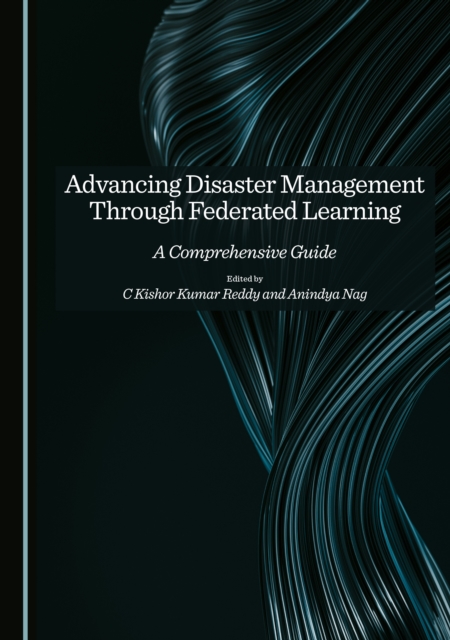
Advancing disaster management through federated learning
Effective disaster management in an age of more frequent and devastating calamities requires creative solutions. This book explores the revolutionary possibilities of Federated Learning (FL) in crisis management, providing an all-inclusive manual that connects theory with practice. Learn how FL can change the game for disaster response and recovery decision-making, resource allocation, predictive modeling, and information sharing. Readers in the fields of emergency response, governance, research, and technology will find this book's wealth of real-world case studies and examples to be an important resource. It shows how FL improves catastrophe readiness and response by letting strong models be built while data privacy is maintained across decentralized sources. With a comprehensive roadmap that includes enhancing early warning systems, optimizing resource distribution, and integrating cutting-edge technologies like IoT, blockchain, and advanced AI, this book provides a clear explanation of how to use FL to protect communities, infrastructure, and lives during disasters.
eBook


Human-in-the-loop machine learning: a state of the art
Researchers are defining new types of interactions between humans and machine learning algorithms generically called human-in-the-loop machine learning. Depending on who is in control of the learning process, we can identify: active learning, in which the system remains in control; interactive machine learning, in which there is a closer interaction between users and learning systems; and machine teaching, where human domain experts have control over the learning process. Aside from control, humans can also be involved in the learning process in other ways. In curriculum learning human domain experts try to impose some structure on the examples presented to improve the learning; in explainable AI the focus is on the ability of the model to explain to humans why a given solution was chosen. This collaboration between AI models and humans should not be limited only to the learning process; if we go further, we can see other terms that arise such as Usable and Useful AI. In this paper we review the state of the art of the techniques involved in the new forms of relationship between humans and ML algorithms. Our contribution is not merely listing the different approaches, but to provide definitions clarifying confusing, varied and sometimes contradictory terms; to elucidate and determine the boundaries between the different methods; and to correlate all the techniques searching for the connections and influences between them.
Journal Article

Deep learning in practice
\"Deep Learning in Practice helps you learn how to develop and optimize a model for your projects using Deep Learning (DL) methods and architectures. This book is useful for undergraduate and graduate students, as well as practitioners in industry and academia. It will serve as a useful reference for learning deep learning fundamentals and implementing a deep learning model for any project, step by step\"-- Provided by publisher.
Book

Ensemble Machine Learning: Advances in Research and Applications
This book delves into the dynamic realm of ensemble methods, offering a comprehensive exploration of its evolution, methodologies, and diverse applications. Chapters are gathered from the collective wisdom of researchers, practitioners, and innovators who have pioneered this ever-evolving domain. This book serves as a compendium, bringing together theoretical foundations, cutting-edge advancements, and practical insights, catering to both seasoned experts and those venturing into the intricate world of ensemble learning. Each chapter encapsulates the essence of collaboration among diverse models, unveiling the intricacies of ensemble techniques, their fusion strategies, and their impact across industries. From boosting algorithms to bagging, stacking, and beyond, this book illuminates the nuances of ensemble learning, illustrating how these techniques amplify predictive accuracy, enhance generalization, and fortify models against the complexities of real-world data. The editors hope this book will serve as a guiding beacon for enthusiasts, researchers, and practitioners navigating the intricate landscape of ensemble machine learning, fostering innovation, and paving the way for future breakthroughs.
eBook

Oracle business intelligence with machine learning : artificial intelligence techniques in OBIEE for actionable BI
Use machine learning and Oracle Business Intelligence Enterprise Edition (OBIEE) as a comprehensive BI solution. This book follows a when-to, why-to, and how-to approach to explain the key steps involved in utilizing the artificial intelligence components now available for a successful OBIEE implementation. Oracle Business Intelligence with Machine Learning covers various technologies including using Oracle OBIEE, R Enterprise, Spatial Maps, and machine learning for advanced visualization and analytics. The machine learning material focuses on learning representations of input data suitable for a given prediction problem. This book focuses on the practical aspects of implementing machine learning solutions using the rich Oracle BI ecosystem. The primary objective of this book is to bridge the gap between the academic state-of-the-art and the industry state-of-the-practice by introducing you to machine learning with OBIEE. You will: See machine learning in OBIEE Master the fundamentals of machine learning and how it pertains to BI and advanced analytics Gain an introduction to Oracle R Enterprise Discover the practical considerations of implementing machine learning with OBIEE.
Book

GPT-4 is here: what scientists think
Researchers are excited about the AI — but many are frustrated that its underlying engineering is cloaked in secrecy.
Researchers are excited about the AI — but many are frustrated that its underlying engineering is cloaked in secrecy.
The GPT-4 logo is seen in this photo illustration on 13 March, 2023 in Warsaw, Poland
Credit: Jaap Arriens/NurPhoto via Getty
Journal Article