
Catalogue Search | MBRL


Are you sure you want to remove the book from the shelf?

{{itemTitle}}
25,947
result(s) for
"Magicians"
Sort by:

Legends and liars
Wanted for murder and pursued by adversaries who want them dead, siblings Vocho and Kacha form an uneasy truce to battle their enemies together.
Book

Trade of the tricks
From risqué cabaret performances to engrossing after-hours shop talk, Trade of the Tricks offers an unprecedented look inside the secretive subculture of modern magicians. Entering the flourishing Paris magic scene as an apprentice, Graham M. Jones gives a firsthand account of how magicians learn to perform their astonishing deceptions. He follows the day-to-day lives of some of France's most renowned performers, revealing not only how secrets are created and shared, but also how they are stolen and destroyed. In a book brimming with humor and surprise, Jones shows how today's magicians marshal creativity and passion in striving to elevate their amazing skill into high art. The book's lively cast of characters includes female and queer performers whose work is changing the face of a historically masculine genre.
eBook

The Magician of Hoad
A young farm boy who possesses mysterious powers is chosen by the king to be the court's royal magician.
Book

The Experience of Magic
Despite its enduring popularity, theatrical magic remains all but ignored by art critics, art historians, and philosophers. This is unfortunate, since magic offers a unique and distinctively intellectual aesthetic experience and raises a host of interesting philosophical questions. Thus, this article initiates a philosophical investigation of the experience of magic. Section I dispels two widespread misconceptions about the nature of magic and discusses the sort of depiction it requires. Section II asks, \"What cognitive attitude is involved in the experience of magic?\" and criticizes three candidate replies; Section III then argues that Tamar Szabó Gendler's notion of \"belief-discordant alief\" holds the key to a correct answer. Finally, Section IV develops an account of the experience of magic and explores some of its consequences. The result is a philosophically rich view of the experience of magic that opens new avenues for inquiry and is relevant to core issues in contemporary aesthetics.
Journal Article

The song of seven
Deep in the woods, in a crooked house full of stairs, a young boy is kept prisoner by his uncle. He cannot meet other children, or have any friends. He holds the key to a secret. Meanwhile, in a quiet village, Frans the schoolteacher invents incredible stories of perilous deeds, shipwrecks, desert islands, and haunted castles to entertain his pupils, in which he is the hero. Then one stormy evening, a mysterious letter blows onto his doormat, summoning him to a meeting. Suddenly, Frans is on a real-life mission, one in which he will encounter magicians, secret passages, conspiracies, hidden treasure, a black cat with green eyes and a sealed parchment which predicts the future. He will learn the secret of the Seven Ways. He will find seven allies. And he will make a fearsome enemy. The adventure has begun.
Book

Fake science: The impact of pseudo-psychological demonstrations on people’s beliefs in psychological principles
Magicians use deception to create effects that allow us to experience the impossible. More recently, magicians have started to contextualize these tricks in psychological demonstrations. We investigated whether witnessing a magic demonstration alters people's beliefs in these pseudo-psychological principles. In the classroom, a magician claimed to use psychological skills to read a volunteer's thoughts. After this demonstration, participants reported higher beliefs that an individual can 1) read a person's mind by evaluating micro expressions, psychological profiles and muscle activities, and 2) effectively prime a person's behaviour through subtle suggestions. Whether he was presented as a magician or psychologist did not influence people's beliefs about how the demonstration was achieved, nor did it influence their beliefs in pseudo-psychological principles. Our results demonstrate that pseudo-psychological demonstrations can have a significant impact on perpetuating false beliefs in scientific principles and raise important questions about the wider impact of scientific misinformation.
Journal Article

The Wingsnatchers
Aspiring inventor and magician's apprentice Felix Carmer III is aided by Grit, a fiery, flightless faerie princess, in winning a magic competition in exchange for his helping Grit investigate a string of faerie disappearances.
Book

SimSAARlabim study – The role magic tricks play in reducing pain and stress in children
Vaccination is an essential preventative medical intervention, but needle fearandinjection painmay result in vaccination hesistancy.
To assess the role of magic tricks – no trick vs. one trick („disappearing handkerchief trick“) vs. three tricks (“disappearing handkerchief trick“, “jumping rubber band trick“, and “disappearing ring trick“) – performed by a professional magician and pediatrician during routine vaccination in reducing discomfort/pain and the stress response (heart rate, visual analogue scale (VAS), and biomarkers (cortisol, Immunoglobulin A (IgA), α-amylase, and overall protein concentration in saliva before and after vaccination).
Randomized controlled trial (RCT) in healthy children aged 6–11 years undergoing routine vaccination in an outpatient setting.
50 children (26 female) were enrolled (no trick: n = 17, 1 trick: n = 16, 3 tricks: n = 17) with a median age of 6.9 years (range: 5.3–10.8 years). We detected no significant differences among the three groups in their stress reponse (heart rate before and after vaccination and cortisol, IgA, α-amylase, and overall protein concentrations in saliva before and after vaccination) or regarding pain assessment using the VAS.
Although children undergoing routine outpatient vaccination appeared to enjoy a magician’s presence, the concomitant performance of magic tricks revealed no significant effect on the stress response.
Journal Article
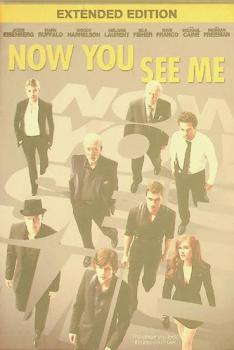
Now you see me 2 : the closer you look, the less you'll see
The Four Horsemen are on a new mission to steal a chip that can decrypt any electronic device in the world.
DVD

Inattentional incoherence blindness: If the world were to “glitch,” would we even be capable of detecting it?
Previous research has shown that perceptual and semantic inconsistencies, as well as discrepancies between our memories and later information, can go unnoticed. Going a step further, the present study investigates whether adults can detect logical impossibilities in sequences of events they personally experience. Participants wrote a personal four-digit code in one location, which then appeared to be known to an experimenter elsewhere through a magician’s trick. Across two experiments (
N
= 44 each), conducted with adult undergraduate students, we examined participants’ detection of the inconsistency and memory of the event. Results show that most participants failed to notice the incoherence unless it was explicitly highlighted, and they did not reconstruct the event in memory. We discuss this yet unknown human limitation: inattentional incoherence blindness.
Journal Article