
Catalogue Search | MBRL


Are you sure you want to remove the book from the shelf?

{{itemTitle}}
1,217
result(s) for
"Magnetism Experiments."
Sort by:

Excellent experiments with electricity and magnetism
Ever wonder how astronauts are able to breathe a continuous supply of oxygen in space? This hands-on approach to electricity and magnetism lets readers conduct experiments to answer this and other fascinating questions! Readers will love learning that the scientific principles they re applying at home have real-world applications. For example, they ll rock out on their own electric drums while learning about technological advances in professional instruments. Simple step-by-step instructions accompanied by detailed photographs make each activity accessible, while handy tips ensure readers safety and fun. Budding scientists will enjoy exploring the recommended twists and additions to experiments.
Book


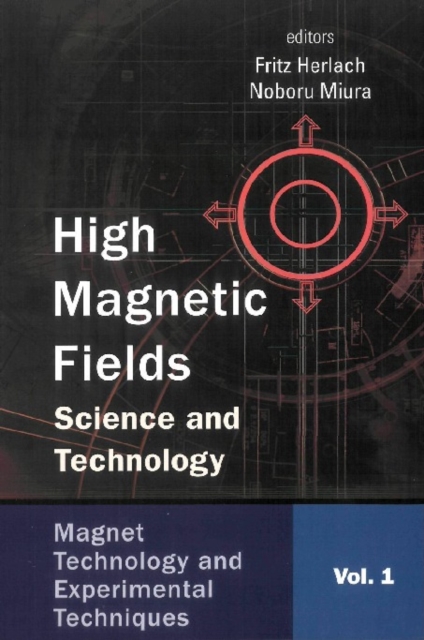
High Magnetic Fields: Science and Technology
This three-volume book provides a comprehensive review of experiments in very strong magnetic fields that can only be generated with very special magnets. The first volume is entirely devoted to the technology of laboratory magnets: permanent, superconducting, high-power water-cooled and hybrid; pulsed magnets, both nondestructive and destructive (megagauss fields). Volumes 2 and 3 contain reviews of the different areas of research where strong magnetic fields are an essential research tool. These volumes deal primarily with solid-state physics; other research areas covered are biological systems, chemistry, atomic and molecular physics, nuclear resonance, plasma physics and astrophysics (including QED).
eBook

Experiments with electricity and magnetism
Through clear instructions and scientific illustrations, students can conduct easy yet engaging experiments to examine the principles of electricity and magnetism. Using easy-to-obtain household materials, readers will make a battery from electric cells, test objects to see if they are conductors or insulators, and build a simple electric motor. Readers are guided through applying the scientific method to gain a better understanding of the basic concepts demonstrated by each experiment. Safety tips educate students on the code of conduct expected when conducting experiments.
Book

Writing and reading antiferromagnetic Mn2Au by Néel spin-orbit torques and large anisotropic magnetoresistance
Using antiferromagnets as active elements in spintronics requires the ability to manipulate and read-out the Néel vector orientation. Here we demonstrate for Mn
2
Au, a good conductor with a high ordering temperature suitable for applications, reproducible switching using current pulse generated bulk spin-orbit torques and read-out by magnetoresistance measurements. Reversible and consistent changes of the longitudinal resistance and planar Hall voltage of star-patterned epitaxial Mn
2
Au(001) thin films were generated by pulse current densities of ≃10
7
A/cm
2
. The symmetry of the torques agrees with theoretical predictions and a large read-out magnetoresistance effect of more than ≃6% is reproduced by ab initio transport calculations.
The zero net moment of antiferromagnets makes them insensitive to magnetic fields and enables ultrafast dynamics promising for novel spintronics. Here the authors achieved pulse current induced Néel vector switching in Mn
2
Au(001) epitaxial thin films, which is associated with a large magnetoresistive effect allowing simple read-out.
Journal Article

Junior scientists. Experiment with magnets
Using simple text and pictures, this book present experiments with magnets that can be performed by young students.
Book

Observation of antiferromagnetic correlations in an ultracold SU(N) Hubbard model
Mott insulators are paradigmatic examples of strongly correlated physics from which many phases of quantum matter with hard-to-explain properties emerge. Extending the typical SU(2) spin symmetry of Mott insulators to SU(
N
) is predicted to produce exotic quantum magnetism at low temperatures. In this work, we experimentally observe nearest-neighbour spin correlations in a SU(6) Hubbard model realized by ytterbium atoms in optical lattices. We study one-dimensional, two-dimensional square and three-dimensional cubic lattice geometries. The measured SU(6) spin correlations are enhanced compared with the SU(2) correlations, owing to strong Pomeranchuk cooling. The experimental data for a one-dimensional lattice agree qualitatively with our theoretical calculations, with an error of at most 30%, without any fitting parameters. Detailed comparison between theory and experiment allows us to infer the temperature to be the lowest achieved for a cold-atom Fermi–Hubbard model. For three-dimensional lattices, the experiments reach entropies below the regime where our calculations converge, highlighting the importance of these experiments as quantum simulations.
A cold-atom simulator has realized a popular many-body model of quantum magnetism in regimes that cannot be easily studied theoretically, achieving the record-coldest fermions ever seen.
Journal Article

A project guide to electricity and magnetism
Looks at the history of the study of electricity and magnetism and presents science experiments and projects that demonstrate these principles.
Book
Extremely large magnetoresistance and ultrahigh mobility in the topological Weyl semimetal candidate NbP
Weyl semimetals are predicted to exhibit a host of unusual transport properties. NbP, a system predicted to share characteristics of both normal and Weyl semimetals, is now shown to have a very large, non-saturating magnetoresistance.
Recent experiments have revealed spectacular transport properties in semimetals, such as the large, non-saturating magnetoresistance exhibited by WTe
2
(ref.
1
). Topological semimetals with massless relativistic electrons have also been predicted
2
as three-dimensional analogues of graphene
3
. These systems are known as Weyl semimetals, and are predicted to have a range of exotic transport properties and surface states
4
,
5
,
6
,
7
, distinct from those of topological insulators
8
,
9
. Here we examine the magneto-transport properties of NbP, a material the band structure of which has been predicted to combine the hallmarks of a Weyl semimetal
10
,
11
with those of a normal semimetal. We observe an extremely large magnetoresistance of 850,000% at 1.85 K (250% at room temperature) in a magnetic field of up to 9 T, without any signs of saturation, and an ultrahigh carrier mobility of 5 × 10
6
cm
2
V
−1
s
−1
that accompanied by strong Shubnikov–de Haas (SdH) oscillations. NbP therefore presents a unique example of a material combining topological and conventional electronic phases, with intriguing physical properties resulting from their interplay.
Journal Article