
Catalogue Search | MBRL


Are you sure you want to remove the book from the shelf?

{{itemTitle}}
9
result(s) for
"Magnus Maximus"
Sort by:

Ammianus, Magnus Maximus and the Gothic Uprising
It has been asserted that the usurper Magnus Maximus can be identified with the commander Maximus who served during the Gothic uprising of 376–77. This assertion is tempting because it connects imperial events in Africa, the Balkans and Britain during a pivotal period. However, this note aims to dispel this identification. It does so by both examining the socio-institutional ramifications of promotion in the imperial chain of command and cross-examining literary traditions previously overlooked in this identification.
Journal Article

Saints and Their Miracles in Late Antique Gaul
Saints' cults, with their focus on miraculous healings and pilgrimages, were not only a distinctive feature of Christian religion in fifth-and sixth-century Gaul but also a vital force in political and social life. Here Raymond Van Dam uses accounts of miracles performed by SS. Martin, Julian, and Hilary to provide a vivid and comprehensive depiction of some of the most influential saints' cults. Viewed within the context of ongoing tensions between paganism and Christianity and between Frankish kings and bishops, these cults tell much about the struggle for authority, the forming of communities, and the concept of sin and redemption in late Roman Gaul.
Van Dam begins by describing the origins of the three cults, and discusses the career of Bishop Gregory of Tours, who benefited from the support of various patron saints and in turn promoted their cults. He then treats the political and religious dimensions of healing miracles--including their relation to Catholic theology and their use by bishops to challenge royal authority--and of pilgrimages to saints' shrines. The miracle stories, collected mainly by Gregory of Tours, appear in their first complete English translations.
eBook

El priscilianismo hoy: balance, perspectivas y aportaciones sobre la injerencia imperial en los conflictos eclesiásticos
Esta contribución ofrece un análisis crítico y selectivo de las más recientes aportaciones a los estudios sobre el priscilianismo y presenta una interpretación novedosa de la intervención de Magno Máximo en los juicios de Tréveris. Las epístolas dirigidas por Magno Máximo a Valentiniano II y Siricio de Roma son textos diplomáticos con una función precisa dentro de la estrategia política del Augusto de Tréveris en 386. En las dos misivas, redactadas prácticamente a la vez en 386, Máximo trataba de justificar su intervención en los juicios de Tréveris, de modo implícito ante Valentiniano II, y ante Siricio de manera explícita, con los argumentos que había escuchado a Martin de Tours y a Ambrosio de Milán: el emperador no debía interferir de manera directa en las disputas heréticas, sino delegar en los obispos, a quienes correspondía resolver los conflictos internos de las iglesias.
Journal Article
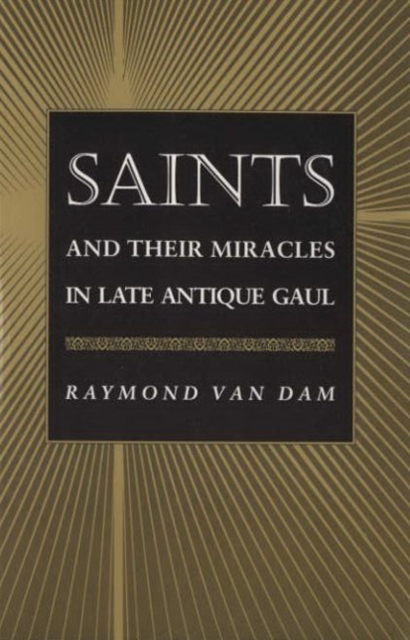
Saints and their miracles in late antique Gaul
Saints' cults, with their focus on miraculous healings and pilgrimages, were not only a distinctive feature of Christian religion in fifth-and sixth-century Gaul but also a vital force in political and social life. Here Raymond Van Dam uses accounts of miracles performed by SS. Martin, Julian, and Hilary to provide a vivid and comprehensive depiction of some of the most influential saints' cults. Viewed within the context of ongoing tensions between paganism and Christianity and between Frankish kings and bishops, these cults tell much about the struggle for authority, the forming of communities, and the concept of sin and redemption in late Roman Gaul.Van Dam begins by describing the origins of the three cults, and discusses the career of Bishop Gregory of Tours, who benefited from the support of various patron saints and in turn promoted their cults. He then treats the political and religious dimensions of healing miracles--including their relation to Catholic theology and their use by bishops to challenge royal authority--and of pilgrimages to saints' shrines. The miracle stories, collected mainly by Gregory of Tours, appear in their first complete English translations.
eBook

Charlottetown: Classics professor to be guest speaker
[David Buck], who holds a PhD degree from Oxford University, specializes in the later Roman Empire. He will be speaking on a Welsh legend pertaining to the fourth century Emperor Magnus Maximus, who was partly of Welsh ancestry.
Newspaper Article

The end of Roman Britain
The death in 388 AD of Magnus Maximus should not be forgotten. He was an imperial usurper who became a link-man between the facutal eclipse of Roman Britain and the legendary world of King Arthur. References.
Magazine Article

TWO ATTITUDES TO DIVINATION IN EUNAPIUS
A passage in Eunapius (476–7, pp. 440–2 Loeb) draws an interesting contrast between the attitudes to divination of the two sophists Maximus and Chrysanthius: Maximus, who manipulates the omens until they say what he wants, and Chrysanthius, who scrupulously obeys their apparent meaning. But a passage a little later (500–1, pp. 542–4 Loeb) apparently ascribes to Chrysanthius the opposite attitude. This article suggests a transposition to restore coherence to the text. Even if the transposition is wrong, the contrast drawn in the first passage between two attitudes to divination, one rigorous and literalist, one manipulative, is important.
Journal Article

Gluteus maximus impairment in femoroacetabular impingement: a tensiomyographic evaluation of a clinical fact
Introductionthe aim of the present study is to evaluate the mechanical and contractile properties of the gluteus maximus (GM) muscle in patients with femoroacetabular impingement (FAI). Our hypothesis is that the clinical observation of GM pain would be evidenced by tensiomyographic impairment in muscle function.Materials and methodsA prospective, cross-sectional, intra-group comparative study was conducted to assess the neuromuscular changes of lower extremity muscles in patients with FAI. Fifty-one patients with clinical and radiographic diagnosis of FAI for at least 3 months were included. The rectus femoris (RF), adductor magnus (AM), and GM of both lower extremities of all patients were evaluated with tensiomyography (TMG). The values of TMG of the affected lower extremity were compared to those of the healthy contralateral side. The parameters obtained in this study were maximal displacement (Dm), and contraction time (Tc).ResultsThe Tc of the injured GM was significantly higher compared to the healthy side (p = 0.01). There were no significant side-to-side differences in the Dm of the GM (p = 0.13), either in the Tc and Dm of the RF (p = 0.15 and p = 0.8, respectively) and AM (p = 0.25 and p = 0.75, respectively).ConclusionsFAI is associated with impairment of contraction time in the GM of the injured compared to the healthy side. Impairment of the GM may be monitored to evaluate response to conservative or surgical treatment.
Journal Article
