
Catalogue Search | MBRL


Are you sure you want to remove the book from the shelf?

{{itemTitle}}
495,025
result(s) for
"Mail"
Sort by:

Unsubscribe : how to kill email anxiety, avoid distractions, and get real work done
\"A modern, no-nonsense guide to getting rid of email anxiety, reclaiming your productivity, and spending more time on the work that matters\"--Amazon.com.
Book
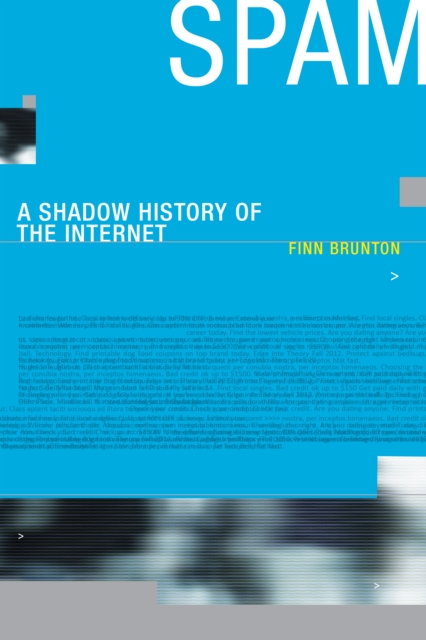
Spam
The vast majority of all email sent every day is spam, a variety of idiosyncratically spelled requests to provide account information, invitations to spend money on dubious products, and pleas to send cash overseas. Most of it is caught by filters before ever reaching an in-box. Where does it come from? As Finn Brunton explains in Spam, it is produced and shaped by many different populations around the world: programmers, con artists, bots and their botmasters, pharmaceutical merchants, marketers, identity thieves, crooked bankers and their victims, cops, lawyers, network security professionals, vigilantes, and hackers. Every time we go online, we participate in the system of spam, with choices, refusals, and purchases the consequences of which we may not understand. This is a book about what spam is, how it works, and what it means. Brunton provides a cultural history that stretches from pranks on early computer networks to the construction of a global criminal infrastructure. The history of spam, Brunton shows us, is a shadow history of the Internet itself, with spam emerging as the mirror image of the online communities it targets. Brunton traces spam through three epochs: the 1970s to 1995, and the early, noncommercial computer networks that became the Internet; 1995 to 2003, with the dot-com boom, the rise of spam's entrepreneurs, and the first efforts at regulating spam; and 2003 to the present, with the war of algorithms -- spam versus anti-spam. Spam shows us how technologies, from email to search engines, are transformed by unintended consequences and adaptations, and how online communities develop and invent governance for themselves.
eBook
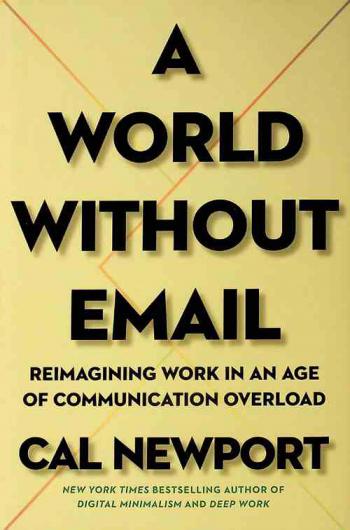
A world without email : reimagining work in an age of communication overload
Outlines recommendations for business leaders on how to maximize a working team's professional productivity by improving administrative support and streamlining digital traffic.

Direct mail to prospects and email to current customers? Modeling and field-testing multichannel marketing
Multichannel retailers need to understand how to allocate marketing budgets to customer segments and online and offline sales channels. We propose an integrated methodological approach to assess how email and direct mail effectiveness vary by channel and customer value segment. We apply this approach to an international beauty retailer in six countries and to an apparel retailer in the United States. We estimate multi-equation hierarchical linear models and find that sales responsiveness to email and direct mail varies by customer value segment. Specifically, direct mail drives customer acquisition in the offline channel, while email drives sales for both online and offline channels for current customer segments. A randomized field experiment with the beauty retailer provides causal support for the findings. The proposed reallocation of marketing resources would yield a revenue lift of 13.5% for the beauty retailer and 9.3% for the apparel retailer, compared with the 6.5% actual increase in the field experiment.
Journal Article

Murder by mail : a global history of the letter bomb
\"The explosive history of weaponized mail over hundreds of years. This book unfolds the gripping history of weaponized mail, offering the first-ever comprehensive exploration of this sinister phenomenon. Spanning two centuries, Murder by Mail unveils the history of postal bombs, describing the evolution of both explosives and the postal services that facilitated their deadly use. From an eighteenth-century incident involving Jonathan Swift to modern acts of terror by groups like the IRA, Suffragettes, and lone actors such as the Unabomber, it uncovers the surprising ubiquity of mail bombs. This chronological account meticulously covers each decade, from early anarchists and world wars through the Cold War to the rise of the serial bomber. Astounding in scope, this book sheds light on the psychopathy, motivations, and political implications behind murder by mail.\" -- Provided by publisher.
BOOK

Email fraud: The search for psychological predictors of susceptibility
Decisions that we make about email legitimacy can result in a pernicious threat to security of both individuals and organisations. Yet user response to phishing emails is far from uniform; some respond while others do not. What is the source of this diversity in decision-making? From a psychological perspective, we consider cognitive and situational influences that might explain why certain users are more susceptible than others. Alongside an email judgment task employed as a proxy for fraud susceptibility, 224 participants completed a range of cognitive tasks. In addition, we manipulated time pressure for email legitimacy judgments. We identify cognitive reflection and sensation seeking as significant, albeit modest, predictors of susceptibility. Further to this, participants asked to make quicker responses made more judgment errors. We conclude there are cognitive signatures that partially contribute to email fraud susceptibility, with implications for efforts to limit online security breaches and train secure behaviors.
Journal Article


E-Mail Interruptions and Individual Performance
Interruption of work by e-mail and other communication technologies has become widespread and ubiquitous. However, our understanding of how such interruptions influence individual performance is limited. This paper distinguishes between two types of e-mail interruptions (incongruent and congruent) and draws upon action regulation theory and the computer-mediated communication literature to examine their direct and indirect effects on individual performance. Two empirical studies of sales professionals were conducted spanning different time frames: a survey study with 365 respondents and a diary study with 212 respondents. The results were consistent across the two studies, showing a negative indirect effect of exposure to incongruent interruptions (interruptions containing information that is not relevant to primary activities) through subjective workload, and a positive indirect effect of exposure to congruent interruptions (interruptions containing information that is relevant to primary activities) through mindfulness. The results differed across the two studies in terms of whether the effects were fully or partially mediated, and we discuss these differences using meta-inferences. Technology capabilities used during interruption episodes also had significant effects: rehearsing (fine-tuning responses to incoming messages) and reprocessing (reexamining received messages) were positively related to mindfulness, parallel communication (engaging in multiple e-mail conversations simultaneously) and leaving messages in the inbox were positively related to subjective workload, and deleting messages was negatively related to subjective workload. This study contributes to research by providing insights on the different paths that link e-mail interruptions to individual performance and by examining the effects of using capabilities of the interrupting technology (IT artifact) during interruption episodes. It also complements the experimental tradition that focuses on isolated interruptions. By shifting the level of analysis from specific interruption events to overall exposure to interruptions over time and from the laboratory to the workplace, our study provides realism and ecological validity.
Journal Article

