
Catalogue Search | MBRL


Are you sure you want to remove the book from the shelf?

{{itemTitle}}
267
result(s) for
"Main-d"
Sort by:

Asian Labor in the Wartime Japanese Empire
During the Pacific War the Japanese government used a wide range of methods to recruit workers for construction projects throughout the occupied territories. Mistreatment of workers was a major grievance, both in widely publicized cases such as the use of prisoners of war and forced Asian labor to construct the Thailand-Burma \"\"Death\"\" Railway, and in a very large number of smaller projects. In this book an international group of specialists on the Occupation period examine the labor needs and the recruitment and use of workers (whether forced, military, or otherwise) throughout the Japanese e
Book

Strategic Human Resource Development
By challenging the reactive, prescriptive and formulaic theories of late 20th century change management, Strategic Human Resource Development seeks to draw the boundaries for a new discipline that views change as an internal and proactive approach to organizations.
eBook

Pesticide exposures, cholinesterase depression, and symptoms among North Carolina migrant farmworkers
Objectives. We conducted a clinic-based study of erythrocyte cholinesterase levels, pesticide exposures, and health effects among farmworkers and nonfarmworkers to determine risks for exposure and associated morbidity. Methods. Two hundred two farmworkers and 42 nonfarmworkers were recruited sequentially at two community health centers. Erythrocyte cholinesterase levels were measured colorimetrically. Questionnaires obtained data on demographics, occupational his- tory, exposures, and symptoms. Results. Cholinesterase levels were significantly lower among farmworkers (30.28 U/g hemoglobin) than among nonfarmworkers (32.3 U/g hemoglobin). Twelve percent of farmworkers, but no nonfarmworkers, had very low levels. Farmworkers applying pesticides also had lower cholinesterase levels. One half of farmworkers reported being sprayed by pesticides and working in fields with an obvious chemical smell. Of reported symptoms, only diarrhea was associated with cholinesterase levels. Reported exposures, however, were strongly associated with symptoms. Conclusions. Farmworkers reported many pesticide exposures that violate state and federal regulations. Farmworkers had cholinesterase levels significantly lower than those of nonfarmworkers, although only spraying pesticides was associated with very low levels.
Journal Article

The Philippines
Nearly five million migrant workers from the Philippines are employed in over 190 countries and territories. They work as doctors and domestic helpers, engineers and entertainers, seamstresses and surveyors. It is through their collective labor that the Philippines has assumed a global presence.
For over five centuries the Philippines has been integrated into the world economy. Only recently, however, has the Philippines been a pro-active agent in the production of a global economy. Since the 1970s the Philippine state, in connection with myriad private institutions, has recruited, trained, marketed, and deployed a mobile work-force. Annually, approximately one million migrant workers travel to all corners of the world. The Philippines seeks to understand how the Philippines has become the world’s largest exporter of government-sponsored temporary contract labor and, in the process, has dramatically reshaped both the processes of globalization and also our understanding of globalization as concept.
1. Local Contexts, Distant Horizons 2. Manufacturing a Global Presence 3. Manila's Place in the World 4. Global-Philippines.Com 5. Performing Globalization 6. Beyond the Philippines
James A. Tyner (Ph.D., University of Southern California) is Professor of Geography at Kent State University. His research interests include population geography, political geography, and Southeast Asia. He is the author of nine books, including Made in the Philippines: Gendered Discourses and the Making of Migrants (Routledge).
eBook

Undocumented Mexico-U.S. migration and the returns to households in rural Mexico
This paper presents estimates of net income gains to a sample of households in rural Mexico from sending migrants illegally to the United States, correcting for sample selectivity bias, and it examines the role of expected income gains in driving illegal Mexico—U.S. migration. There is no evidence that people who migrate illegally to the United States are above-average contributors to household income, either as workers in Mexico or as Mexico—U.S. migrants. However, other things being equal, villagers who are in the best position to contribute to household income as workers in Mexico are positively selected not to migrate to the United States.
Journal Article

Using a voucher system to extend health services to migrant farmworkers
Family Health/La Clinica de los Campesinos, Inc., is a federally funded migrant health clinic in the heart of Wisconsin's farmland that has offered outpatient health care since 1973 and an accompanying \"voucher\" program since 1988. The charges for outpatient care are based on the ability to pay. The clinic issues vouchers not only to migrant workers living and working in remote parts of the State but also to patients needing services the clinic does not offer. Between 1 April 1992 and 30 March 1993, 677 participants submitted 1,794 vouchers that provided for $83,833 in partial health care payments. La Clinica paid a median amount of $22 for each voucher, its reimbursement value ranging from $1 to $979. Hospitals received the highest median payment and pharmacies the lowest. Voucher payments generally covered 60% of the bill, but dentists commanded a higher percentage (70%) and clinics and medical groups a lower one (42%). Most vouchers paid for procedures and services La Clinica could not provide. This program shows how a health care provider in one location, with a patient population scattered throughout a sizable geographic area, can coordinate services not offered at its facility. With the national spotlight on health care reform, the concept of vouchers for people in outlying or underserved regions deserves further investigation.
Journal Article

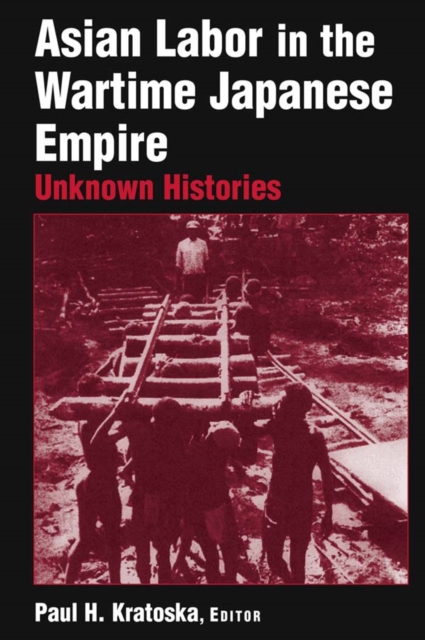
Asian Labor in the Wartime Japanese Empire: Unknown Histories
During the Pacific War the Japanese government used a wide range of methods to recruit workers for construction projects throughout the occupied territories. Mistreatment of workers was a major grievance, both in widely publicized cases such as the use of prisoners of war and forced Asian labor to construct the Thailand-Burma \"Death\" Railway, and in a very large number of smaller projects. In this book an international group of specialists on the Occupation period examine the labor needs and the recruitment and use of workers (whether forced, military, or otherwise) throughout the Japanese empire. This is the first study to look at Japanese labor policies comparatively across all the occupied territories of Asia during the war years. It also provides a graphic context for examining Japanese colonialism and relations between the Japanese and the people living in the various occupied territories.
List of Maps, Photographs, Tables, and Figures; Preface, Paul H. Kratoska; Maps; Introduction, Paul H. Kratoska; List of Abbreviations; 1. Labor Mobilization in Japan and the Japanese Empire, Paul H. Kratoska; 2. Labor Policy and the Construction Industry in Manchukuo: Systems of Recruitment, Management, and Control, David Tucker; 3. Northern Chinese Laborers and Manchukuo, Ju Zhifen; 4. Japan's Korean Soldiers in the Pacific War, Utsumi Aiko; 5. Korean Forced Labor in Japan's Wartime Empire, Naitou Hisako; 6. Total War, Labor Drafts, and Colonial Administration: Wartime Mobilization in Taiwan, 1936-1945, Caroline Ts'ai Hui-yu; 7. \"Economic Soldiers\" in Java: Indonesian Laborers Mobilized for Agricultural Projects, Shigeru Sato; 8. The Construction of a Railway Line in West Java during the Japanese Occupation: The Road to Hell, Harry A. Poeze; 9. The Heiho during the Japanese Occupation of Indonesia, Kaori Maekawa; 10. Indonesian Romusha and Coolies under Naval Administration: The Eastern Archipelago, 1942-1945, Remco Raben; 11. End of a Forgotten Drama: The Reception and Repatriation of Romusha after the Japanese Capitulation, Henk Hovinga; 12. Labor in the Malay Peninsula and Singapore under Japanese Occupation, Paul H. Kratoska; 13. Malayan Labor on the Thailand-Burma Railway, Nakahara Michiko; 14. Labor Usage and Mobilization during the Japanese Occupation of the Philippines, 1942-1945, Ricardo T. Jose; 15. Working for the Japanese: Working for Vietnamese Independence, 1941-1945, Tran My-Van; 16. The Origin and Development of Military Sexual Slavery in Imperial Japan, Chin-Sung Chung; 17. History, Memory, Compensation, and Reconciliation: The Abuse of Labor along the Thailand-Burma Railway, E. Bruce Reynolds; About the Editor and Contributors; Index
eBook

The nursing shortage
This book presents an overview of innovative initiatives to combat the nursing shortage that are being pioneered in a number of states, schools of nursing, and health care institutions. Among the strategies described are preceptor and mentoring arrangements, scholarship/work payback agreements, private and public funding initiatives to support the education of future nurses, and service/education partnership models. An international perspective is added by a chapter on initiatives in a hospital in Iceland.
eBook

Gender inequality in nonmetropolitan and metropolitan areas
Nonmetropolitan-metropolitan differences in the United States are large and growing, but we know relatively little about how they interact with gender differences. Using data from the CPS, the Census PUMS, and the GSS, we find nonmetropolitan and metropolitan areas are quite similar in the gender gap in earnings and in rates of married women's labor force participation. Occupational sex segregation is higher and some gender attitudes are a few percentage points less egalitarian in nonmetropolitan areas. Each of these dimensions of gender stratification has been declining over the last two decades and the declines are roughly similar in nonmetropolitan and metropolitan areas. Variations in gender stratification have been greater over time than across place. Thus, while both place and gender are important dimensions of stratification, there appears to have been little interaction between the two.
Journal Article