
Catalogue Search | MBRL


Are you sure you want to remove the book from the shelf?

{{itemTitle}}
1,181
result(s) for
"Makeup"
Sort by:

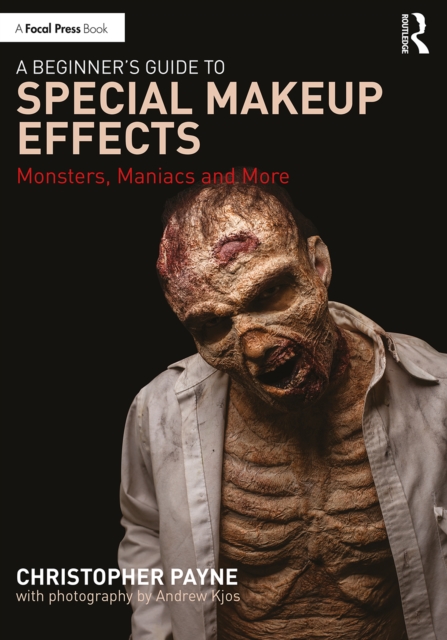
A Beginner's Guide to Special Makeup Effects
A Beginner's Guide to Special Makeup Effects: Monsters, Maniacs and More is an introduction to special effects makeup using cost-effective tools and materials that can be found in local stores.
The book is divided into three sections - Simple Makeup, Advanced Materials and Techniques and Advanced Makeup - and features tutorials to create characters such as a pirate, vampire, ghost, robot, burn victim, witch, zombie and goblin. Each character is introduced with a full-page photograph of the finished makeup and illustrated with full-color, step-by-step photographs. The book also includes instructions on how to make fake teeth, apply bald caps, create gory wounds and injuries and make simple prosthetics. Each makeup tutorial is designed to progressively build on the techniques outlined in the preceding tutorial, guiding readers from the basics of foundation, highlight and shadow to creating advanced creature makeups.
This is a beginner makeup book suited for students of Stage Makeup courses, as well as for the theatre technician working and training on their own.
eBook

Makeup artist
Makeup can transform an ordinary person into a hideous beast or a glamorous star. A makeup artist is indeed an artist, an artist who uses an actual person as a canvas. Makeup enthusiasts will find this book a wealth of information about the many paths available for makeup artists, including the beauty and movie industries.
Book

Why Permanent Makeup (PMU) Is Not a Lifetime Application
Permanent makeup (PMU) is a popular form of tattooing applied to the eyebrows, eyelids, and lips for corrective and aesthetic purposes. It also has medical applications, such as reconstructing the breast areola, mimicking hair follicles on the head, and covering scars and vitiligo. Unlike body tattoos, PMU often requires reapplication to maintain color density and shape, as the pigments fade over time. This fading is likely due to the characteristics of PMU colorants rather than the application methods or apparatuses. The aim of our study was to assess the application depth of PMU colorants and tattoo ink after procedures. PMU colorants typically contain larger pigment particles in their composition compared to the nanoparticles found in traditional tattoo inks. We applied both tattoo ink and PMU colorants on SKH-1 mice using a PMU apparatus and a tattoo apparatus. To clarify the semi-permanent nature of PMU compared to the more permanent body tattoos, skin biopsies were performed at various intervals throughout this study. The results showed that PMU and tattoo ink were placed at approximately the same depth but exhibited key differences in behavior. PMU with larger inorganic pigments fades over time, while tattoos with smaller, stable organic pigments ensure permanence.
Journal Article


Potential Carcinogens in Makeup Cosmetics
Facial makeup cosmetics are commonly used products that are applied to the skin, and their ingredients come into contact with it for many years. Consequently, they should only contain substances that are considered safe or used within an allowable range of established concentrations. According to current European laws, all cosmetics approved for use should be entirely safe for their users, and the responsibility for this lies with manufacturers, distributors, and importers. However, the use of cosmetics can be associated with undesirable effects due to the presence of certain chemical substances. An analysis of 50 random facial makeup cosmetics commercially available on the European Union market and manufactured in six European countries was carried out, concerning the presence of substances with potential carcinogenic properties, as described in recent years in the literature. Nine types of facial makeup cosmetics were selected, and their compositions, as declared on the labels, were analyzed. The carcinogens were identified with information present in the European CosIng database and according to the Insecticide Resistance Action Committee’s (IRAC) classification. As a result, the following potential carcinogens were identified: parabens (methylparaben, propylparaben, butylparaben, and ethylparaben), ethoxylated compounds (laureth-4, lautreth-7, or ethylene glycol polymers known as PEG), formaldehyde donors (imidazolidinyl urea, quaternium 15, and DMDM hydantoin), and ethanolamine and their derivatives (triethanolamine and diazolidinyl urea), as well as carbon and silica. In conclusion, all of the analyzed face makeup cosmetics contain potential carcinogenic substances. The literature review confirmed the suppositions regarding the potential carcinogenic effects of selected cosmetic ingredients. Therefore, it seems necessary to carry out studies on the long-term exposure of compounds present in cosmetics and perhaps introduce stricter standards and laws regulating the potential presence of carcinogens and their activity in cosmetics.
Journal Article

Special makeup effects for stage and screen : making and applying prosthetics
\"Presents the latest techniques and special effects ... [and] covers the latest gear you will need and details how to maintain your kit, how to take care of the actor's skin, how to airbrush for HD, and much more. With in-depth, step-by-step tutorials, learn how to sculpt and mold your own makeup prosthetics, focusing on human anatomy to create the most realistic effects. This new and expanded edition features updated information on lifecasting, prosthetics made using 3D printing, advanced airbrushing techniques, new artist profiles, and includes updated images and illustrations throughout\"-- Provided by publisher.
Book

SRPSGAN: Super-resolution with pose and expression robust spatial-aware generative adversarial network for makeup transfer
In this paper, we address special scenario makeup-transfer tasks designed to transfer makeup features from a low-resolution (LR) reference image to a LR source image and generate high-resolution (HR) results. Existing methods are not suitable when limited by storage space, especially when HR images are unavailable. To overcome this problem, we propose the super-resolution (SR) pose-and-expression robust spatial-aware (PS) generative adversarial network (GAN), which makes full use of the prior information while preserving the original network properties (i.e., robustness of pose and expression during makeup transfer). Specifically, it feeds the results of the PSGAN (Jiang et al.
20
) into the prior estimation network (PEnet) to estimate facial landmarks and parsing maps. Then, a feature map containing makeup information extracted from the PSGAN is used as additional prior information. Both the feature map and the PEnet results are sent to the SR network to generate HR makeup-transfer images. Moreover, we propose a novel makeup recommender that integrates three evaluation metrics to provide superior decision support. Our extensive experiments show that the SRPSGAN achieves excellent results in SR makeup-transfer tasks.
Journal Article

Makeup
\"Engaging images accompany information about makeup. The combination of high-interest subject matter and narrative text is intended for students in grades 3 through 8\"-- Provided by publisher.
Book

Early-Onset Colorectal Cancer: Current Insights
Over the past decade, the incidence of colorectal cancer has increased in individuals under the age of 50 years. Meanwhile, the incidence has gradually decreased in the older population. As described herein, we reviewed the available literature to summarize the current landscape of early-onset colorectal cancer, including risk factors, clinicopathological presentation, genetic makeup of patients, and management. Currently, early-onset colorectal cancer is treated similarly as late-onset colorectal cancer, yet the available literature shows that early-onset colorectal cancer is more aggressive and different, and this remains a significant unmet need. A detailed understanding of early-onset colorectal cancer is needed to identify risk factors for the increased incidence and tailor treatments accordingly.
Journal Article