
Catalogue Search | MBRL


Are you sure you want to remove the book from the shelf?

{{itemTitle}}
1,524
result(s) for
"Malay language"
Sort by:

Language Maintenance and Identity: A Case of Bangka Malay
This article describes the factors causing shifts in the usage, maintenance efforts, and maintenance strategies for the Bangka Malay language. The method used in this research is descriptive qualitative. The data were the results of interviews and library sources. Data was collected through direct observation of objects and the use of language in the life of the people of the Bangka Belitung Islands. The theory used is language maintenance and language shift. The findings show that many factors cause a shift in the use of Bangka Malay. However, efforts to maintain the use of language have been carried out by the government and the people who use it. These efforts have shown results, but optimization must be done. Language preservation can be done through a process of language education from an early age so that pride in using Bangka Malay appears earlier before being affected by foreign languages.
Journal Article
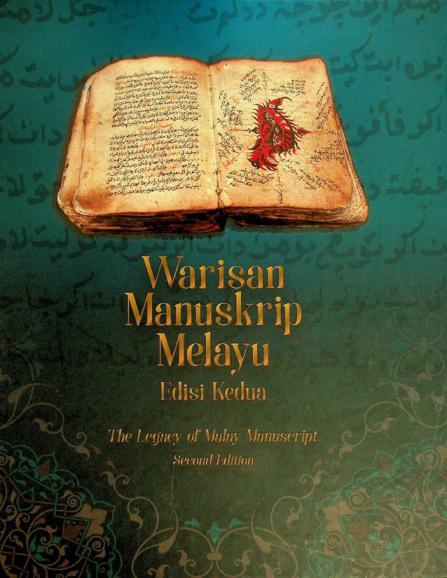

Explaining the Diversity in Malay-English Code-Switching Patterns: The Contribution of Typological Similarity and Bilingual Optimization Strategies
Bilingual speakers often engage in code-switching, that is the use of lexical items and grammatical features from two languages in one sentence. Malaysia is a particularly interesting context for the study of code-switching because Malay-English code-switching is widely practiced across formal and informal situations, and the available literature reveals that there is a great diversity in switch patterns in this language pair. One of the most remarkable characteristics of Malay-English code-switching is the high frequency of switches of function words (pronouns, modal verbs, demonstratives, etc.), which is very unusual in most code-switching corpora. Here, we analyse the structural properties of Malay-English code-switching, which have received less attention than functional analyses in the academic literature on code-switching in this language pair. We first summarize the literature on the different types of code-switching that are found in a range of sources, and then analyze the code-switching patterns in the speech of two teachers of English in Malaysia. We conclude with a discussion of the variables that can explain the diversity found, in particular structural factors (similarity between the word orders of both languages, and the limited number of inflections), and bilingual optimization strategies, as well as strategies of neutrality and efficiency.
Journal Article


Sula Malay's Hate Speech in the Sanana Jurisdiction: A Pragmatic Study
Hate speech – harsh or menacing words or writing that propagate bigotry based on sexual orientation, religion, ethnicity, or other comparable categories – is prevalent in nearly every language, including Indonesian. In fact, hate speech in Indonesian society is also spoken in its regional languages such as Sula Malay in North Maluku Province. This hate speech is of interest and should be studied because literal and metaphorical meanings, along with cultural context, are important for learning and understanding the vocabulary of a language. This study uses a qualitative descriptive approach to analyze hate speech in the Malay Sula language with data taken from the webpages of the Directory of Decisions of the Supreme Court of the Republic of Indonesia. The research population consisted of ten decisions, out of which five were selected as samples. Data analysis uses lexical-grammatical semantic theory, while pragmatic theory focuses on illocutionary speech acts, which is a tool of forensic linguistic analysis. Types of illocutionary speech include commissive speech in the form of threatening and insulting using curse words; directive speech in the form of commanding, which means to insult using curse words; and expressive speech in the form of regret that intends to inform by using insulting and cursing words. Another form of hate speech was found in the form of defamation.
Journal Article

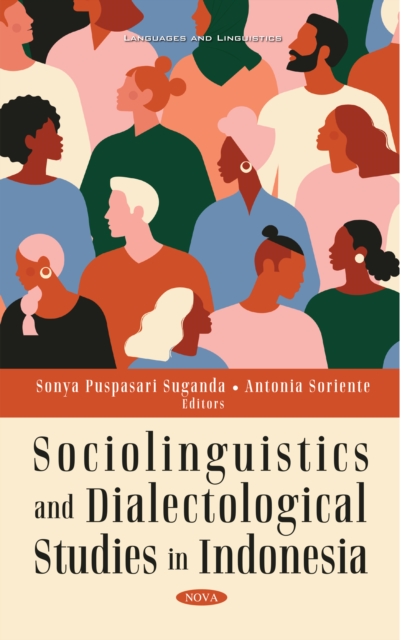
Sociolinguistics and Dialectological Studies in Indonesia
This book contains chapters which are classified into three major themes, namely Dialectology Studies in Indonesia, Sociolinguistics Issues in Java, and Meanings and Society. The first part of the edited volume discusses the close relationship between culture, traditions, and myths in the community, such as the tradition of Labuhan in East Java as a ritual offering to the Queen of the Southern Sea. There are multiple factors influencing languages in different regions in Indonesia, which include economic development from the tourism sector. The second part focuses on the concept of the relationship between language and its speakers. Family, as the smallest unit of society, is considered the most ideal place for language maintenance. Country is also assumed to play an important role in determining what language to maintain through lessons taught in school. The interesting thing, however, is that in the Indonesian context, administrative boundary is not always equivalent with the language boundary. Expansion or unification of regions, for instance, may change the language curriculum taught in schools. Meanwhile, Meanings and Society chapters show that the intention to maintain tradition and establish harmonious relations with other speakers from different backgrounds may also influence the way someone speaks. It is not surprising, therefore, that code switching in a conversation, which is done with the intention to show solidarity towards speakers from different backgrounds, has become a common phenomenon in Indonesia. The studies in this book constitute empirical studies of the Indonesian people's everyday lives particularly those concerning the abundance of languages spoken across the country.
eBook