
Catalogue Search | MBRL


Are you sure you want to remove the book from the shelf?

{{itemTitle}}
16
result(s) for
"Malick, Terrence, 1943-"
Sort by:

The magic hours : the films and hidden life of Terrence Malick
\"Terrence Malick is the most enigmatic film director currently working. Since the early seventies, his work has won top prizes at film festivals worldwide and brought him wide recognition as the cinematic equivalent of a poet. His life is shrouded in mystery, leaving audiences with rumors, few established facts, and virtual silence from the filmmaker himself following his last published interview in 1979. This has done nothing to dim the luminous quality of his films, from Badlands (1973) and Days of Heaven (1978), to later works such as The Thin Red Line (1998), The Tree of Life (2011), and A Hidden Life (2019). The Magic Hours: The Films and Hidden Life of Terrence Malick is the first true biography of this visionary filmmaker. Through interviews and in-depth research, John Bleasdale reveals the autobiographical grounding of many of Malick's greatest films as well as the development of an experimental form of filmmaking that constantly expands the language of cinema. It is the essential account for anyone wishing to understand Malick and his work\"-- Provided by publisher.
BOOK

Settler Aesthetics
In Settler Aesthetics , an analysis of renowned director
Terrence Malick's 2005 film, The New World , Mishuana
Goeman examines the continuity of imperialist exceptionalism and
settler-colonial aesthetics. The story of Pocahontas has thrived
for centuries as a cover for settler-colonial erasure, destruction,
and violence against Native peoples, and Native women in
particular. Since the romanticized story of the encounter and
relationship between Pocahontas and Captain John Smith was first
published, it has imprinted a whitewashed historical memory into
the minds of Americans. As one of the most enduring tropes of
imperialist nostalgia in world history, Renaissance European
invasions of Indigenous lands by settlers trades in a falsified
\"civilizational discourse\" that has been a focus in literature for
centuries and in films since their inception. Ironically, Malick
himself was a symbol of the New Hollywood in his early career, but
with The New World he created a film that serves as a
buttress for racial capitalism in the Americas. Focusing on settler
structures, the setup of regimes of power, sexual violence and the
gendering of colonialism, and the sustainability of colonialism and
empires, Goeman masterfully peels away the visual layers of settler
logics in The New World , creating a language in Native
American and Indigenous studies for interpreting visual media.
eBook

Terrence Malick's unseeing cinema : memory, time and audibility
This unique study opens up a new dimension of Terrence Malick?s cinema ? its expressions of unseeing and hearing. ?Unseeing? is Malick?s means of transcending the moment in order to enter the life that unfolds; to treat cinema as a real experience for those who live its reality. In this way, the book moves beyond film theory to advance a work of original philosophy, bringing together two thinkers not normally associated with one another: Gilles Deleuze and Søren Kierkegaard. It investigates how Malick?s gatherings of time allow one to explore new philosophical questions about immanence and transcendence, ethics and faith, time and infinity, and the foldings of subjectivity that are central to both philosophers. Beyond cinema, it offers a way to think about our everyday repetitions and recollections and our ephemeral points of connection with those we love.
Book

Terrence Malick
For a director who has made only four feature films over three decades, Terrence Malick has sustained an extraordinary critical reputation as one of America's most original and independent filmmakers. In this book, Lloyd Michaels analyzes each of Malick's four features in depth, emphasizing both repetitive formal techniques such as voiceover and long lens cinematography as well as recurrent themes drawn from the director's academic training in modern philosophy and American literature. Michaels explores Malick's synthesis of the romance of mythic American experience and the aesthetics of European art film. He performs close cinematic analysis of paradigmatic moments in Malick's films: the billboard sequence in Badlands, the opening credits in Days of Heaven, the philosophical colloquies between Witt and Welsh in The Thin Red Line, and the epilogue in The New World. This richly detailed study also includes the only two published interviews with Malick, both in 1975 following the release of his first feature film.
eBook
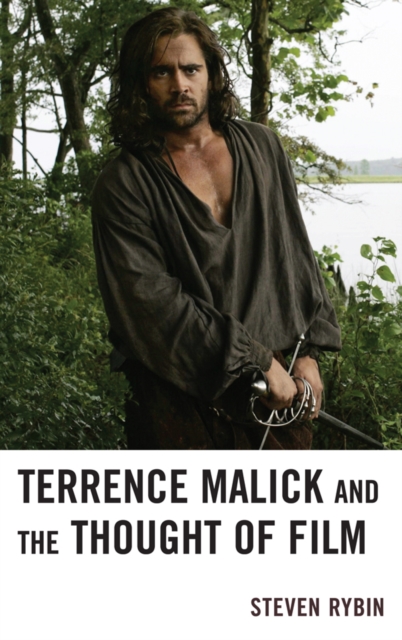
Terrence Malick and the Thought of Film
As the director of Badlands , Days of Heaven , The Thin Red Line , and The New World , Terrence Malick has created a remarkable body of work that enables imaginative acts of philosophical interpretation.
eBook


