
Catalogue Search | MBRL


Are you sure you want to remove the book from the shelf?

{{itemTitle}}
242
result(s) for
"Malta History"
Sort by:
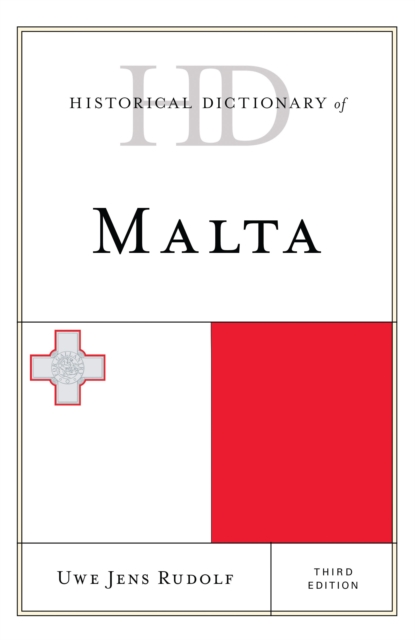
Historical Dictionary of Malta
Malta, has been visited and influenced over the centuries by many different peoples and cultures. The site of the oldest free-standing, man-made structures known to exist, Malta has been occupied by Phoenicians, Carthaginians, Arabs, Normans, the Knights of St. John, Swabians, Angevins, French, and British. Most recently, Malta has elected a new government replacing one that had been in office for many years, major improvements in infrastructure, a significant growth in population, the liberalization of laws permitting divorce and same-sex marriage.
This third edition of Historical Dictionary of Malta contains a chronology, an introduction, and an extensive bibliography. The dictionary section has over 300 cross-referenced entries on important personalities, politics, economy, foreign relations, religion, and culture. This book is an excellent resource for students, researchers, and anyone wanting to know more about Malta.
eBook

In Passage Perilous
By mid-1942 the Allies were losing the Mediterranean war: Malta was isolated and its civilian population faced starvation. In June 1942 the British Royal Navy made a stupendous effort to break the Axis stranglehold. The British dispatched armed convoys from Gibraltar and Egypt toward Malta. In a complex battle lasting more than a week, Italian and German forces defeated Operation Vigorous, the larger eastern effort, and ravaged the western convoy, Operation Harpoon, in a series of air, submarine, and surface attacks culminating in the Battle of Pantelleria. Just two of seventeen merchant ships that set out for Malta reached their destination. In Passage Perilous presents a detailed description of the operations and assesses the actual impact Malta had on the fight to deny supplies to Rommel's army in North Africa. The book's discussion of the battle's operational aspects highlights the complex relationships between air and naval power and the influence of geography on littoral operations.
eBook


Coleridge's Laws
Samuel Taylor Coleridge is best known as a great poet and literary theorist, but for one, quite short, period of his life he held real political power — acting as Public Secretary to the British Civil Commissioner in Malta in 1805. This was a formative experience for Coleridge which he later identified as being one of the most instructive in his entire life. In this book, Barry Hough and Howard Davis show how Coleridge's actions whilst in a position of power differ markedly from the idealism he had advocated before taking office — shedding new light on Coleridge's sense of political and legal morality. Meticulously researched and including newly discovered archival materials, Coleridge's Laws provides detailed analysis of the laws and public notices drafted by Coleridge, together with the first published translations of them. Drawing from a wealth of primary sources, Hough and Davis identify the political challenges facing Coleridge and reveal that, in attempting to win over the Maltese public to support Britain's strategic interests, Coleridge was complicit in acts of government which were both inconsistent with the rule of law and contrary to his professed beliefs. Coleridge's willingness to overlook accepted legal processes and personal misgivings for political expediency is disturbing and, as explained by Michael John Kooy in his extensive introduction, necessarily alters our understanding of the author and his writing. Coleridge's Laws contributes in new ways to the current debates about Coleridge's achievements, British colonialism and its engagement with the rule of law, nationhood and the effectiveness of the British administration of Malta. It provides essential reading for anybody interested in Coleridge specifically and the Romantics more generally, for political and legal historians and for students of colonial government.
eBook


The Knights Hospitaller of the English Langue 1460-1565
This book examines the English-speaking branch, or langue, of the Hospital of St John of Jerusalem, a military order devoted to the care of the sick and defence of the Latin East and based successively, in this period, in Rhodes and Malta. The order's houses in Britain and Ireland, governed from priories at Clerkenwell and Kilmainham, supported these activities with men and money, and also provided spiritual and other services to the local population. This work examines the recruitment of British and Irish members of the order and their family ties and career structure as well as their relationship with society at large, mediated through their provision of spiritual services outside the parish network as well as through their offer of vicarious participation in the defence of the faith through the offer of confraternity. The administration of the order's estates by its members and their servants and families is analysed, and its despatch of resources to the east investigated. The support of the governing authorities of Britain and Ireland was crucial to the latter, and the Hospital was a significant component of the later medieval political order, so there is extended discussion of the order's relationship with the English and Scots' crowns and the Irish nobility. Finally, the activities of the langue in the Mediterranean are examined, attention being given to the careers of its members in the east, its role in the defence of Rhodes and Malta, and the position and functions of its chief officer, the turcopolier.
eBook


Nobility, Faith and Masculinity
This is an important study of elite European noblemen who joined the Order of Malta. The Order–functioning in parallel with the convents that absorbed the surplus daughters of the nobility–provided a highly respectable outlet for sons not earmarked for marriage. The process of becoming a Hospitaller was a semi-structured one, involving clear-cut (if flexible) social and financial requirements on the part of the candidate, and a mixture of formal and informal socialization into the ways of the Order. Once enrolled, a Hospitaller became part of a very hierarchical and ethnically mixed organisation, within which he could seek offices and status. This process was delineated by a complex interaction of internal factors – hierarchy, patriarchy and age – set within external mechanisms such as papal patronage and interference. This book is innovative in its methodology, drawing on a wide range of sources and applying historiographical approaches not previously brought to bear on the Order.
eBook