
Catalogue Search | MBRL


Are you sure you want to remove the book from the shelf?

{{itemTitle}}
3,506
result(s) for
"Malta."
Sort by:
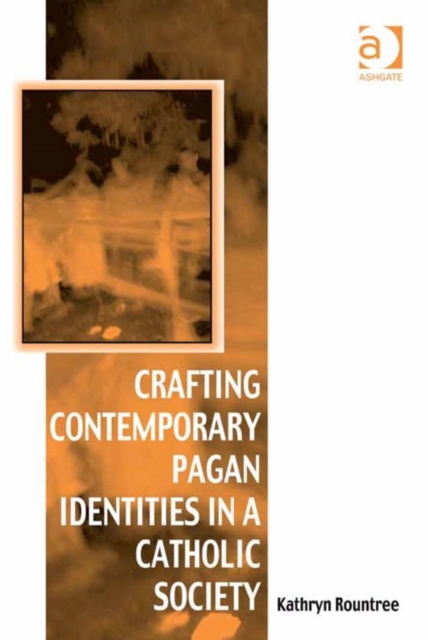
Crafting Contemporary Pagan Identities in a Catholic Society
Contemporary western Paganism is now a global religious phenomenon with Pagans in many parts of the world sharing much in common - from a nature-revering worldview and lifestyle to a host of chants, invocations, ritual tools and magical practices. But there are also locally-specific differences. Local religious contexts, landscapes, histories, traditions, politics, values and norms all impact on local Paganisms. This is nowhere more evident than in a strongly Catholic society, where religion and culture are deeply entwined. Taking the Mediterranean society of Malta as a case study, this book invites readers inside the world of a small, hidden sub-culture. Showing what it is like being Pagan in a society where the vast majority of the population is Roman Catholic, and Catholicism permeates every sphere of public and domestic, social and political life, Rountree reveals that Paganism here is a unique brew of indigenous and global influences. Pagans employ both creativity and borrowing in constructing identities within a cultural context characterized by antagonism as well as continuity. This book explores the intersections of religious and cultural identity, the global and local, Paganism and Christianity, with insights grounded in rich ethnographic detail based on long-term fieldwork. Rountree makes invaluable comparisons with other studies of modern Pagans and their various worlds.
eBook

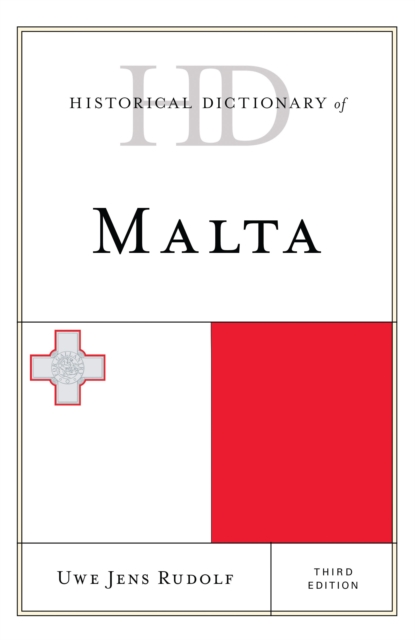
Historical Dictionary of Malta
Malta, has been visited and influenced over the centuries by many different peoples and cultures. The site of the oldest free-standing, man-made structures known to exist, Malta has been occupied by Phoenicians, Carthaginians, Arabs, Normans, the Knights of St. John, Swabians, Angevins, French, and British. Most recently, Malta has elected a new government replacing one that had been in office for many years, major improvements in infrastructure, a significant growth in population, the liberalization of laws permitting divorce and same-sex marriage. This third edition of Historical Dictionary of Malta contains a chronology, an introduction, and an extensive bibliography. The dictionary section has over 300 cross-referenced entries on important personalities, politics, economy, foreign relations, religion, and culture. This book is an excellent resource for students, researchers, and anyone wanting to know more about Malta.
eBook
Malta in the European Union
Malta has bucked the trend of its EU Mediterranean neighbours in many ways. This smallest of EU states barely dipped into recession during the global financial crisis and remains a stable member of the Eurozone whilst also having one of the lowest infringement rates and highest transposition of EU law records amongst the 28 member states. Providing the first comprehensive study of Malta's complex road to EU membership this book looks at the impact of membership on the country's political structures and processes and explains the principal factors that have conditioned the country's Europeanization experience. Reflecting Malta's unique and often contentious road to membership, the book explores the historical context and outlines how Maltese processes and policies have changed since membership and whether a causative link exists between these changes and Malta's membership of the EU. A wide range of primary and secondary sources facilitate the study complemented by a series of interviews with a broad range of Malta's political and social actors as well as individuals from EU institutions. This depth of analysis enables a holistic view of Malta's first decade of EU membership and helps establish the fundamental characteristics of Malta's unique Europeanization experience.
eBook

Les audacieux corsaires de l'île de Malte
L'Ordre de Malte a fait l'objet de multiples travaux historiques, mais l'auteur traite ici d'un aspect moins connu. C'est celui des activités maritimes corsaires, non seulement de membres de l'Ordre, mais aussi des Maltais, ou même des étrangers, les exerçant sous son autorisation.Leurs actions régulières et en course, sous le pavillon rouge à croix blanche, furent si multiples et si couronnées de succès que les musulmans surnommèrent ces marins Les Scorpions de la mer.En effet, en dehors des campagnes officielles, qu'elles soient systématiques comme lors des « caravanes », ou en expédition militaire ponctuelle comme l'attaque d'Alger, toute une flottille de bâtiments très divers, de la galère à la barcasse, se livrait, sous armement privé, à la course. Ces expéditions, connues sous le nom de « corsaires », étaient destinées à engranger des profits, officiellement destinés à soutenir le premier type d'opération.Mais ces chasses relevaient de processus plus compliqués qu'à première vue, et leurs buts étaient-ils si clairs ?
eBook

Coleridge's Laws
Samuel Taylor Coleridge is best known as a great poet and literary theorist, but for one, quite short, period of his life he held real political power — acting as Public Secretary to the British Civil Commissioner in Malta in 1805. This was a formative experience for Coleridge which he later identified as being one of the most instructive in his entire life. In this book, Barry Hough and Howard Davis show how Coleridge's actions whilst in a position of power differ markedly from the idealism he had advocated before taking office — shedding new light on Coleridge's sense of political and legal morality. Meticulously researched and including newly discovered archival materials, Coleridge's Laws provides detailed analysis of the laws and public notices drafted by Coleridge, together with the first published translations of them. Drawing from a wealth of primary sources, Hough and Davis identify the political challenges facing Coleridge and reveal that, in attempting to win over the Maltese public to support Britain's strategic interests, Coleridge was complicit in acts of government which were both inconsistent with the rule of law and contrary to his professed beliefs. Coleridge's willingness to overlook accepted legal processes and personal misgivings for political expediency is disturbing and, as explained by Michael John Kooy in his extensive introduction, necessarily alters our understanding of the author and his writing. Coleridge's Laws contributes in new ways to the current debates about Coleridge's achievements, British colonialism and its engagement with the rule of law, nationhood and the effectiveness of the British administration of Malta. It provides essential reading for anybody interested in Coleridge specifically and the Romantics more generally, for political and legal historians and for students of colonial government.
eBook