
Catalogue Search | MBRL


Are you sure you want to remove the book from the shelf?

{{itemTitle}}
5
result(s) for
"Mamelucken"
Sort by:
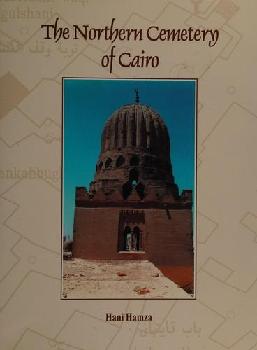
The Northern Cemetery of Cairo
\"The Northern Cemetery of Cairo deals with the beginnings, growth and decline of one of the most important cemeteries of Cairo, which is quintessentially a product of Mamluk patronage. The Northern Cemetery was a separate entity isolated on all sides; to the south the steep descent of Bab al-Wazir and the Citadel complex separated it from the Qarafa; to the west the Barqiyya mounds and the Cairo wall separated it from the city proper; to the east al-Gabal al-Ahmar fixed its physical limit; its northern boundaries, however, are not clearly defined.\"
BOOK

The Chronicles and Annalistic Sources of the Early Mamluk Circassian Period
This book examines in a detailed and comprehensive manner, the genealogy of the historiography of the Early Mamluk Circassian period and provides a source-critical assesment of the sources for the reign of al-Zāhir Barqūq (784-91, 792-801/1382-9, 1390-9).
eBook
Cairo of the Mamluks : a history of the architecture and its culture
The Arab philosopher Ibn Khaldun described Cairo under the Mamluks as \"\"a city beyond imagination\"\". The Mamluk sultans originated as a slave-based caste rose to rule in the mid-13th century. Accordingly, they designed their capital to be the heart of the Muslim world. It became the focus of their enormous patronage of art and architecture, the stage for their ceremonial rituals, and a memorial to their achievements. This history of Mamluk architecture spans three centuries and examines the monuments of the Mamluks in their social, political and urban context, during the period of their rule (1250-1517). The book displays the multiple facets of Mamluk patronage, and also provides a succinct discussion of the sixty key monuments built in Cairo by the Mamluk sultans. The unique strength of Doris Abouseif s work lies in its scholarly yet engaging presentation of original material, diligently researched in the waqf (Islamic endowments) archives including architectural plans and personal records. A richly illustrated volume with colour photographs, plans and isometric drawings, it will be an essential reference work for scholars and students of the art and architecture of the Islamic world as well as art historians and historians of late medieval Islamic history. -- Amazon.com.
BOOK

The Ottomans and the Mamluks
Beginning on the eve of oceanic exploration, and the first European forays into the Indian Ocean and the Middle East, The Ottomans and the Mamluks traces the growth of the Ottoman Empire from a tiny Anatolian principality to a world power, and the relative decline of the Mamluks-historic defenders of Mecca and Medina and the rulers of Egypt and Syria. Cihan Yuksel Muslu traces the intertwined stories of these two dominant Sunni Muslim empires of the early modern world, setting out to question the view that Muslim rulers were historically concerned above all with the idea of Jihad against non-Muslim entities. Through analysis of the diplomatic anad military engagements around the Mediterranean and Indian Ocean, Muslu traces the interactions of these Islamic super-powers and their attitudes towards the wider world. This is the first detailed study of one of the most important political and cultural relationships in early-modern Islamic history.
eBook

The Mamluks in Egyptian and Syrian politics and society
This volume is a collection of studies by leading historians on central aspects of the Mamluk Empire of Egypt and Syria (1250-1517), and of Ottoman Egypt (16th-18th century) where the Mamluks survived under the Ottoman suzerainty.
eBook