
Catalogue Search | MBRL


Are you sure you want to remove the book from the shelf?

{{itemTitle}}
40
result(s) for
"Mamelukes History."
Sort by:


The Chronicles and Annalistic Sources of the Early Mamluk Circassian Period
This book examines in a detailed and comprehensive manner, the genealogy of the historiography of the Early Mamluk Circassian period and provides a source-critical assesment of the sources for the reign of al-Zāhir Barqūq (784-91, 792-801/1382-9, 1390-9).
eBook


The Ottomans and the Mamluks
Beginning on the eve of oceanic exploration, and the first European forays into the Indian Ocean and the Middle East, The Ottomans and the Mamluks traces the growth of the Ottoman Empire from a tiny Anatolian principality to a world power, and the relative decline of the Mamluks-historic defenders of Mecca and Medina and the rulers of Egypt and Syria. Cihan Yuksel Muslu traces the intertwined stories of these two dominant Sunni Muslim empires of the early modern world, setting out to question the view that Muslim rulers were historically concerned above all with the idea of Jihad against non-Muslim entities. Through analysis of the diplomatic anad military engagements around the Mediterranean and Indian Ocean, Muslu traces the interactions of these Islamic super-powers and their attitudes towards the wider world. This is the first detailed study of one of the most important political and cultural relationships in early-modern Islamic history.
eBook

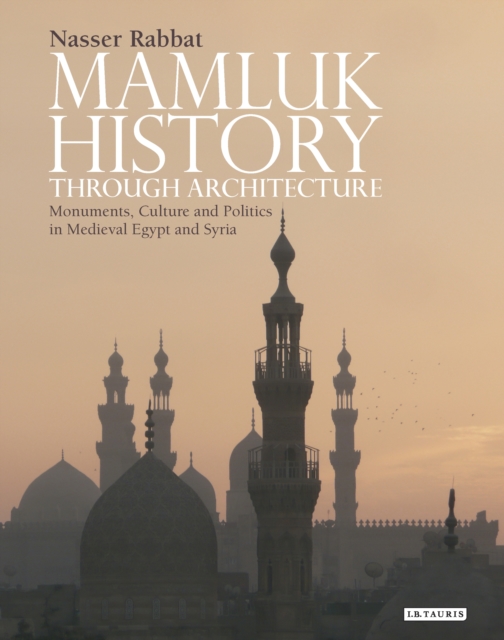
Mamluk History Through Architecture
The most enduring testament to the Mamluk Sultanate is its architecture. Not only do Mamluk buildings embody one of the most outstanding medieval architectural traditions, Mamluk architecture is actually a key to the social history of the period. Analysing Mamluk constructions as a form of communication and documentation as well as a cultural index, “Mamluk History Through Architecture” shows how the buildings mirror the complex - and historically unique - military, political, social and financial structures of Mamluk society. With this original and authoritative study, Nasser Rabbat offers an innovative approach to the history of the Mamluks - through readings of the spectacular architecture of the period. Drawing on examples from throughout both Egypt and Syria, from the Citadel and Al-Azhar Mosque of Cairo to the Mausoleum of al-Zahir Baybars in Damascus, Rabbat demonstrates how Mamluk architecture served to reinforce visually the spirit of the counter-Crusade, when the Muslim world rebounded from the setbacks of the First Crusade. Both holistically and in case studies, Rabbat demonstrates how history is inscribed into and reflected by a culture’s artefacts.
This is a groundbreaking work in the study of architecture and social history in the Middle East and beyond.
eBook

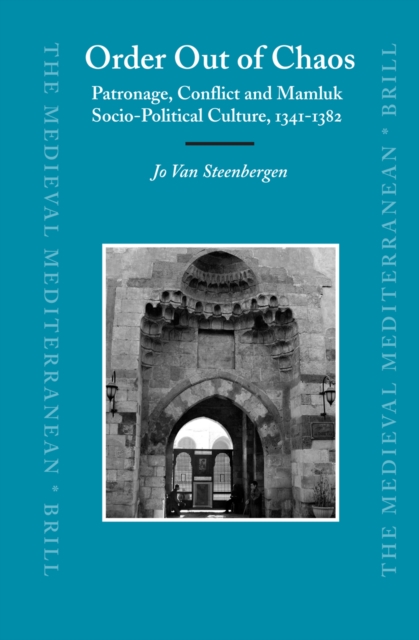
Order out of chaos : patronage, conflict and Mamluk socio-political culture, 1341-1382
This book deals with the socio-political history of the Syro-Egyptian Mamluk Sultanate between 1341 and 1382 CE, providing an unprecedented and intriguing analysis of this period's political culture from three interrelated perspectives: political institutions, individual relationships, and conflicts.
eBook


The Fortress of the Raven
Textual and archaeological sources are employed to reconstruct the history of Karak in Jordan, 1100-1650 CE. The book establishes the ways in which the construction of a major castle at Karak affected the town and the surrounding rural hinterland.
eBook