
Catalogue Search | MBRL


Are you sure you want to remove the book from the shelf?

{{itemTitle}}
57
result(s) for
"Mamelukes."
Sort by:


The Chronicles and Annalistic Sources of the Early Mamluk Circassian Period
This book examines in a detailed and comprehensive manner, the genealogy of the historiography of the Early Mamluk Circassian period and provides a source-critical assesment of the sources for the reign of al-Zāhir Barqūq (784-91, 792-801/1382-9, 1390-9).
eBook

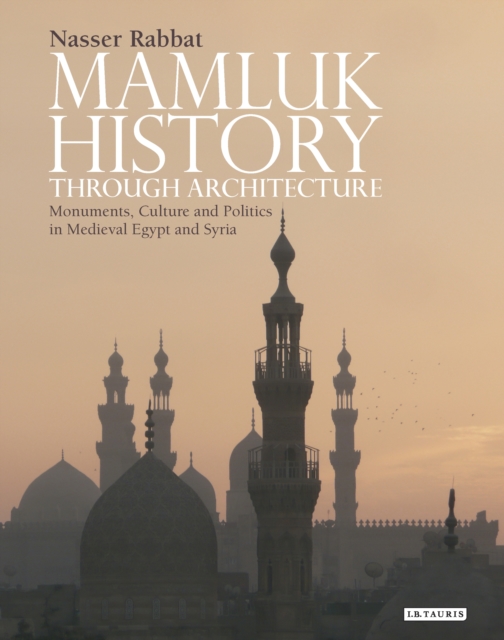
Mamluk History Through Architecture
The most enduring testament to the Mamluk Sultanate is its architecture. Not only do Mamluk buildings embody one of the most outstanding medieval architectural traditions, Mamluk architecture is actually a key to the social history of the period. Analysing Mamluk constructions as a form of communication and documentation as well as a cultural index, “Mamluk History Through Architecture” shows how the buildings mirror the complex - and historically unique - military, political, social and financial structures of Mamluk society. With this original and authoritative study, Nasser Rabbat offers an innovative approach to the history of the Mamluks - through readings of the spectacular architecture of the period. Drawing on examples from throughout both Egypt and Syria, from the Citadel and Al-Azhar Mosque of Cairo to the Mausoleum of al-Zahir Baybars in Damascus, Rabbat demonstrates how Mamluk architecture served to reinforce visually the spirit of the counter-Crusade, when the Muslim world rebounded from the setbacks of the First Crusade. Both holistically and in case studies, Rabbat demonstrates how history is inscribed into and reflected by a culture’s artefacts.
This is a groundbreaking work in the study of architecture and social history in the Middle East and beyond.
eBook


The Ottomans and the Mamluks
Beginning on the eve of oceanic exploration, and the first European forays into the Indian Ocean and the Middle East, The Ottomans and the Mamluks traces the growth of the Ottoman Empire from a tiny Anatolian principality to a world power, and the relative decline of the Mamluks-historic defenders of Mecca and Medina and the rulers of Egypt and Syria. Cihan Yuksel Muslu traces the intertwined stories of these two dominant Sunni Muslim empires of the early modern world, setting out to question the view that Muslim rulers were historically concerned above all with the idea of Jihad against non-Muslim entities. Through analysis of the diplomatic anad military engagements around the Mediterranean and Indian Ocean, Muslu traces the interactions of these Islamic super-powers and their attitudes towards the wider world. This is the first detailed study of one of the most important political and cultural relationships in early-modern Islamic history.
eBook


Unveiling the Harem
There is a long history in the West of representing Middle Eastern women as uniformly oppressed by Islam, by Islamic law, and by men. Stereotypical views of Middle Eastern women today maintain that they are without legal rights, do not attend universities or have jobs outside their homes, and are not full citizens of their countries because they cannot vote or hold public office. Similar misinformation circulated in the eighteenth century when European male travellers to Egypt, documenting their observations, depicted harem women as sexual objects, deprived of autonomy, and held captive by their husbands. Fay's Unveiling the Harem offers a persuasive corrective to this distorted view of Middle Eastern women. Instead of the odalisque of nineteenth-century painting and the fevered imaginings of European travellers, historical research reveals that elite women in powerful, wealthy households exercised their rights under Islamic law, property rights in particular, to become owners of lucrative real estate in Cairo as well as influential members of their families and the wider society. One such woman, Sitt Nafisa, who was literate in several languages, commissioned a public water fountain and a Qur'anic school that still stands today. She played a pivotal role as the intermediary between French officials and her husband, who was leading the revolt against the French from Upper Egypt. Based on documents from various archives in Cairo, including records of women's property ownership, repeated visits to eighteenth-century palaces and their family quarters, and textual reconstruction's of the elite residential neighbourhoods of the city, Unveiling the Harem presents a lucid and historically grounded portrait of Egyptian women, stripped of the powerless victim narrative that is still with us today.
eBook

