
Catalogue Search | MBRL


Are you sure you want to remove the book from the shelf?

{{itemTitle}}
18,458
result(s) for
"Mammal populations"
Sort by:

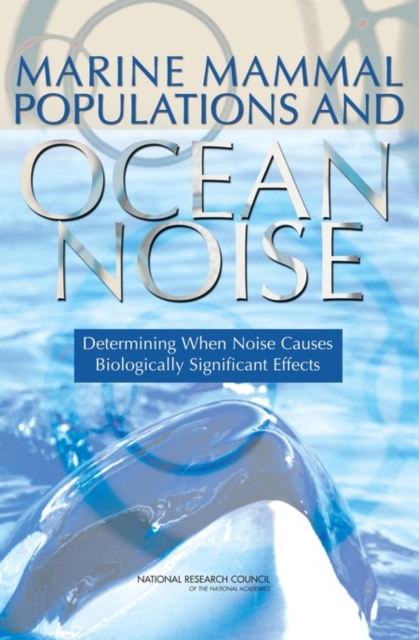
Marine mammal populations and ocean noise
Attention has been drawn to the subject of how ocean noise affects marine mammals by a series of marine mammal strandings, lawsuits, and legislative hearings, and most recently, the report from the U.S. Commission on Ocean Policy. One way to assess the impact of ocean noise is to consider whether it causes changes in animal behavior that are \"biologically significant,\" that is, those that affect an animal's ability to grow, survive, and reproduce. This report offers a conceptual model designed to clarify which marine mammal behaviors are biologically significant for conservation purposes. The report is intended to help scientists and policymakers interpret provisions of the federal Marine Mammal Protection Act.
eBook

American wolf : a true story of survival and obsession in the West
The story of the rise of a Yellowstone wolf, and what her life and death tell us about the struggle for the American West. -- Provided by publisher.
Book

Large mammal population trends in Comoé National Park
Africa's wildlife decline has received increasing attention, yet underlying reasons have remained opaque. Using generalized additive models of 25 terrestrial and aerial counts, we present West Africa's first large herbivore population trend series alongside potential drivers. Following Comoé national park's creation in 1968, large herbivore populations increased till the mid-1980s, but subsequently declined, amplified during Côte d'Ivoire's political crisis (2002-2011) when active management ceased. Between 2010-2022, populations of roan, hartebeest and waterbuck have quasi-recovered to pre-crisis numbers. The previously dominant kob, common hippopotamus and savanna elephant have remained at c. 10% of their 1970-80s numbers, however. Grasslands declined from 15 to 2% between 1979-2020, negatively impacting kob and common hippopotamus. Since 1962, surrounding human populations and cattle inside the park increased over six-fold, yet the number of rangers only doubled. These developments have resulted in a different wildlife assemblage. Species typical of long-coarse shrub savanna - hartebeest and roan - have reached pre-crisis levels, contrary to kob and common hippopotamus likely because of the reduction of floodplain grasslands and their gregarious distribution rendering them vulnerable to poaching. We recommend increased efforts to understand habitat changes and poaching pressures, prior to re-introducing extinct species. This study highlights the importance but also the challenges of studying large herbivore populations trends alongside drivers of change.
Journal Article
Random versus Game Trail-Based Camera Trap Placement Strategy for Monitoring Terrestrial Mammal Communities
Camera trap surveys exclusively targeting features of the landscape that increase the probability of photographing one or several focal species are commonly used to draw inferences on the richness, composition and structure of entire mammal communities. However, these studies ignore expected biases in species detection arising from sampling only a limited set of potential habitat features. In this study, we test the influence of camera trap placement strategy on community-level inferences by carrying out two spatially and temporally concurrent surveys of medium to large terrestrial mammal species within Tanzania's Ruaha National Park, employing either strictly game trail-based or strictly random camera placements. We compared the richness, composition and structure of the two observed communities, and evaluated what makes a species significantly more likely to be caught at trail placements. Observed communities differed marginally in their richness and composition, although differences were more noticeable during the wet season and for low levels of sampling effort. Lognormal models provided the best fit to rank abundance distributions describing the structure of all observed communities, regardless of survey type or season. Despite this, carnivore species were more likely to be detected at trail placements relative to random ones during the dry season, as were larger bodied species during the wet season. Our findings suggest that, given adequate sampling effort (> 1400 camera trap nights), placement strategy is unlikely to affect inferences made at the community level. However, surveys should consider more carefully their choice of placement strategy when targeting specific taxonomic or trophic groups.
Journal Article
Global donkey and mule populations: Figures and trends
Knowing how many donkeys there are in specific countries where welfare is compromised is a key concern for targeting efforts to improve donkey welfare. Additionally, accurate population estimates are vital for providing evidence and addressing the impact of population threats. The FAO annually report the number of donkeys and mules in each country. The last paper to investigate global and region trends dates back to 2000 and used FAO data from 1961 to 1997. This paper is an update focusing on global, regional and country level donkey and mule populations to understand if there have been any changes in the trends reported by the previous study between 1997 and 2018. Results show that the general trend identified between 1961 and 1997 is continuing with the number of donkeys globally increasing at a rate of ~1% per annum whilst mule populations are in decline at a rate of ~2% per annum. Results also suggest that the trend identified in the original paper are still evident today with the largest increases in donkey population seen in the sub-Saharan African region and greatest reduction noted in Eastern Europe with these two regions having different socio-economic drivers influencing these changes. These results highlight the multifaceted socio-economic drivers influence changes in donkey and mule populations demonstrating the complexity of designing targeted one-welfare approaches. Whilst the FAO donkey and mule datasets are the best available for understanding spatial-temporal distributions in populations there needs to be greater effort to promote the communication of information from the country level to the FAO. This can be directly supported by NGO’s by promoting the robustness of the FAO process for collating and disseminating this information. NGO’s should also seek to highlight the importance of this information for understanding global regional and country level drivers for equid population changes and potential threats to welfare as well as using this information to facilitate projects that support one-welfare approaches.
Journal Article
Large mammal population trends in Comoé National Park (1958–2022): Towards understanding their asymmetric decline and recovery in West Africa’s largest savanna park
Africa’s wildlife decline has received increasing attention, yet underlying reasons have remained opaque. Using generalized additive models of 25 terrestrial and aerial counts, we present West Africa’s first large herbivore population trend series alongside potential drivers. Following Comoé national park’s creation in 1968, large herbivore populations increased till the mid-1980s, but subsequently declined, amplified during Côte d’Ivoire’s political crisis (2002–2011) when active management ceased. Between 2010–2022, populations of roan, hartebeest and waterbuck have quasi-recovered to pre-crisis numbers. The previously dominant kob, common hippopotamus and savanna elephant have remained at c. 10% of their 1970-80s numbers, however. Grasslands declined from 15 to 2% between 1979–2020, negatively impacting kob and common hippopotamus. Since 1962, surrounding human populations and cattle inside the park increased over six-fold, yet the number of rangers only doubled. These developments have resulted in a different wildlife assemblage. Species typical of long-coarse shrub savanna - hartebeest and roan – have reached pre-crisis levels, contrary to kob and common hippopotamus likely because of the reduction of floodplain grasslands and their gregarious distribution rendering them vulnerable to poaching. We recommend increased efforts to understand habitat changes and poaching pressures, prior to re-introducing extinct species. This study highlights the importance but also the challenges of studying large herbivore populations trends alongside drivers of change.
Journal Article

Occupancy and relative abundances of introduced ungulates on New Zealand’s public conservation land 2012–2018
Describes the design and implementation of a monitoring programme enabling ungulate occupancy and relative abundances to be estimated on New Zealand’s public conservation land (PCL). Reports key results from the first measurement cycle, including spatial and temporal trends in ungulate occupancy-abundance on PCL and the effects of government-funded management actions and commercial harvesting on ungulate occupancy abundance. Discusses the opportunities provided by this monitoring programme, and its limitations. Source: National Library of New Zealand Te Puna Matauranga o Aotearoa, licensed by the Department of Internal Affairs for re-use under the Creative Commons Attribution 3.0 New Zealand Licence.
Journal Article

Mammal recovery inside and outside terrestrial protected areas
Protected areas are a key component of global conservation, and the world is aiming to increase protected areas to cover 30% of land and water through the 30 × 30 Initiative under the Post-2020 Global Biodiversity Framework. However, factors affecting their success or failure in regard to promoting mammal population recovery are not well studied, particularly using quantitative approaches comparing across diverse taxa, biomes, and countries. To better understand how protected areas contribute to mammalian recovery, we conducted an analysis of 2706 mammal populations both inside and outside of protected areas worldwide. We calculated the annual percent change of mammal populations within and outside of terrestrial protected areas and examined the relationship between the percent change and a suite of human and natural characteristics including biome, region, International Union for Conservation of Nature (IUCN) protected area category, IUCN Red List classification, and taxonomic order. Our results show that overall mammal populations inside and outside of protected areas are relatively stable. It appears that Threatened mammals are doing better inside of protected areas than outside, whereas the opposite is true for species of least concern and Near Threatened species. We also found significant population increases in protected areas classified as category III and significant population decreases in protected and unprotected areas throughout Oceania. Our results demonstrate that terrestrial protected areas can be an important approach for mammalian recovery and conservation.
Journal Article
Exodus! Large-scale displacement and social adjustments of resident Atlantic spotted dolphins
Over the last 20 years, significant habitat shifts have been documented in some populations of cetaceans. On Little Bahama Bank (LBB) there are sympatric communities of resident Atlantic spotted dolphins (Stenella frontalis) and bottlenose dolphins (Tursiops truncatus), monitored since 1985. The size and social structure (three clusters: Northern, Central, Southern) have been stable among the spotted dolphin community with little immigration/emigration, even after large demographic losses (36%) following two major hurricanes in 2004. In 2013 an unprecedented exodus of over 50% (52 individuals) of the spotted dolphin community was documented. The entire Central cluster and a few Northern and Southern individuals relocated 161 km south to Great Bahama Bank (GBB), also home to two sympatric resident communities of spotted dolphins and bottlenose dolphins. During the late summer of 2013 and the summers of 2014 and 2015 both sites were regularly monitored but no former LBB dolphins returned to LBB. Uncharacteristic matriline splits were observed. Social analyses revealed random associations for those spotted dolphins and very little integration between spotted dolphins that moved to GBB (MGBB) and those dolphin resident to GBB (RGBB). Male alliances among spotted dolphins were present, with some altered patterns. On LBB, the operational sex ratio (OSR) was reduced (.40 to .25). OSR for MGBB and RGBB dolphins were similar (.45 and .43). A significant steady decrease in sea surface temperature and chlorophyll a (a proxy for plankton production) occurred on LBB leading up to this exodus. Similar trends were not present over the same period on GBB. The sudden large-scale shift of spotted dolphins from LBB to GBB in association with the gradual decline in certain environmental factors suggests that a possible \"tipping point\" was reached in prey availability. This study provides a unique view into social and genetic implications of large-scale displacement of stable dolphin communities.
Journal Article