
Catalogue Search | MBRL


Are you sure you want to remove the book from the shelf?

{{itemTitle}}
11,829
result(s) for
"Mammals Evolution."
Sort by:
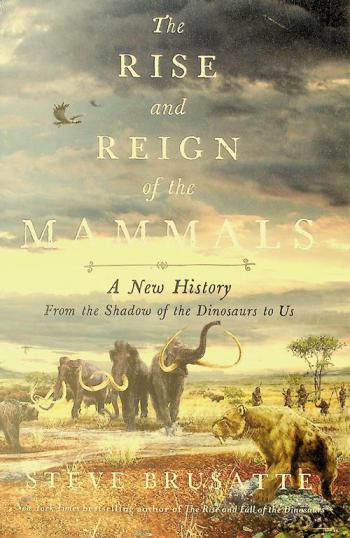
The rise and reign of the mammals : a new history, from the shadow of the dinosaurs to us
\"Beginning with the earliest days of our lineage some 325 million years ago, Brusatte charts how mammals survived the asteroid that claimed the dinosaurs and made the world their own, becoming the astonishingly diverse range of animals that dominate today's Earth. Brusatte also brings alive the lost worlds mammals inhabited through time, from ice ages to volcanic catastrophes. Entwined in this story is the detective work he and other scientists have done to piece together our understanding using fossil clues and cutting-edge technology\"--Jacket.

Return to the sea
Return to the Sea portrays the life and evolutionary times of marine mammals—from giant whales and sea cows that originated 55 million years ago to the deep diving elephant seals and clam-eating walruses of modern times. This fascinating account of the origin of various marine mammal lineages, some extinct, others extant but threatened, is for the non-specialist. Set against a backdrop of geologic time, changing climates, and changing geography, evolution is the unifying principle that helps us to understand the present day diversity of marine mammals and their responses to environmental challenges. Annalisa Berta explains current controversies and explores patterns of change taking place today, such as shifting food webs and predator-prey relationships, habitat degradation, global warming, and the effects of humans on marine mammal communities.
eBook

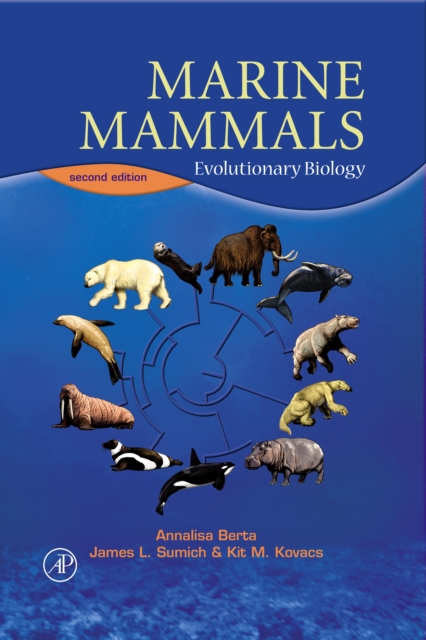
Marine Mammals
Berta and Sumich have succeeded yet again in creating superior marine reading! This book is a succinct yet comprehensive text devoted to the systematics, evolution, morphology, ecology, physiology, and behavior of marine mammals. The first edition, considered the leading text in the field, is required reading for all marine biologists concerned with marine mammals. Revisions include updates of citations, expansion of nearly every chapter and full color photographs. This title continues the tradition by fully expanding and updating nearly all chapters. * Comprehensive, up-to-date coverage of the biology of all marine mammals * Provides a phylogenetic framework that integrates phylogeny with behavior and ecology * Features chapter summaries, further readings, an appendix, glossary and an extensive bibliography* Exciting new color photographs and additional distribution maps
eBook


Evolutionary Innovations in Conserved Regulatory Elements Associate With Developmental Genes in Mammals
Abstract
Transcriptional enhancers orchestrate cell type- and time point-specific gene expression programs. Genetic variation within enhancer sequences is an important contributor to phenotypic variation including evolutionary adaptations and human disease. Certain genes and pathways may be more prone to regulatory evolution than others, with different patterns across diverse organisms, but whether such patterns exist has not been investigated at a sufficient scale. To address this question, we identified signatures of accelerated sequence evolution in conserved enhancer elements throughout the mammalian phylogeny at an unprecedented scale. While different genes and pathways were enriched for regulatory evolution in different parts of the tree, we found a striking overall pattern of pleiotropic genes involved in gene regulatory and developmental processes being enriched for accelerated enhancer evolution. These genes were connected to more enhancers than other genes, which was the basis for having an increased amount of sequence acceleration over all their enhancers combined. We provide evidence that sequence acceleration is associated with turnover of regulatory function. Detailed study of one acceleration event in an enhancer of HES1 revealed that sequence evolution led to a new activity domain in the developing limb that emerged concurrently with the evolution of digit reduction in hoofed mammals. Our results provide evidence that enhancer evolution has been a frequent contributor to regulatory innovation at conserved developmental signaling genes in mammals.
Journal Article

The real planet of the apes : a new story of human origins
Was Darwin wrong when he traced human origins to Africa? The Real Planet of the Apes makes the explosive claim that it was in Europe, not Africa, where apes evolved the most important hallmarks of our human lineage--such as bipedalism, dexterous hands, and larger brains. In this compelling and accessible book, David Begun, one of the world's leading paleoanthropologists, transports readers to an epoch in the remote past when the Earth was home to many migratory populations of ape species. Drawing on the latest astonishing discoveries in the fossil record as well as his own experiences conducting field expeditions across Europe and Asia, Begun provides a sweeping evolutionary history of great apes and humans. He tells the story of how one of the earliest members of our evolutionary group--a new kind of primate called Proconsul--evolved from lemur-like monkeys in the primeval forests of Africa. Begun vividly describes how, over the next 10 million years, these hominoids expanded into Europe and Asia and evolved climbing and hanging adaptations, longer maturation times, and larger brains, setting the stage for the emergence of humans.
Book

Major evolutionary transitions and innovations: the tympanic middle ear
One of the most amazing transitions and innovations during the evolution of mammals was the formation of a novel jaw joint and the incorporation of the original jaw joint into the middle ear to create the unique mammalian three bone/ossicle ear. In this review, we look at the key steps that led to this change and other unusual features of the middle ear and how developmental biology has been providing an understanding of the mechanisms involved. This starts with an overview of the tympanic (air-filled) middle ear, and how the ear drum (tympanic membrane) and the cavity itself form during development in amniotes. This is followed by an investigation of how the ear is connected to the pharynx and the relationship of the ear to the bony bulla in which it sits. Finally, the novel mammalian jaw joint and versatile dentary bone will be discussed with respect to evolution of the mammalian middle ear.
This article is part of the themed issue ‘Evo-devo in the genomics era, and the origins of morphological diversity’.
Journal Article

I, mammal : the story of what makes us mammals
Examines the biology, evolution, and traits of humans, exploring the anatomical and physiological attributes that makes mankind mammals and that ultimately separate people from other members of the same scientific class designation.
Book

Transposable Elements Activity is Positively Related to Rate of Speciation in Mammals
Transposable elements (TEs) play an essential role in shaping eukaryotic genomes and generating variability. Speciation and TE activity bursts could be strongly related in mammals, in which simple gradualistic models of differentiation do not account for the currently observed species variability. In order to test this hypothesis, we designed two parameters: the Density of insertion (DI) and the Relative rate of speciation (RRS). DI is the ratio between the number of TE insertions in a genome and its size, whereas the RRS is a conditional parameter designed to identify potential speciation bursts. Thus, by analyzing TE insertions in mammals, we defined the genomes as “hot” (high DI) and “cold” (low DI). Then, comparing TE activity among 29 taxonomical families of the whole Mammalia class, 16 intra-order pairs of mammalian species, and four superorders of Eutheria, we showed that taxa with high rates of speciation are associated with “hot” genomes, whereas taxa with low ones are associated with “cold” genomes. These results suggest a remarkable correlation between TE activity and speciation, also being consistent with patterns describing variable rates of differentiation and accounting for the different time frames of the speciation bursts.
Journal Article