
Catalogue Search | MBRL


Are you sure you want to remove the book from the shelf?

{{itemTitle}}
2,390
result(s) for
"Management Humor"
Sort by:

What to Say to a Porcupine
An entertaining, instructive collection of fables that will inspire the kind of customer service that keeps people coming back!.
eBook

Who moved my stilton? : a guide to getting ahead in business
An irreverent and humorous look at the world's first capitalists and their secrets of business success, written as though it was published in 1896 Victorian England.
Book


The Peter principle : why things always go wrong
In satirical fashion, Dr. Laurence J. Peter discusses the 'Peter principle' in terms of its social implications for both the individual employees and the organizations they work in.
Book

Impact of anthropomorphic features of artificially intelligent service robots on consumer acceptance: moderating role of sense of humor
Purpose
This study aims to investigate the impact of both physical and personality-related anthropomorphic features of an artificial intelligence service robot on the cognitive and affective appraisals and acceptance of consumers during service delivery.
Design/methodology/approach
The proposed hypotheses that investigate the effects of service robots’ physical appearance on the emphasis consumers place on each evaluation criteria they use in determining their willingness to accept the use of service robots in service delivery and the moderating role of sense of humor are tested by conducting two studies using scenario-based experiments.
Findings
The results show that humanlike appearance leads to higher performance expectancy, mascot-like appearance generates higher positive emotions and machine-like appearance results in higher effort expectancy. The effects of humanlike and mascot-like appearances on consumer acceptance are moderated by the sense of humor of service robots. However, the sense of humor effect is attenuated with a machine-like appearance owing to the lack of anthropomorphism.
Practical implications
This study provides crucial insights for hospitality managers who plan to use service robots in service delivery. The findings highlight the key roles of appearance type and sense of humor of service robots in influencing the appraisals and acceptance of consumers regarding the use of service robots in service delivery.
Originality/value
This study focuses on comparing the effects of traditional and mascot-like appearances of service robots on consumer appraisals and identifies sense of humor as a cute anthropomorphized personality trait of service robots.
Journal Article
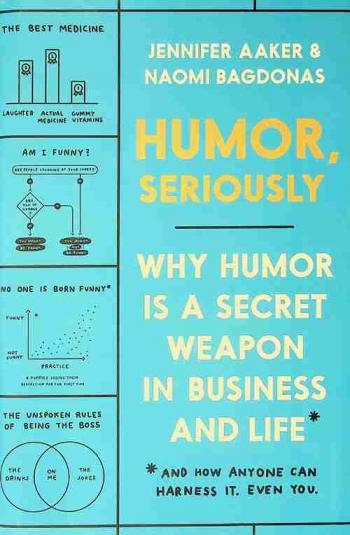
Humor, seriously : why humor is a secret weapon in business and life : And how anyone can harness it. Even you.
\"Anyone-even you!-can learn how to harness the power of humor in business (and life), based on the popular class at Stanford's Graduate School of Business. Many people understand humor's power intuitively. But when it comes to using it with intention, far fewer know how. As a result, humor is vastly underleveraged in most workplaces today, impacting our performance, relationships, and health, and contributing to a permanent and unsightly frown known as \"resting boss face.\" In fact, research shows that humor is one of the most powerful tools we have for accomplishing serious things. Top executives know this, which is why 98 percent prefer employees with a sense of humor, and 84 percent believe these employees do better work. Studies show that humor makes us appear more competent and confident, strengthens relationships, unlocks creativity, and boosts our resilience during difficult times. That's why Jennifer Aaker and Naomi Bagdonas teach the popular course Humor: Serious Business at the Stanford Graduate School of Business, where they help some of the world's most hard-driving, blazer-wearing business minds build levity into their organizations and lives. In Humor, Seriously, they draw on findings by behavioral scientists, advice from world-class comedians, and stories from real-life business leaders to reveal how humor works and-more important-how you can make greater and better use of it. Aaker and Bagdonas unpack the theory and application of humor: what makes something funny, how to mine your life for material, and how to craft a joke. They show how to use humor to make a strong first impression, deliver difficult feedback, and foster cultures where levity and creativity can thrive. And they explore the gray areas of humor: how to keep it appropriate-and recover if you cross a line. President Dwight D. Eisenhower once said, \"A sense of humor is part of the art of leadership, of getting along with people, of getting things done.\" If Eisenhower-the second least naturally funny president ever (after Franklin Pierce)-thought humor was necessary to win wars and build highways, then you might consider learning it too. Seriously\"-- Provided by publisher.

A systematic review of humour‐based strategies for addressing public health priorities
To systematically review research into the use of humour‐based health promotion strategies for addressing public health issues during the past 10 years.
The systematic review was conducted in accordance with the Preferred Reporting Items for Systematic Reviews and Meta‐Analyses (PRISMA) guidelines.
Thirteen studies were included in the review. Mental health, breast and testicular cancer self‐examination, safe sex, skin cancer and binge drinking public health issues were targeted. Humour‐based strategies were used to influence health attitudes and behaviours, encourage interpersonal sharing to indirectly affect health behaviour, and investigate the level of threat and humour associated with positive outcomes. Findings provided some evidence to support the use of humour‐based strategies as determined by the right combination of audience characteristics, level of humour and amusement evoked, and message persuasion and behaviour change methods underpinning strategies.
Methodologies varied limiting comparability, although overall results indicate that humour‐based health promotion strategies may be a useful tool for increasing awareness and help‐seeking behaviour for public health priorities, particularly those associated with stigma.
Humour interventions vary widely because there can never be a standardised approach to evoking humour. Further research examining humour and public health promotion is needed.
Journal Article


Employee Humor Can Shield Them from Abusive Supervision
Drawing upon conservation of resources theory, we develop and test a theoretical model that specifies how and when employee humor toward leaders affects leader abusive supervision. We propose that employee humor is negatively associated with leader abusive supervision via leader relational energy. Furthermore, the negative indirect relationship between employee humor and leader abusive supervision via leader relational energy is stronger for female leaders than for male leaders. An experiment and a multi-wave, multi-source field study provide substantial support for our hypotheses. Our findings contribute to the abusive supervision literature by identifying employee humor as a safe and effective bottom-up approach to prevent leader abusive supervision.
Journal Article