
Catalogue Search | MBRL


Are you sure you want to remove the book from the shelf?

{{itemTitle}}
15,744
result(s) for
"Management information systems Case studies."
Sort by:


Real-life MDA : solving business problems with model driven architecture
The first stories of Model Driven Architecture in action.
eBook


Lessons learned from World Bank education management information system operations : portfolio review 1998-2014
Provides an overview of the World Bank's portfolio in the area of Education Management Information Systems (EMISs) over the course of 17 years, from 1998 to 2014. It seeks to identify overall trends and characteristics of World Bank support in this area, with the intent of informing future project preparation and analytical work. The portfolio review revealed that although several good practices were evident, operational performance of EMIS activities fell short of expectations, with widespread deficiencies that ranged from unclear definitions and understanding of the EMIS to ineffective implementation and utilization. Examples of successful activities include the development of an EMIS to manage teachers and provide access to education (for example, Afghanistan); utilization of an EMIS as a management tool (for example, Bosnia and Herzegovina); creation of an online EMIS to improve access to education data (for example, Honduras); use of an EMIS to strengthen teaching and learning (for example, Guatemala and Lithuania); and use of an EMIS as a management tool for schools (for example, Malaysia). These success stories highlight how a well-implemented EMIS can improve the performance of an education system. The challenges that have been identified as contributing to the shortcomings are related to the following: Misalignment of activities and unrealistic EMIS goals; Institutionalization of the EMIS; Sustainability challenges resulting from inconsistent leadership; Missed integration opportunities; Private players in education; EMIS at the local level. Future projects could benefit from the SABER (Systems Approach for Better Education Results)-EMIS Assessment Framework. The SABER-EMIS Framework focuses on the need for a strong enabling environment, system soundness, quality data, and effective utilization as the key factors essential for the successful implementation of an EMIS. Initial needs assessment of a country's EMIS can play a critical role in benchmarking countries and provide a valuable foundation for the design of new projects.
Book
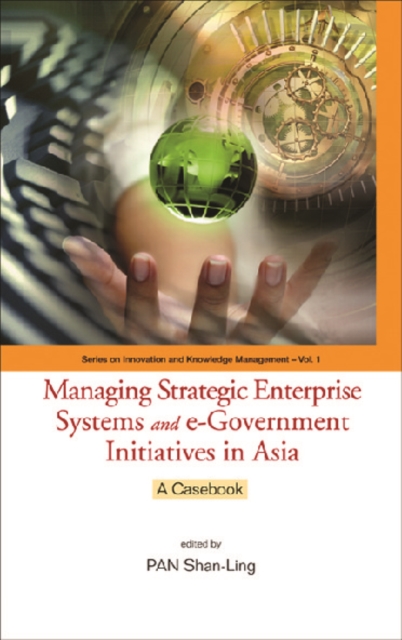
Managing strategic enterprise systems and e-government initiatives in Asia
This book presents a socio-technical view of strategic information systems issues such as enterprise systems implementation and management, knowledge management, customer relationship management, and e-government initiatives. It contains eight case studies documenting experiences of utilizing enterprise systems and e-government initiatives in organizations and government agencies from Asia-Pacific countries such as Australia, India, Singapore, and South Korea. The book provides regional (Asia-Pacific) coverage highlighting empirical case studies — involving both private and public organizations — of strategic information systems practices covering both the developed and developing economies. These in-depth, well-written case materials will be helpful to organizations and government agencies planning to implement enterprise systems and e-government initiatives. These cases can also be beneficial to classroom teaching and discussions.
eBook


User-centered design stories: real-world UCD case files
Intended for both the student and the practitioner, this is the first user-centered design casebook. It follows the Harvard Case study method, where the reader is placed in the role of the decision-maker in a real-life professional situation. In this book, the reader is asked to perform analysis of dozens of UCD work situations and propose solutions for the problem set. The problems posed in the cases cover a wide variety of key tasks and issues facing practitioners today, including those that are related to organizational/managerial topics, UCD methods and processes, and technical/ project issues. The benefit of the casebook and its organization is that it offers the new practitioner (as well as experienced practitioners working in new settings) the valuable practice in decision-making that one cannot get by reading a book or attending a seminar. *The first User-Centered Design Casebook, with cases covering the key tasks and issues facing UCD practitioners today.*Each chapter based on real world cases with complex problems, giving readers as close to a real-world experience as possible.* Offers \"the things you don't learn in school,\" such as innovative and hybrid solutions that were actually used on the problems discussed.
eBook