
Catalogue Search | MBRL


Are you sure you want to remove the book from the shelf?

{{itemTitle}}
795
result(s) for
"Manifest Destiny"
Sort by:

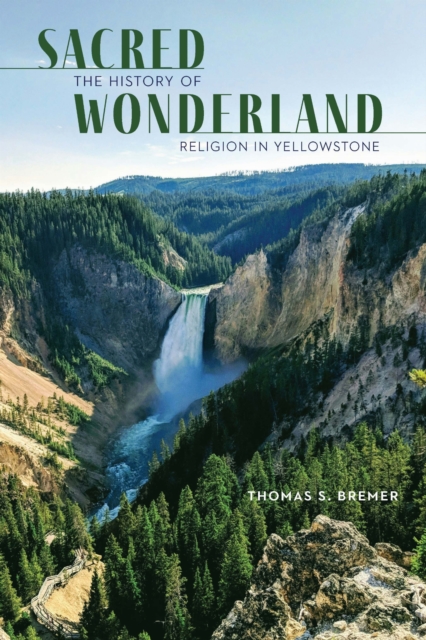
Sacred Wonderland
Sacred Wonderland explores the historical role of religion in making Yellowstone National Park a meaningful American icon.
eBook

Manifest destinies : America's westward expansion and the road to the Civil War
A sweeping history of the 1840s that captures America's enormous sense of possibility and shows how the extraordinary expansion of territories forced the nation to come to grips with the deep rift that would bring war just a decade later. This book is an account of a crucial decade that forged a young nation's character and destiny.
Book

Historical Dictionary of the Jacksonian Era and Manifest Destiny
The Jacksonian period under review in this dictionary served as a transition period for the United States. The growing pains of the republic's infancy, during which time Americans learned that their nation would survive transitions of political power, gave way to the uncertainty of adolescence. While the United States did not win its second war, the War of 1812, with its mother country, it reaffirmed its independence and experienced significant maturation in many areas following the conflict's end in 1815. As the second generation of leaders took charge in the 1820s, the United States experienced the challenges of adulthood. The height of those adult years, from 1829 to 1849, is the focus of the Historical Dictionary of the Jacksonian Era and Manifest Destiny. This second edition of Historical Dictionary of the Jacksonian Era and Manifest Destiny contains a chronology, an introduction, appendixes, and an extensive bibliography. The dictionary section has over 200 cross-referenced entries on important personalities, politics, economy, foreign relations, religion, and culture. This book is an excellent access point for students, researchers, and anyone wanting to know more about this era in American history.
eBook


(Re)mapping Landscapes: De-normalizing “Manifestalgia” or How Is the Imaginative Poetic Panorama Being Re-Indigenized in Queer and Feminist Indigenous Arts
Landscapes have had an instrumental role in the construction of U.S. and Canadian nation-states from the nineteenth century onwards, consistently accompanying the collective imagination of these nations in their journey towards a sense of a “unified” identity. Nevertheless, such representations naturalized Judeo-Christian settler heteronormative values and spatiotemporal visions of extraction upon Indigenous peoples and nature; visions that generally left (queer and Two-Spirit) Indigenous subjects out of the frame. One such vision that this paper identifies is that of “Manifestalgia,” combining the narratives of Manifest Destiny and a nostalgic utopianism, that—as depicted in the paintings—requires Indigenous bodies to have vanished since the very moment of arrival for settler futures to be imaginatively justified. This paper initiates thus an interdisciplinary dialogue between art and poetry that interrogates the settler-colonial rhetoric through the lens of queer Indigenous “(re)mapping.” By approaching the visual and poetic works of artists and authors such as Kent Monkman (Two-Spirit, Cree, ocêkwi sîpiy, Fisher River Cree Nation, Treaty 5), Tommy Pico (Kumeyaay Nation), and Jana-Rae Yerxa (Anishnabee, Treaty 3), this article approaches the re-indigenization of imaginative landscapes not only as visual phenomena but as embodied forms of queer Indigenous (re)mapping, thus foregrounding queer Indigenous resurgence and futurities.
Journal Article

Securing Manifest Destiny
This article argues Mexico’s war on drugs was a tactic by elites in both the United States and Mexico to legitimate the Mexican neoliberal state’s political, economic, and ideological governance over Mexican society. Through tough on crime legislation and maintenance of free market policies, the war on drugs is a “morbid symptom” that obfuscates the crisis of global capitalism in the region. It is a way of managing a crisis of legitimacy of Mexico’s neoliberal state. Through arguments of Mexico as a potential “failed state” and a “narco-state,” the United States has played a leading role by investing in militarized policing in the drug war and securitization of Mexico’s borders to expand and maintain capitalist globalization. In the twenty-first century, the ideology of manifest destiny persists, but instead of westward expansion of the U.S. state, it serves as the maintenance and expansion of global capitalism.
Journal Article


Two of a kind? Large-scale land acquisitions and commodity frontier expansion in Argentina's Dry Chaco
Land-use change (LUC) driven by commodity agriculture over the last 20 years has been particularly extensive in the Dry Chaco region of Argentina, which surpassed the Amazon during that time to become one of the top three global deforestation hotspots. Large-scale land acquisitions (LSLAs) have been cited as a key catalyst of deforestation and related LUC in commodity frontier expansion. However, it is unclear whether contemporary LSLAs that affected the Dry Chaco and other agricultural commodity frontiers globally differed in their mechanisms of LUC from conventional agricultural expansion processes. The diversity of domestic and foreign investors, commodity crops, and LUC dynamics observable in contemporary LSLAs in Argentina's Dry Chaco provide a focused lens, or \"case set,\" through which to consider commodity frontier dynamics in the Salta Province since 2000. We integrated remote sensing analysis and classification of the timing and location of LUC within the boundaries of LSLA and non-LSLA agricultural parcels with survival analysis to draw conclusions about the dynamics of LSLA establishment (i.e., purchase/transfer of ownership/title change) and LUC associated with production operations. Regionally, spatio-temporal patterns of agricultural expansion into increasingly marginal land were consistent between LSLA and non-LSLA parcels. However, parcel-based analysis revealed differing responsiveness to commodity prices and land-use constraints imposed by the National Forest Law, which translated into diverging LUC trajectories among LSLA and non-LSLA parcels. In particular, LUC on LSLA parcels was significantly slowed by Forest Law constraints, but continued on non-LSLA parcels and a small number of \"recategorized\" and/or illegally deforested LSLA parcels. Our findings demonstrate the importance of moving beyond large-scale, aggregate spatial assessments of LSLA outcomes that aim to inform policy yet 'black box\" actors. Actor heterogeneity must be explicitly accounted for as part of the causal mechanisms that influence land acquisition and lead to differing LUC trajectories.
Journal Article