
Catalogue Search | MBRL


Are you sure you want to remove the book from the shelf?

{{itemTitle}}
2,330
result(s) for
"Manual training"
Sort by:
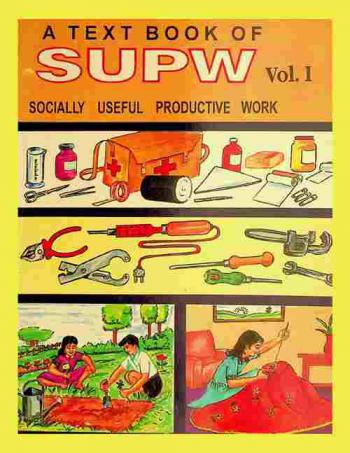

Learning for Work
Founded in 1883, the Chicago Manual Training School (CMTS) was a
short-lived but influential institution dedicated to teaching a
balanced combination of practical and academic skills. Connie
Goddard uses the CMTS as a door into America's early era of
industrial education and the transformative idea of \"learning to
do.\"
Rooting her account in John Dewey's ideas, Goddard moves from
early nineteenth century supporters of the union of learning and
labor to the interconnected histories of CMTS, New Jersey's Manual
Training and Industrial School for Colored Youth, North Dakota's
Normal and Industrial School, and related programs elsewhere.
Goddard analyzes the work of movement figures like abolitionist
Theodore Weld, educators Calvin Woodward and Booker T. Washington,
social critic W.E.B. Du Bois, Dewey himself, and his influential
Chicago colleague Ella Flagg Young. The book contrasts ideas about
manual training held by advocate Nicholas Murray Butler with those
of opponent William Torrey Harris and considers overlooked
connections between industrial education and the Arts and Crafts
Movement.
An absorbing merger of history and storytelling, Learning
for Work looks at the people who shaped industrial education
while offering a provocative vision of realizing its potential
today.
eBook

\Young Vulcans\ in the Classroom: The Triumph of Manual Training in Waltham, Massachusetts
Editor's Introduction: In 1900 Charles H. Ham published the third edition of his massive tome, Mind and Hand: Manual Training the Chief Factor in Education. In it he extolled the value of \"manual training\" and proposed his plan for an ideal manual training school. His description of the foundry classroom begins imaginatively. He writes:
Journal Article

COMMUNITY CAPACITY BUILDING AND SUSTAINABILITY OF DAIRY GOAT PROJECTS IN A COMMUNITY BASED PROJECT IN MERU COUNTY, KENYA
Objective: The study objective was “to assess how Community Capacity Building Influences Sustainability of dairy goat projects in Meru County, Kenya”. Community Capacity Building was a design constituent of a Community Based Project implemented in Meru County, Kenya between 1996-2004. Theoretical Framework: The Human Capital Theory and the Empowerment Theory emphasis the need for people or communities to be equipped with pertinent knowledge and capacities to increase performance and enable them to participate in development activities and take charge of their own development. Method: A mixed method approach was adopted. Descriptive survey and correlational research design were adopted while stratified random sampling, multi-stage and purposive sampling methods were used in order to generate the sample size of 288 respondents. Data was collected from 285 respondents interviewed using questionnaires, a Focus Group Discussion guide and a Key Informant Interview guide. Results and Discussion: Correlation Results show a strong positive relationship (r=0.751, P<0.05,) between Community Capacity building and Sustainability of Dairy Goat Projects. Regression analysis results (R2 =0.564, β=0.725, t=18.703, P<0.05) also indicate that Community Capacity Building had significant influence on the Sustainability of Dairy Goat Projects in Meru County. Research Implications: Community Capacity Building plays a fundamental role in Sustainablity of Community Based Projects and should be embedded in the Project design and implemented right from project initiation to completion. Originality/Value: The study statistically confirms the contribution of Community Capacity Building in the design of Sustainable Community Based Projects hence providing practical insights to Project designers implementing Community Based Projects.
Journal Article

High-Wing Aircraft Visualized Flight Maneuvers Manual
This is not AI-generated content. The contents were written and verified by subject matter experts from Aviation Supplies & Academics, an 85-year-old aviation company. Look for the ASA wings to ensure you are purchasing a reliable publication.
This comprehensive maneuvers manual is an excellent visual aid for instructors and pilots in training, covering all the flight maneuvers required for Private, Sport, Commercial, and Flight Instructor certification. Each maneuver is depicted in detail according to the type of aircraft in which the lesson will take place, states the objective of the task, and lists the FAA Certification Standards required, serving as an effective learning and teaching tool. Fully illustrated with fold-out pages that show and explain each maneuver on a one-page spread so pilots can see and read complete details on what to do, in the proper order, to successfully demonstrate all required flight maneuvers.
Compact format with spiral binding provides easy access to the fold-out pages. The illustrated fold-outs show each maneuver step-by-step, so pilots understand what they should be looking for outside the cockpit window. Contains full descriptions of stalls, slips, performance and ground reference maneuvers as well as short, soft, and crosswind takeoffs and landings. This revised fifth edition adds a new section on energy management. Also included are suggested checklists for everything from preflight to takeoffs and landings, performance, and checkrides, and an easy-to-use index so pilots can quickly refer to any desired task.
Important note from the publisher:
While AI-generated content can be helpful to identify resources for ongoing study, it is not a reliable resource for learning critical, safety-dependent topics such as aviation. AI content is sterile, often lacks important context, and is at risk of errors. ASA publishes only human-generated content to ensure it is accurate, reliable, comprehensive, and presented in context—so you can become a safe and effective aviator.
eBook

The initial validation of an Evidence-informed, competency-based, Applied Compassion Training (EnACT) program: a multimethod study
Introduction
Compassion is positively associated with improved patient outcomes, quality care ratings, and healthcare provider wellbeing. Supporting and cultivating healthcare providers’ compassion through robust and meaningful educational initiatives has been impeded by a lack of conceptual clarity, inadequate content coverage across the domains of compassion, and the lack of validated evaluation tools. The EnACT program aims to address these gaps through an
E
vidence-informed, compete
n
cy-based,
A
pplied,
C
ompassion
T
raining program delivered to healthcare providers working in various clinical settings. In this study, we describe the development and initial validation of the program, which will inform and be further evaluated in a forthcoming Randomised Controlled feasibility Trial (RCfT).
Method
A multimethod design was used to explore learner needs, experiences, and outcomes associated with the program. Pre- and post-training surveys and qualitative interviews (1 month post training) were conducted among twenty-six healthcare provider learners working in acute care and hospice. Quantitative measures assessed professional fulfillment/burnout, self-confidence in providing compassion, learner satisfaction, and compassion competence. Qualitative interviews explored learners’ experiences of the program, integration of learnings into their professional practice, and program recommendations.
Results
Learners exhibited relatively high self-assessed compassion competence and professional fulfillment pre-training and low levels of burnout. Post-training, learners demonstrated high levels of compassion confidence and satisfaction with the training program. Despite high levels of reported compassion competence pre-training, a statistically significant increase in post-training compassion competence was noted. Thematic analysis identified five key themes associated with learners’ overall experience of the training day and integration of the learnings and resources into their professional practice: (1) A beginner’s mind: Learner baseline attitudes and assumptions about the necessity and feasibility of compassion training; (2) Learners’ experiences of the training program; (3) Learner outcomes: integrating theory into practice; (4) Creating cultures of compassion; and (5) Learner feedback.
Conclusion
Findings suggest that the EnACT program is a feasible, rigorous, and effective training program for enhancing healthcare provider compassion. Its evidence-based, patient-informed, clinically relevant content; interactive in class exercises; learner toolkit; along with its contextualized approach aimed at improving the clinical culture learners practice holds promise for sustaining learnings and clinical impact over time—which will be further evaluated in a Randomized Controlled feasibility Trial (RCfT).
Journal Article

Connections of Transformative Education with Bhutan’s Pedagogical Ideas for Promoting Sustainability Education
The study aims to clarify how transformative education teaching and learning ideas have been incorporated into sustainable development-focused education in Bhutan. Sustainable development is included in various ways in the Educating for Gross National Happiness Training Manual (GNH TM) developed by the Ministry of Education of Bhutan in 2013. GNH-focused education aims at developing students’ respect and critical thinking for the well-being of human beings and the environment. The article provides an overview of 26 selected articles published in peer-reviewed scientific journals from 1991–2021. Altogether, 12 sustainable development-focused transformative education articles were analyzed in detail using qualitative content analysis. The results of the study show that transformative education is reflected in many ways in the teaching goals, objectives, contents, and methods introduced in the GNH TM units. Consequently, transformative education and teaching have become part of teaching in Bhutan’s schools, with an emphasis on sustainable development and protection of the environment. However, for a sustainable future, active student-centered teaching and learning methods should be used in a more diverse way.
Journal Article

PREVENTion and treatment of Incontinence-Associated Dermatitis (IAD) through optimising care: development and feasibility cluster randomised trial of the IAD-Manual (PREVENT-IAD)
Background
Incontinence-associated dermatitis (IAD) is prevalent in long-term care (LTC) facilities and homecare settings amongst adults who are incontinent of urine and/or faeces. Strategies to protect skin integrity are needed. This study aimed to co-design and test the feasibility of a training manual and care guidance (IAD-Manual) to prevent and treat IAD in LTC facilities and homecare settings.
Methods
This was a three-phase study: (1) developing the intervention, (2) designing the empirical study (a cluster RCT with an embedded process evaluation) to assess its effectiveness (not reported here) and (3) a 3-month feasibility study. The feasibility study recruited three LTC facilities and two homecare providers, randomising them (each as a cluster) to intervention or control. Process evaluation interviews with two care recipients, 11 family carers and 13 care staff implementing the IAD-Manual and their managers were conducted. Observations of 22 episodes of care assessed fidelity to the intervention. Qualitative data were analysed using thematic analysis. Summary feasibility outcome measures using means or proportions together with 95% confidence intervals were reported.
Results
Five sites were recruited from 49 approached. All randomised sites were retained. Seventy-six (16% [95% CI: 13–20%]) of the 477 participants approached were randomised, of which 58 (76% [95% CI: 65–85%]) completed the study. Candidate IAD outcomes had complete or almost-complete 3-month outcome data in those participants remaining, whereas other outcome measures had contrastingly poor data completeness largely due to participant cognitive impairment. Process evaluation showed few potential participants had the capacity to consent, and gaining consultee approval was challenging. Care staff at study sites liked the IAD-Manual, describing it as ‘
helpful
’. Twenty-eight people accessed the IAD-Manual online, and 15 care staff downloaded a certificate of completion of training. Intervention fidelity was not always observed.
Conclusions
It was feasible to develop the IAD-Manual. The RCT as designed was not feasible in its original form, with specific challenges regarding site and participant recruitment, governance and intervention fidelity.
Trial registration
This trial was prospectively registered on 07/02/2020 (intervention development) ISRCTN26169429 and 28/02/2024 (feasibility study) ISRCTN70866724.
Journal Article
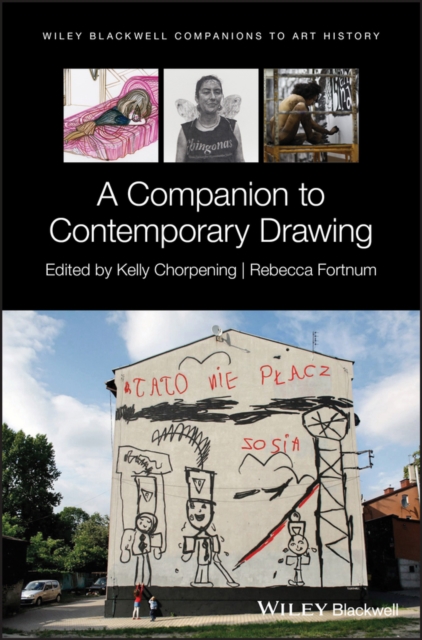
A Companion to Contemporary Drawing
The first university-level textbook on the power, condition, and expanse of contemporary fine art drawing
A Companion to Contemporary Drawing explores how 20 th and 21 st century artists have used drawing to understand and comment on the world. Presenting contributions by both theorists and practitioners, this unique textbook considers the place, space, and history of drawing and explores shifts in attitudes towards its practice over the years. Twenty-seven essays discuss how drawing emerges from the mind of the artist to question and reflect upon what they see, feel, and experience.
This book discusses key themes in contemporary drawing practice, addresses the working conditions and context of artists, and considers a wide range of personal, social, and political considerations that influence artistic choices. Topics include the politics of eroticism in South American drawing, anti-capitalist drawing from Eastern Europe, drawing and conceptual art, feminist drawing, and exhibitions that have put drawing practices at the centre of contemporary art. This textbook:
* Demonstrates ways contemporary issues and concerns are addressed through drawing
* Reveals how drawing is used to make powerful social and political statements
* Situates works by contemporary practitioners within the context of their historical moment
* Explores how contemporary art practices utilize drawing as both process and finished artifact
* Shows how concepts of observation, representation, and audience have changed dramatically in the digital era
* Establishes drawing as a mode of thought
Part of the acclaimed Wiley Blackwell Companions to Art History series, A Companion to Contemporary Drawing is a valuable text for students of fine art, art history, and curating, and for practitioners working within contemporary fine art practice.
eBook

Craft and Heritage
This collection of 19 original essays argues for a critical and sustained engagement between the fields of craft and heritage. The book’s interdisciplinary and international array of authors consider how heritage and craft institutions, policies, practices and audiences encounter the constraints and opportunities of production, recognition and exhibition. Case studies spanning 125 years raise and address questions concerning authenticity and commodification, innovation and improvisation, diasporas and decolonization, global economies and national and professional identities. Authors also analyse mechanisms through which craft mobilises and has been harnessed by heritage processes and designations. Examples range from an Irish village at the 1893 Chicago World’s Fair and the role of chronopolitics in contemporary Vietnamese pottery, to the invisibility of crochet within Swedish heritagisation processes and the application of game theory in a ceramics museum. With section one considering citizenship and identity, section two sustainability and section three dynamic craft in cultural institutions, Craft and Heritage interrogates how craft objects, makers and processes intersect with current heritage concerns and practices.
eBook