
Catalogue Search | MBRL


Are you sure you want to remove the book from the shelf?

{{itemTitle}}
19,109
result(s) for
"Manuscript studies"
Sort by:

Heresy and Liminality in Shingon Buddhism: Deciphering a 15th Century Treatise on Right and Wrong
Traditional historiography of Japanese Buddhism presents the Muromachi period as an era of triumph for Zen, and of decline for the previous near-hegemony of Esoteric Buddhism. However, for the Shingon school, the period from the late Middle Ages to early Edo period was rather a phase of expansion, especially in the more remote locales of Eastern Japan. Focusing on a text authored during the fifteenth century, this article will analyze how this idea of the outskirts or periphery was integrated with the process of creation of orthodoxy in local Shingon temples. In doing so, it will shed new light not only on the evolution, but also on the epistemological role of discourse relating to heresy, and on their role in the legitimation of monastic lineages.
Journal Article

I MANOSCRITTI ETIOPICI DEL FONDO CONTI ROSSINI NELL’ARCHIVIO DELL’ACCADEMIA DEI LINCEI
This article deals with the remains of dozens of ancient Ethiopic manuscripts kept in the Archives of the Accademia Nazionale dei Lincei of Rome. The material, gathered in Ethiopia by Antonio Mordini, then transferred to Carlo Conti Rossini’s private home, entered the rooms of the Accademia’s Archives following the death of the renowned scholar (1949). The fragments, most probably tracing back to several liturgical codices once belonged to the Təgrayan monastery of Däbrä Dammo, prove to be of remarkable scientific value and are still waiting for a thorough philological, paleographic, and codicological investigation.
Journal Article

Books Before Print
This beautifully illustrated book provides an accessible introduction to the medieval manuscript and what it can tell us about the world in which it was made and used. Captured in the materiality of manuscripts are the data enabling us to make sense of the preferences and habits of the individuals who made up medieval society. With short chapters grouped under thematic headings, Books Before Print shows how we may tap into the evidence and explores how manuscripts can act as a vibrant and versatile tool to understand the deep historical roots of human interaction with written information. It highlights extraordinary continuities between medieval book culture and modern-world communication, as witnessed in medieval pop-up books, posters, speech bubbles, book advertisements, and even sticky notes.
eBook
MONASTIC LIBRARIES IN ERITREA
Eritrea can boast a long-lasting scribal culture on parchment which is intimately associated with the presence of monastic and ecclesiastic centres. Monastic libraries scattered throughout the country preserve historical manuscript collections, in some cases very extensive, which are veritable parchment treasures still awaiting a proper cataloguing and investigation. Research initiatives that will hopefully carry out scholarly activities on the Eritrean manuscript culture will face manifold challenges, but will have the privilege to actively re-introduce that precious heritage into the scholarly discussion.
Journal Article
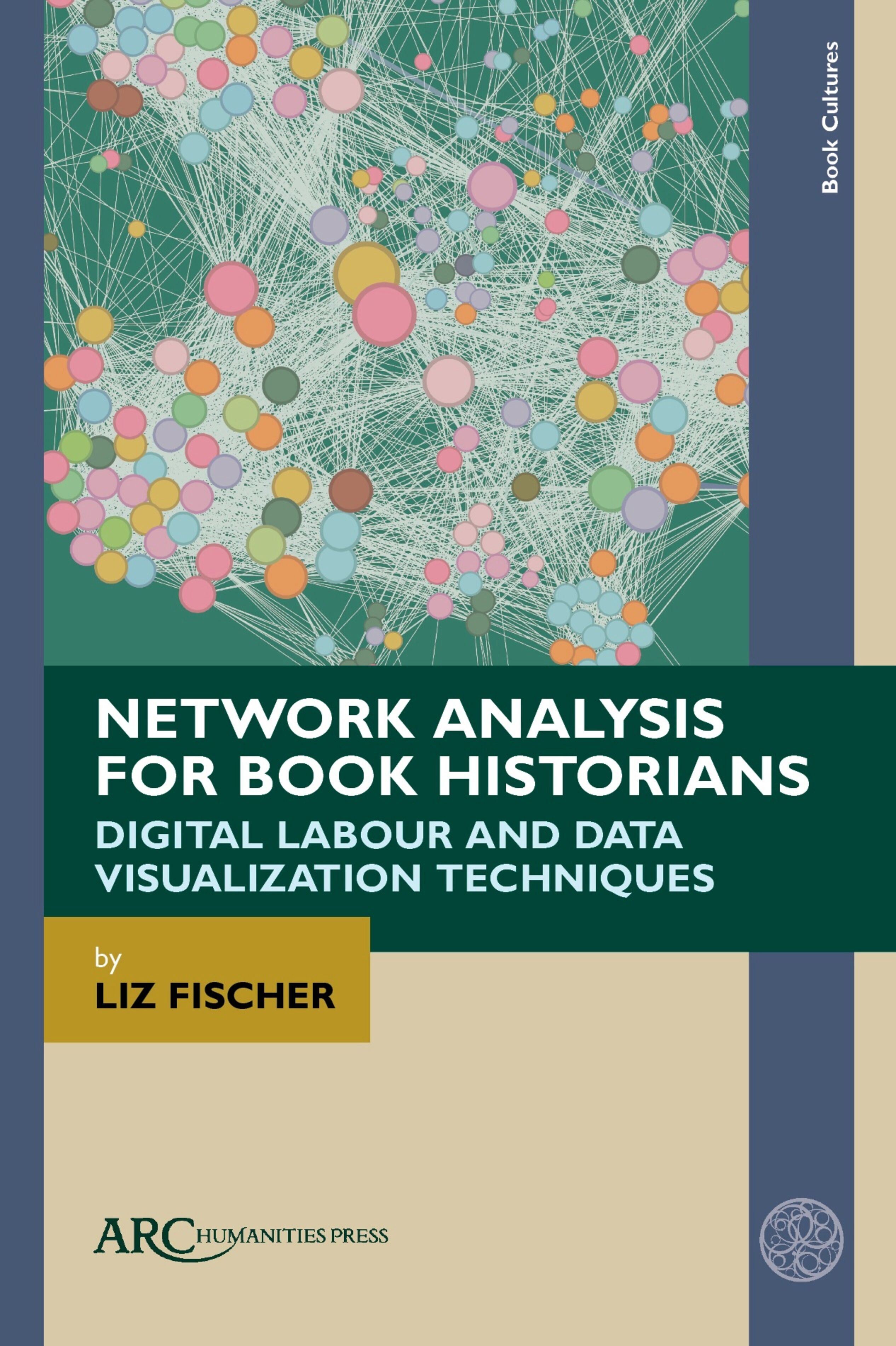
Network Analysis for Book Historians
Researchers and archivists have spent decades digitizing and cataloguing, but what does the future hold for book history? This book explores the potential of network analysis as a method for medieval and early modern book history. Presented through case studies of the Cotton Library, the Digital Index of Middle English Verse, and the Pforzheimer Collection, this book offers a blueprint for drawing on extant scholarly resources to visualize relationships between people, text, and books. Such visualizations serve as a new form of reference work with the potential to offer new, broad insights into the history of book collecting, compilation, and use. This volume gives a realistic look at the decision-making involved in digital humanities work, and emphasizes the value of so-called \"mechanical\" labour in scholarship.
eBook

Importance and challenges of handwriting recognition with the implementation of machine learning techniques: a survey
Ancient manuscripts store historical, literary, cultural, and geographical information. Therefore, the automatic analysis of manuscripts is of great interest in heritage culture and history preservation. Different approaches to handwriting recognition using images have been applied to analyze manuscripts. However, reliable handwriting recognition is a considerable challenge due to different factors related to the writer, the design, the script, the manuscript, and the economy. This paper presents the most relevant works in handwriting recognition using machine learning techniques. The contributions are: i) provide a review of previous research addressing handwriting recognition, ii) depict the general methodology using machine learning in handwriting recognition, iii) highlight relevant works at different levels of analysis (character, word, text line, and text block), iv) present handwriting datasets including the type of content they have, script and language, and v) present the importance and challenges in handwriting recognition. We are confident that the insights and reflections from this review will have a positive impact on the gaps for future research in handwriting recognition.
Journal Article

Some Thoughts on the Use of Autograph Manuscripts in Editing the Works of Verdi and Puccini
No one believes an autograph manuscript provides sufficient information to allow scholars to edit nineteenth- or early twentieth-century music, particularly in genres that accepted considerable modifications in performance, opera or virtuosic piano music. If anything, the pendulum has swung too far in the other direction, with doubts cast on the role of composers' autographs in choosing texts to serve for critical editions. This latter approach is problematical, even for composers known to introduce significant changes in their works to ensure their survival in the theater. One needs always to cite (while not necessarily adopting) autograph readings, which tend to reflectcompositionalconcerns rather thanpracticalconcerns. A critical edition may ultimately present a text oriented toward practical solutions, but it demands that users understand why and how a composer's ideas could not be maintained. This is particularly true for a composer like Verdi, who left autograph manuscripts close to a definitive version, but it is also true for a composer like Puccini who expected autograph manuscripts to be superseded in performance.
Journal Article

Disrupting Categories, 1050–1250
This study uses a series of medieval texts to address a set of urgent critical issues in Humanities centring on categories of L/literature, history, periodization, languages, and descriptions of script. These categories are inherited from the foundation of modern disciplines and fields of study, superimposed on what could be more flexible modes of scholarship. They are reinforced by modern academics in ways that hinder nuance, intellectual nimbleness, and new interpretative possibilities. Readers and researchers of English Language, Literature, Book Historical/Media Studies, and History are obliged by delimiting labels to navigate problematic foundational approaches and sources that confine and frustrate scholarly investigation. Through a series of cogent case studies, all situated from 1050 to 1250, the book highlights how restrictive and hierarchical modern scholarly categories can sometimes be.
eBook

THREE OVERLOOKED MANUSCRIPT WITNESSES OF CAROLINGIAN EPISTOLAE FORMATAE BY ARCHBISHOP THEUTGAUD OF TRIER AND BISHOP ADVENTIUS OF METZ FROM PROVENCE AND CATALONIA
This article presents three new discoveries of Carolingian epistolae formatae from Provence and Catalonia, which update recent editions of the texts in question and offer clues about their historical context and purpose.
Journal Article