
Catalogue Search | MBRL


Are you sure you want to remove the book from the shelf?

{{itemTitle}}
21,853
result(s) for
"Mao, Zedong, 1893-1976."
Sort by:

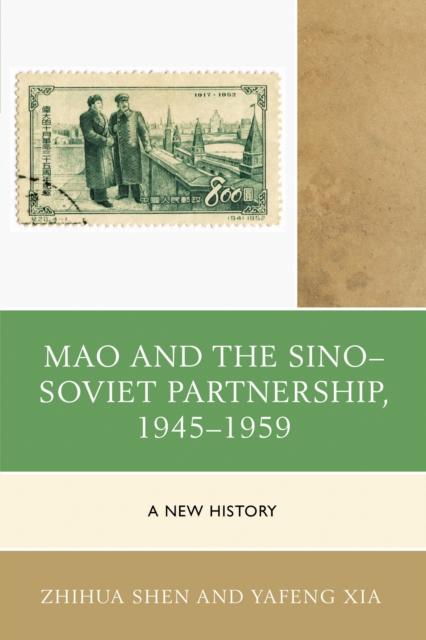
Mao and the Sino-Soviet partnership, 1945-1959
Based on Chinese archival documents, interviews, and more than twenty years of research on the subject, Zhihua Shen and Yafeng Xia offer a comprehensive look at the Sino-Soviet alliance between the end of the World War II and 1959, when the alliance was left in disarray as a result of foreign and domestic policies.
eBook

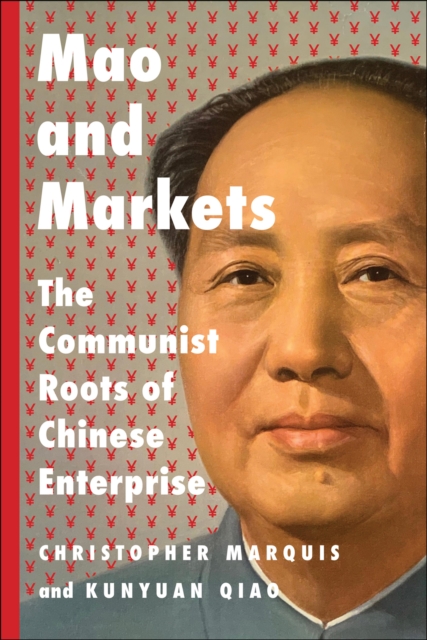
Mao and Markets
A thoroughly researched assessment of how China's economic
success continues to be shaped by the communist ideology of
Chairman Mao It was long assumed that as China embraced
open markets and private enterprise, its state-controlled economy
would fall by the wayside, that free markets would inevitably lead
to a more liberal society. Instead, China's growth over the past
four decades has positioned state capitalism as a durable foil to
the orthodoxy of free markets, to the confusion of many in the
West. Christopher Marquis and Kunyuan Qiao argue that China's
economic success is based on-not in spite of-the continuing
influence of Communist leader Mao Zedong. They illustrate how Mao's
ideological principles, mass campaigns, and socialist institutions
have enduringly influenced Chinese entrepreneurs' business
strategies and the management of their ventures. Grounded in case
studies and quantitative analyses, this book shows that while
private enterprise is the engine of China's growth, Chinese
companies see no contradictions between commercial drive and a
dedication to Maoist ideology.
eBook

Mao Zedong : the rebel who led a revolution
A biography of Mao Zedong, who is famous for establishing a communist government over China.
BOOK

The International Ambitions of Mao and Nehru
Why do leaders sometimes challenge, rather than accept, the international structures that surround their states? In The International Ambitions of Mao and Nehru, Andrew Kennedy answers this question through in-depth studies of Chinese foreign policy under Mao Zedong and Indian foreign policy under Jawaharlal Nehru. Drawing on international relations theory and psychological research, Kennedy offers a new theoretical explanation for bold leadership in foreign policy, one that stresses the beliefs that leaders develop about the 'national efficacy' of their states. He shows how this approach illuminates several of Mao and Nehru's most important military and diplomatic decisions, drawing on archival evidence and primary source materials from China, India, the United States and the United Kingdom. A rare blend of theoretical innovation and historical scholarship, The International Ambitions of Mao and Nehru is a fascinating portrait of how foreign policy decisions are made.
eBook

ماوتسي تونج : المتمرد الذي قاد ثورة
اقرأ القصة الحقيقة لطفولة ماو المتمردة ومعتقداته الثورية ومشوار صعوده دون توقف إلى السلطة كأول حاكم لجمهورية الصين الشعبية، اكتشف عالم صبا ماو بدءا من الحياة القروية وحتى الدروس التي تلقاها في المدرسة. ففي هذا الكتاب سلسلة من الأحداث المؤرخة التي تلقي الضوء على إنجازات ماو العظيمة وأخطائه الفادحة وتضعه في الإطار الرئيس لتاريخ العالم، تعيد الرسوم التوضيحية والخرائط عصر الصين إلى الحياة مرة أخرى، بدءا من الأباطرة الذين حكموها وحتى ثوارها ومن المدينة المحرمة إلي السور العظيم.
Book
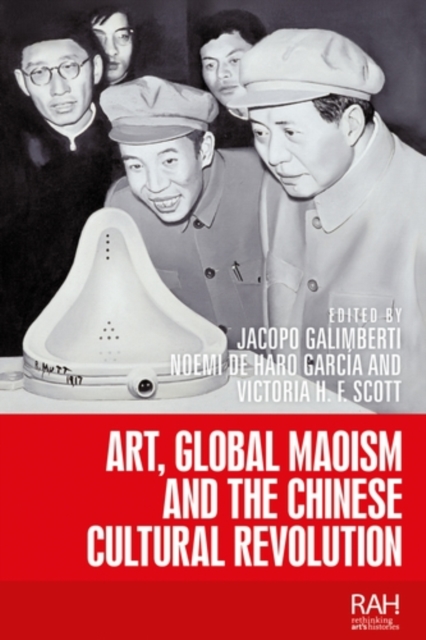
Art, Global Maoism and the Chinese Cultural Revolution
This lively anthology explores the impact of the art, images and ideas associated with Maoism on artistic practices around the world from 1945 to the present. It establishes that the chameleonic appearances of global Maoism deserve a more prominent place in the study of art history.
eBook

Art, global Maoism and the Chinese Cultural Revolution
This is the first book to explore the global influence of Maoism on modern and contemporary art. Featuring eighteen original essays written by established and emerging scholars from around the world, and illustrated with fascinating images not widely known in the west, the volume demonstrates the significance of visuality in understanding the protean nature of this powerful worldwide revolutionary movement. Contributions address regions as diverse as Singapore, Madrid, Lima and Maputo, moving beyond stereotypes and misconceptions of Mao Zedong Thought's influence on art to deliver a survey of the social and political contexts of this international phenomenon. At the same time, the book attends to the the similarities and differences between each case study. It demonstrates that the chameleonic appearances of global Maoism deserve a more prominent place in the art history of both the twentieth and twenty-first centuries.
BOOK
Mao and the economic stalinization of China, 1948-1953
In the first systematic study of its kind, Hua-yu Li tackles one of the most important unresolved mysteries of the early history of the People's Republic of China_the economic policy shift of 1953.
eBook