
Catalogue Search | MBRL


Are you sure you want to remove the book from the shelf?

{{itemTitle}}
134
result(s) for
"Marc Bloch"
Sort by:
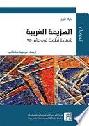
الهزيمة الغريبة : شهادة نظمت في عام 1940
كتاب \"الهزيمة الغريبة\" لمارك بلوخ من ترجمة عومرية سلطاني ومراجعة يوسف معوض يحتوي الكتاب على ثلاثة فصول بالإضافة إلى وصية مارك بلوخ وجاء في 184 صفحة من القطع المتوسط شاملا المراجع والفهرس العام، الفصل الأول جاء بعنوان \"تعريف الشاهد\"، ويبدأه بتساؤل مهم لمؤرخ وجندي يعيش فترة من أهم الفترات التحولية في العالم، الحرب، فلم يكن على يقين بأن ما سيكتبه سيتم نشره أم لا، وهو الذي تم إعدامه بعد أربعة أعوام على بداية تدوينه هذه الشهادة، \"شهادة مهزوم\" كان عنوان الفصل الثاني يفتتح بلوخ بجملة قاسية تقول \"منينا للتو بهزيمة لا تصدق\"، ويبدأ بلوم النظام البرلماني والقوات المسلحة والإنكليز حسب ما يقول جنرالات الحرب لكن سبب هذه الهزيمة بحسب بلوخ كان عجز القيادة العسكرية وعدم امتلاكها للمعدات والعقيدة لخوضها الفصل الثالث جاء بعنوان \"فرنسي يفحص ضميره\"، وفي بدايته نذكر عدم رضاه عن الحديث حول أسباب الهزيمة وانتقاد القيادة العسكرية وما ارتكبته، حيث يعتقد أنه قد يتغاضى عن بعض الأخطاء وسيصب تركيزه على أخطاء أخرى تم ارتكابها.
Book
Lucien Febvre und das historisch-didaktische Potenzial von Geschichtsschreibung
Long description: Geschichtsschreibung als ergebnisoffene, narrative Rekonstruktion von Vergangenheit ist für die kulturelle Selbstvergewisserung demokratischer Gesellschaften essenziell. Für den renommierten französischen Historiker Lucien Febvre (1878–1956) hatte daher die von ihm gemeinsam mit Marc Bloch (1886–1944) initiierte Erforschung vergangener sozialer, wirtschaftlicher und mentaler Strukturen eine über die Wissenschaft hinausweisende Bedeutung. Doch wie vollzieht sich jenes Vordringen in neue Wissensgebiete aus sprachlicher Perspektive? Wie „funktionieren“ historiographische Texte als kulturelle Gegenstände, die auch auf ihren Entstehungskontext und ihre Leserschaft Bezug nehmen? Kristian Raums Studie verknüpft kultur- und literaturwissenschaftliche sowie geschichtsdidaktische Ansätze und geht der Frage nach dem emanzipatorischen Potenzial von Geschichtsschreibung nach.
Biographical note: Kristian Raum ist Gymnasiallehrer für Geschichte und Französisch und zurzeit im Hochschuldienst an der Technischen Universität Dresden tätig, wo er im Bereich Französische Literatur- und Kulturwissenschaft promoviert hat. Seine Forschungsinteressen liegen an der Schnittstelle von Didaktik, Geschichts- und Kulturwissenschaft.
eBook


THE SYNTAX OF OBJECTS AND THE REPRESENTATION OF HISTORY: SPEAKING OF SLAVERY IN NEW YORK
The representation of history continues to evolve in the domain of museum exhibitions. This evolution is informed in part by the creation of new display methods-many of which depart from the traditional conventions used to achieve the \"museum effect\"-in part by an increased attention to the museum-visitor relationship. In this context the ethical force of bearing witness, at times a crucial aspect of the museum experience, has emerged as a particularly compelling issue. In seeking to represent and address atrocity, injustice, and the abrogation of human rights, museums have the potential to become \"sites of conscience\" and to encourage \"historical consciousness.\" Through a series of three exhibitions devoted to slavery, the New-York Historical Society demonstrated how such sites can be constructed and how objects can be deployed to represent extreme or \"limit cases.\" In this review/essay I investigate and interrogate these exhibitions, looking closely at the use of objects as a source of \"indirect testimony\" (Marc Bloch) and at the \"dialogical situation\" (Paul Ricoeur) that might arise in an encounter among objects, exhibit narratives, and visitors. Thinking in terms of point of view, I look at the variety of rhetorical platforms from which objects speak in these exhibitions; thinking in terms of syntax, I look at the effects of ordering and of the radical juxtaposition of objects; thinking in terms of irony, I look at the provocations of double-voiced narratives and at how objects are used to support those historical sentences.
Journal Article

Are the social sciences combat sports? Reflections on the obstacles to the scientific study of the social, between Markovian temptation, scalar indifference, and the historian’s obsession with the past
This paper does not intend to present results of an empirical study but rather those of theoretical, epistemological, and historiographical reflections about the heterogeneity of the field of social sciences, a field fragmented into objects, methods, and concepts that are mutually ignorant across disciplines and languages. From the author’s historical perspective, the roots of the blockages lie in the historical conditions surrounding the formation of the social sciences, particularly their initial disciplinary configurations aimed at population control (social engineering). Subsequently, once these initial conditions were overcome (thanks to the scientistic moment), the disciplinary structure — enabled by decomposing the object of social science into various dimensions (time, space, language, culture, kinship, etc.) assigned to distinct disciplines — helped mitigate the critical risk that they embodied. The author maintains that the object of social science cannot be anything other than the explanation of the dynamics of human societies, as expressed in social change. However, this object is largely neglected in favor of empirical work on specific aspects of social functioning, to the detriment of studying transformation. Concepts and models for understanding transformation remain inadequate, even among historians. Although historians are theoretically the only ones who fully incorporate the dimension of time (hence the reference to Markov and the question of scales), they do so in a strictly backward-looking manner. After having presented the methodological frame of this analysis (2.), the paper will address the historical genesis of the cacophony within the social sciences (3.1.); the dynamics of social change as a desirable yet underexplored theoretical horizon (3.2.); and propose concrete steps to advance toward this objective (3.3.).
Journal Article

El anacronismo en la historia: ¿error o posibilidad? A propósito de las reflexiones sobre el tiempo en Carlo Ginzburg, Marc Bloch y Georges Didi-Huberman
En su libro inconcluso y publicado póstumamente, Apología por la Historia, Marc Bloch entregó como legado a la posteridad una crítica fundamental al concepto de tiempo como objeto del análisis histórico. En las últimas décadas este tema ha conocido un renovado interés entre los estudiosos de la Historia. Dentro de dicho debate, en donde el tema del anacronismo ha venido a ocupar un rol protagónico, el historiador italiano Carlo Ginzburg y el historiador del arte y filósofo francés Georges Didi-Huberman, han hecho aportes muy sugerentes. En este artículo pretendo pasar revista a dos intervenciones de éstos historiadores sobre el tema del tiempo histórico para mostrar que a pesar de que adoptan posturas diferentes con relación al anacronismo, ambos están profundamente influenciados por la obra de Marc Bloch, situación que abre una serie de preguntas sobre las divergencias y convergencias que podrían existir en el desarrollo de su crítica.
Journal Article

Syria's Peasantry, the Descendants of Its Lesser Rural Notables, and Their Politics
In this book, the distinguished scholar Hanna Batatu presents a comprehensive analysis of the recent social, economic, and political evolution of Syria's peasantry, the segment of society from which the current holders of political power stem. Batatu focuses mainly on the twentieth century and, in particular, on the Ba`th movement, the structures of power after the military coup d'état of 1963, and the era of îvfiz al-Asad, Syria's first ruler of peasant extraction. Without seeking to prove any single theory about Syrian life, he offers a uniquely rich and detailed account of how power was transferred from one demographic group to another and how that power is maintained today.
Batatu begins by examining social differences among Syria's peasants and the evolution of their mode of life and economic circumstances. He then scrutinizes the peasants' forms of consciousness, organization, and behavior in Ottoman and Mandate times and prior to the Ba`thists' rise to power. He explores the rural aspects of Ba`thism and shows that it was not a single force but a plurality of interrelated groups--prominent among them the descendants of the lesser rural notables--with different social goals and mental horizons. The book also provides a perceptive account of President Asad, his personality and conduct, and the characteristics and power structures of his regime. Batatu draws throughout on a wide range of socioeconomic and biographical information and on personal interviews with Syrian peasants and political leaders, offering invaluable insights into the complexities of a country and a regime that have long been poorly understood by outsiders.
eBook
El anacronismo en la historia: ¿error o posibilidad? A proposito de las reflexiones sobre el tiempo en Carlo Ginzburg, Marc Bloch y Georges Didi-Huberman
En su libro inconcluso y publicado póstumamente, Apología por la Historia, Marc Bloch entregó como legado a la posteridad una crítica fundamental al concepto de tiempo como objeto del análisis histórico. En las últimas décadas este tema ha conocido un renovado interés entre los estudiosos de la Historia. Dentro de dicho debate, en donde el tema del anacronismo ha venido a ocupar un rol protagónico, el historiador italiano Carlo Ginzburg y el historiador del arte y filósofo francés Georges Didi-Huberman, han hecho aportes muy sugerentes. En este artículo pretendo pasar revista a dos intervenciones de estos historiadores sobre el tema del tiempo histórico para mostrar que a pesar de que adoptan posturas diferentes con relación al anacronismo, ambos están profundamente influenciados por la obra de Marc Bloch, situación que abre una serie de preguntas sobre las divergencias y convergencias que podrían existir en el desarrollo de su crítica.//In his unfinished and posthumously published book Apologie pour l'histoire, Marc Bloch bestowed on future historians a seminal legacy of critical reflections on the concept of time as the object of historical analysis. During the last decades, the concept of time in History has experienced a renewed interest by professional historians, in particular in reference to the category of anachronism. The Italian historian Carlo Ginzburg and the French art historian Georges Didi-Huberman are among those engaged in this debate. This article offers a reading of two works by these historians with the purpose of underlying the fundamental influence that Marc Bloch's ideas on time had in Ginzburg and Didi-Hubermans' critical interventions.
Journal Article
Anachronism in the writing of History: ¿Error or Possibility? Some reflections about the concept of time in Carlo Ginzburg, Marc Bloch and Georges Didi-Huberman
In his unfinished and posthumously published book Apologie pour l’histoire, Marc Bloch bestowed on future historians a seminal legacy of critical reflections on the concept of time as the object of historical analysis. During the last decades, the concept of time in History has experienced a renewed interest by professional historians, in particular in reference to the category of anachronism. The Italian historian Carlo Ginzburg and the French art historian Georges Didi-Huberman are among those engaged in this debate. This article offers a reading of two works by these historians with the purpose of underlying the fundamental influence that Marc Bloch’s ideas on time had in Ginzburg and Didi-Hubermans’ critical interventions.
Journal Article
