
Catalogue Search | MBRL


Are you sure you want to remove the book from the shelf?

{{itemTitle}}
298,967
result(s) for
"Margaret"
Sort by:

The handmaid's tale : teaching dystopia, feminism and resistance across disciplines and borders
The contributors in this collection analyze how their disciplines can add unique depth and context to many of the themes that are being mobilized in Atwood's 'The Handmaid's Tale' and its screen adaptations. This book addresses how these themes apply to social issues and specific topics such as science and religion to the role of journalism in a democratic society.
BOOK

The natural philosophy of Margaret Cavendish : reason and fancy during the scientific revolution
Margaret Cavendish, Duchess of Newcastle, led a remarkable—and controversial—life, writing poetry and prose and philosophizing on the natural world at a time when women were denied any means of a formal education. Lisa T. Sarasohn acutely examines the brilliant work of this untrained mind and explores the unorthodox development of her natural philosophy.
Cavendish wrote copiously on such wide-ranging topics as gender, power, manners, scientific method, and animal rationality. The first woman to publish her own natural philosophy, Cavendish was not afraid to challenge the new science and even ridiculed the mission of the Royal Society. Her philosophy reflected popular culture and engaged with the most radical philosophies of her age. To understand Cavendish’s scientific thought, Sarasohn explains, is to understand the reception of new knowledge through both insider and outsider perspectives in early modern England.
In close readings of Cavendish’s writings—poetry, treatises, stories, plays, romances, and letters—Sarasohn explores the fantastic and gendered elements of her natural philosophy. Cavendish saw knowledge as a continuum between reason and fancy, and her work integrated imaginative speculation and physical science. Because she was denied the university education available to her male counterparts, she embraced an epistemology that favored contemplation and intuition over logic and empiricism.
The Natural Philosophy of Margaret Cavendish serves as a guide to the unusual and complex philosophy of one of the seventeenth century’s most intriguing minds. It not only celebrates Cavendish as a true figure of the scientific age but also contributes to a broader understanding of the contested nature of the scientific revolution.
eBook

Troubling natural categories : engaging the medical anthropology of Margaret Lock
A collection of essays taking up Margaret Lock's enduring project to question our deeply held assumptions about biology, medicine, and culture.
Book

The Cambridge Companion to Margaret Atwood
Margaret Atwood's international celebrity has given a new visibility to Canadian literature in English. This Companion provides a comprehensive critical account of Atwood's writing across the wide range of genres within which she has worked for the past forty years, while paying attention to her Canadian cultural context and the multiple dimensions of her celebrity. The main concern is with Atwood the writer, but there is also Atwood the media star and public performer, cultural critic, environmentalist and human rights spokeswoman, social and political satirist, and mythmaker. This immensely varied profile is addressed in a series of chapters which cover biographical, textual, and contextual issues. The Introduction contains an analysis of dominant trends in Atwood criticism since the 1970s, while the essays by twelve leading international Atwood critics represent the wide range of different perspectives in current Atwood scholarship.
eBook

One child reading : my auto-bibliography
\"In a significant and unique contribution to our understanding of reading and literacy development, Margaret Mackey draws together memory, textual criticism, social analysis, and reading theory in an extraordinary act of self-study. One Child Reading reflects a remarkable academic undertaking. Seeking a deeper sense of what happens when we read, Mackey revisited the texts she read, viewed, listened to, and played as she became literate in the 1950s and 1960s in St. John's, Newfoundland. This tremendous sweep of reading included school texts, knitting patterns, and games, as well as hundreds of books. The result is not a memoir but rather a deftly theorized exploration of how a reader is constructed. This is an essential book for librarians, classroom teachers, those involved in literacy development, and all serious readers.\"-- Provided by publisher.
Book
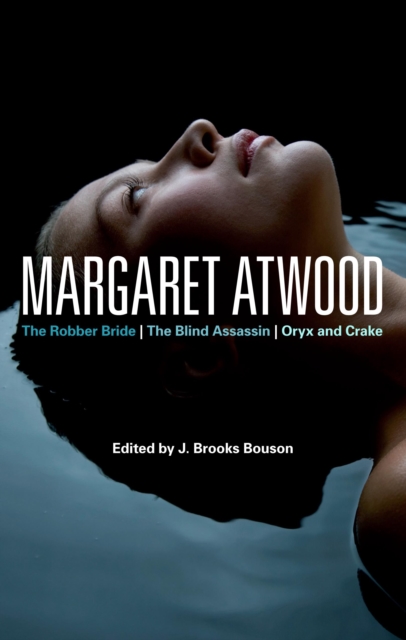
Margaret Atwood : The robber bride, The blind assassin, Oryx and Crake
A collection of original essays by well-known Atwood scholars offering contemporary critical readings and assessments of three well known Atwood texts.
eBook


Afterword
This afterword reflects on this issue of 19’s accomplishments and on prior studies of Queen Victoria in local and global contexts, and suggests directions for future scholarship.
Journal Article

The Cambridge introduction to Margaret Atwood
\"Margaret Atwood offers an immensely influential voice in contemporary literature. Her novels have been translated into over 22 languages and are widely studied, taught and enjoyed. Her style is defined by her comic wit and willingness to experiment. Her work has ranged across several genres, from poetry to literary and cultural criticism, novels, short stories and art. This Introduction summarizes Atwood's canon, from her earliest poetry and her first novel, The Edible Woman, through The Handmaid's Tale to The Year of the Flood. Covering the full range of her work, it guides students through multiple readings of her oeuvre. It features chapters on her life and career, her literary, Canadian and feminist contexts, and how her work has been received and debated over the course of her career. With a guide to further reading and a clear, well organised structure, this book presents an engaging overview for students and readers\"--Provided by publisher.
BOOK
