
Catalogue Search | MBRL


Are you sure you want to remove the book from the shelf?

{{itemTitle}}
58
result(s) for
"Margaret Lock"
Sort by:

Troubling natural categories : engaging the medical anthropology of Margaret Lock
A collection of essays taking up Margaret Lock's enduring project to question our deeply held assumptions about biology, medicine, and culture.
Book
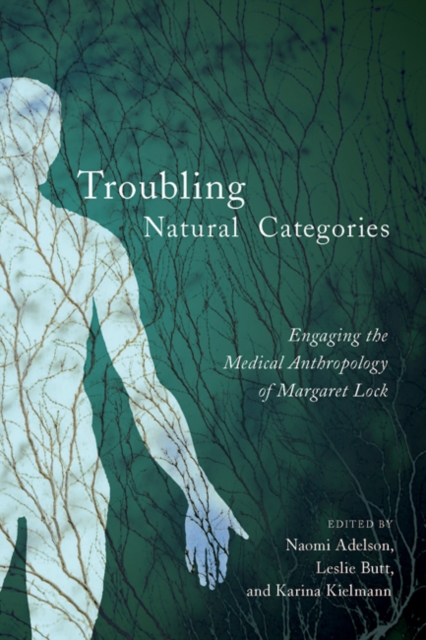
Troubling Natural Categories
Where do our conventional understandings of health, illness, and the body stem from? What makes them authoritative? How are the boundaries set around these areas of life unsettled in the changing historical and political contexts of science, technology, and health care delivery? These questions are at the heart of Troubling Natural Categories, a collection of essays honouring the tradition of Margaret Lock, one of the preeminent medical anthropologists of our time. Throughout her career, Lock has investigated how medicine sets boundaries around what is deemed \"normal\" and \"natural,\" and how, in turn, these ideas shape our technical and moral understandings of life, sickness, and death. In this book, nine established medical anthropologists - all former students of Lock - critically engage with her work, offering ethnographic and historical analyses that problematize taken-for-granted constructs in health and medicine in a range of global settings. The essays elaborate cutting-edge themes within medical anthropology, including the often disturbing, inherently political nature of biomedicine and biotechnology, the medicalization of mental health processes, and the formation of uniquely \"local biologies\" through the convergence of bodily experience, scientific discourse, and new technologies of care. Troubling Natural Categories not only affirms Margaret Lock's place at the forefront of scholarship but, with these essays, carves out new intellectual directions in the medical social sciences. Contributors include Sean Brotherton, Vinh-Kim Nguyen, Junko Kitanaka, Stephanie Lloyd, Dominique Behague, and Annette Leibing.
eBook

The structure of embodiment and the overcoming of dualism: an analysis of Margaret Lock's paradigm of embodiment
This paper elaborates the structure of the dualistic theory and that of embodiment in order to demonstrate the existence of a linkage between the two using a topological approach. This theoretical step is taken in order to analyze the so-called overcoming of dualistic theories by the theory of embodiment. The author takes into analysis one particular theory of embodiment: Margaret Lock's. The analysis of her theory of embodiment takes into consideration both the level of enunciation and the enunciated, which enables the conceptualisation and understanding of Lock's subjectivity as immanent to her theory. The specific moral position taken by Lock, which is required by her 'project,' is not transcendental, but rather an effect of the structure of her theory. This approach enables the author to develop a critique that aims at developing further her theory rather than pragmatically negating it. The paper ends with the conclusion that the object of the overcoming is not the dualism itself, but the element called 'Difference.' This element belongs to the dualistic relation yet simultaneously cannot be integrated into the relation. Conversely, a theory of embodiment is faced with the same element (Difference), but the former finds another structural solution to it. In the claim of an overcoming of dualities, the theory of embodiment demonstrates a reactionary position in relation to Difference. Precisely this position produces the structural impossibility of accepting the fact that the actual problem is not to bridge Difference, but, rather, to formulate it as such.
Journal Article

The enculturated gene
In the 1980s, a research team led by Parisian scientists identified several unique DNA sequences, or haplotypes, linked to sickle cell anemia in African populations. After casual observations of how patients managed this painful blood disorder, the researchers in question postulated that the Senegalese type was less severe. The Enculturated Gene traces how this genetic discourse has blotted from view the roles that Senegalese patients and doctors have played in making sickle cell \"mild\" in a social setting where public health priorities and economic austerity programs have forced people to improvise informal strategies of care.
eBook


Local Biologies and Ecologies of Screening: Tracing the Aftereffects of the \Shanghai Study\
Between 1988 and 1995, the first randomized controlled trial (RCT) of breast self-exam (BSE) was conducted in Shanghai, China. Subsequent policy recommendations transformed the landscape of breast cancer screening in North America as practice guidelines shifted from \"BSE\" toward \"breast awareness. \"Critiques of the study raised issues of race, regionalism, and difference. I turn to Margaret Lock's concept \"local biology\" to tease out the complexities of these arguments, and expand upon it to consider the impact of local ecologies of screening on receipt and implementation of international behavioral clinical trial results. The case study of the Shanghai trial illuminates conflicts and controversies around what constitutes evidence in breast cancer prevention research, and for whom.
Journal Article

Rethinking our criteria for death
[Margaret Lock] is especially interested in the different reception that the attempt to redefine death in terms of the loss of brain functions has had in Japan, as opposed to its seemingly ready acceptance in the USA and Europe. As others have noted, the redefinition of death for transplant purposes seems to have been foisted upon the professions and public without informed debate. There is, accordingly, \"nothing like a public consensus\" even now. In these western countries, it may be that \"the seductive metaphor of the gift of life\" has led to the \"studious\" avoidance of reflection on how exactly the organs are procured. And the absence of legal and religious objection may have been an important factor. In Japan, the lawyers are still opposed to the confusion of brain death with death itself. Japanese transplant law preserves the distinction, allowing the diagnosis of brain death-which involves the acknowledged danger of the crucial apnoea test-only for the specific purpose of organ procurement in cases where the patient has registered a wish to donate organs and the relatives agree.
Journal Article

A 'story' on the Rail Trail
In West Boylston, the book \"Leaves\" by David Ezra Stein, was chosen. \"Leaves\" is the story of a young bear who is puzzled by the falling leaves. \"Please leave it up, and please do more books was a recurring theme,\" [Margaret Lock] said. \"Under 'ages of children,' I saw 'young at heart' and 'inner child,' so it's not just kids enjoying it.\"
Newspaper Article

Medical anthropologist abandoned the lab to look at the big picture
After a decade spent teasing out cultural and biological differences between the ways women in North America and Japan bear up during menopause, she grappled with cultural attitudes toward organ transplants and brain death. Now in her early 70s, [Margaret Lock] has shifted her focus to the impact of genetic breakthroughs on how we understand and cope with Alzheimer's disease and other types of senile dementia. She's thrilled with the research grant, but also with recognition of the need to pause and think about issues arising from the revolution under way in medicine and biotechnology, such as the mapping of genes for the late onset diseases like Alzheimer's. \"A lot of people - a lot of scientists - feel things are running away with it all.\" Yet in the end, this acclaimed researcher still thinks of herself as a teacher: \"I have taught hundreds of students in the social sciences and in medicine at McGill, many of whom have said my course changed the direction of their career. That's where I feel I'm making a real and lasting contribution.\"
Newspaper Article