
Catalogue Search | MBRL


Are you sure you want to remove the book from the shelf?

{{itemTitle}}
85
result(s) for
"Marginality, Social -- France"
Sort by:


Muslim girls and the other France : race, identity politics, & social exclusion
[Keaton] provides the most in-depth analysis of the predicament of
French Arabs and Africans living in the suburbs of Paris... [O]ne can read the book
through the lens of such great African American writers and activists as Richard
Wright, James Baldwin, and Malcolm X... [It] contains an implicit warning to you,
France, not to repeat the American racism in your country. -- from the
foreword by Manthia Diawara Muslim girls growing up in the
outer-cities of Paris are portrayed many ways in popular discourse -- as oppressed,
submissive, foreign, kids from the projects, even as veil-wearing
menaces to France's national identity -- but rarely are they perceived simply as
what they say they are: French. Amid widespread perceptions of heightened urban
violence attributed to Muslims and highly publicized struggles over whether Muslim
students should be allowed to wear headscarves to school, Muslim girls often appear
to be the quintessential other. In this vivid, evocative study, Trica
Danielle Keaton draws on ethnographic research in schools, housing projects, and
other settings among Muslim teenagers of North and West African origin. She finds
contradictions between the ideal of universalism and the lived reality of ethnic
distinction and racialized discrimination. The author's own experiences as an
African American woman and non-Muslim are key parts of her analysis. Keaton makes a
powerful statement about identity, race, and educational politics in contemporary
France.
eBook
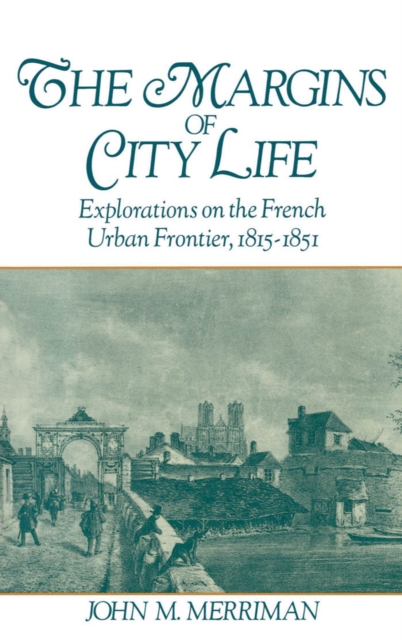
The margins of city life : explorations on the French urban frontier, 1815-1851
Unlike most historians of France, who draw a sharp contrast between cities and the countryside, the author of this book focuses on the spatial and social margins of urban life, the faubourgs, or suburbs, where rural migrants and the laboring poor of the cities congregated in growing numbers in the first half of the nineteenth century. In the eyes of the urban elite, the women and men of the periphery—the world of beggars, the most miserable prostitutes, rag pickers, casual labor, and unwanted people; the location of slaughterhouses, gas factories, tanneries, and, increasingly, even executions—resembled barbarians at the gates of civilization. The book examines the cultural and social traditions—as expressed in festivals, in songs, in strikes, and in political movements—that took root in these areas. Neighborhood solidarities developed that were based on a collective sense of exclusion from the urban centre. Urban elites came to realize that the “disreputable” persons they had cast out to the suburbs were becoming a ring of organized worker communities, “the cord that might wring our necks one day”. The author argues that to know the margins is also to know the centre, for the periphery of urban life was a mirror in which the French upper classes viewed the most frightening aspects of their world.
eBook

State power, stigmatization, and youth resistance culture in the French Banlieues
State Power, Stigmatization, and Youth Resistance Culture in the French Banlieues: Uncanny Citizenship studies the invisibility of visible minorities in a space relegated to the periphery of major French cities.
eBook
Interpreting the republic
Interpreting the Republic focuses on contemporary French literary and cinematic works (1986-2003) that reflect on what it means to belong to a nation such as France by giving voice to those who find themselves marginalized by French society. While citizenship and belonging can be, and indeed are, interpreted differently depending on the socio-cultural and political context, it is the foundational universalist republican principle of egalitarianism that has remained the sacred cow of French society. One of the major claims of this study is that the rigidity of French national discourse that attempts to impose a certain homogeneity in its official identificatory practices—all citizens are French, and thus difference (ethnic, sexual or other) ceases to matter—is but one of the many possible interpretations of the notion of the Republic. Vinay Swamy seeks to show how such supposedly unshakeable principles, too, can be, and often are, reinterpreted in novel ways by the works analyzed in this study, which carve out niches for their protagonists that are otherwise foreclosed in the French national space. Swamy examines the different tactics of identification deployed in works ranging from early \"romans beurs\" by Azouz Begag, Farida Belghoul and Soraya Nini, and Allah Superstar, the 2003 satirical novel by Y.B., to a number of films including Gazon maudit (1995), Ma vie en rose (1997), Le Placard (2001), Chouchou (2003), all of which (re)interpret the Republic in an effort to legitimize their protagonists' otherwise marginalized social position(s). He demonstrates how all these works put pressure, in a variety of ways, on an unacknowledged understanding of the institutional positions.
eBook

Neighbourhood deprivation and smoking cessation: a survival analysis using the French constances cohort
Background
Socioeconomic disparity in smoking prevalence is increasing in France, which may be partially related to lower rates of smoking cessation in lower socioeconomic groups. Research suggests that this socioeconomic gradient may extend to the neighbourhood level, as deprived neighbourhoods present characteristics that reduce the likelihood of quitting. However, longitudinal studies are limited; therefore, this study aims to investigate the effect of neighbourhood deprivation on smoking cessation.
Methods
Data from Constances, a French national population-based cohort collecting annual data from adults aged 18 to 69 at inception, were used. Participants who enrolled between 2012 and 2018 with at least one follow-up wave and with information on smoking status before 2020 were included. The hazard of quitting was estimated by the decile of the French Deprivation Index (FDEP) using a Cox model on a cohort of 21,110 smokers at baseline.
Results
After adjustment for relevant demographic and individual-level socioeconomic factors, individuals in the highest deprivation decile were less likely to quit smoking compared to those in the lowest, with a hazard ratio of 0.89 (95% CI 0.81, 0.98). Stratified analyses indicated that this effect was present for those with the least education.
Conclusions
In a large representative cohort, we found that smokers living in highly deprived neighbourhoods are less likely to quit. These smokers may be facing multiple barriers to cessation, underscoring the importance of targeting such neighbourhoods in smoking cessation interventions.
Journal Article

A “Promise” of Proximity in Pandemic Times: Governing Urban Marginality in the Netherlands and France
In early 2020, the world went into lockdown. New norms of social distancing and remote work were implemented in response to the Covid‐19 crisis. These appeared to challenge a key aspect of the current governance of urban marginality: proximity. This article asks how proximity, involving physical presence in the neighborhood and direct contact with urban residents, changed and remained the same during the pandemic and what that means for the governance of urban marginality beyond pandemic times. To answer this question, I draw on ethnographic research in marginalized neighborhoods in the Netherlands and France. Studying how local actors practiced proximity and responded to the pandemic, I found that Covid‐19 did not simply challenge proximate governance. While physical presence decreased, the pandemic instigated direct daily contact and community response and relief, albeit at a distance. Yet, the pandemic also exposed and aggravated existing difficulties in working “close by,” particularly integrated approaches and civic engagement. The analysis, first, highlights the importance of daily contact beyond mere physical presence in the neighborhood, deepening current understanding of proximity in practice. Second, it demonstrates that local actors continuously negotiate community involvement, advancing understanding of civic engagement in proximate governance and the assumed inherent qualities and fixed nature of “the local.” Third, it challenges the centrality of “the local” in urban governance, revealing the impact of a “far‐away” state on local actors’ ability to improve living conditions in marginalized neighborhoods, in and beyond pandemic times.
Journal Article

Territorial Stigma and the Politics of Resistance in a Parisian Banlieue: La Courneuve and Beyond
Drawing on research carried out in the Parisian banlieue of La Courneuve, this article contributes to the sociological analysis of urban marginalisation in post-riot France. Beginning with a discussion of the broad relationship between society and space, drawing on Pierre Bourdieu’s relational understanding of social space and how these complexities are inscribed in the urban, it moves on to consider how this relates to Lefebvre’s production of space thesis. The main body of the article outlines some of the ways in which territorial stigmatisation is imposed and reproduced. Empirical material is treated here as ‘diagnostic’ of the symbolic domination that blights La Courneuve. Yet this material is also illuminative of the irregular and scattered forms that resistance to territorial stigma takes. It is suggested that the complex relationship between social and physical space is expressed through the construction of symbolic geographies of domination/resistance and negotiated through intricate ‘entanglements of power’.
Journal Article
Considering social inequalities in health in large-scale testing for COVID-19 in Montréal: a qualitative case study
Background
Evidence continues to demonstrate that certain marginalised populations are disproportionately affected by COVID-19. While many studies document the impacts of COVID-19 on social inequalities in health, none has examined how public health responses to the pandemic have unfolded to address these inequities in Canada. The purpose of our study was to assess how social inequalities in health were considered in the design and planning of large-scale COVID-19 testing programs in Montréal (Québec, Canada).
Methods
Part of the multicountry study HoSPiCOVID, this article reports on a qualitative case study of large-scale testing for COVID-19 in Montréal. We conducted semi-structured interviews with 19 stakeholders involved in planning large-scale testing or working with vulnerable populations during the pandemic. We developed interview guides and a codebook using existing literature on policy design and planning, and analysed data deductively and inductively using thematic analysis in NVivo.
Results
Our findings suggest that large-scale COVID-19 testing in Montréal did not initially consider social inequalities in health in its design and planning phases. Considering the sense of urgency brought by the pandemic, participants noted the challenges linked to the uptake of an intersectoral approach and of a unified vision of social inequalities in health. However, adaptations were gradually made to large-scale testing to improve its accessibility, acceptability, and availability. Actors from the community sector, among others, played an important role in supporting the health sector to address the needs of specific subgroups of the population.
Conclusions
These findings contribute to the reflections on the lessons learned from COVID-19, highlighting that public health programs must tackle structural barriers to accessing healthcare services during health crises. This will be necessary to ensure that pandemic preparedness and response, including large-scale testing, do not further increase social inequalities in health.
Journal Article

Asylum, Racism, and the Structural Production of Sexual Violence against Racialised Women in Exile in Paris
The recent arrival of refugees from Ukraine has thrown into sharp focus the racialised colonial underpinnings of the French asylum and refugee system, as the open-door welcome afforded to Ukrainians, supposedly “closer” to the French population, highlights the rejection and marginalisation of “others” who seek refuge in the country. The current situation lays bare not only the “double standards” applied to refugees depending on their country of origin and race, but also the colonial foundations of the French asylum system as a whole. This might be seen as particularly significant in a country where even within academic research on asylum and refugees the racial and colonial foundations of the current system are rarely mentioned, and where the principle of Republican universalism has been consistently used to both hide and justify racialised and gendered forms of inequality and discrimination. In this contribution we wish to explore the ways in which the coloniality of the French asylum system works to deny exiled women access to welfare and social services, creating systems of racialised and gendered violence against them. We highlight the ways in which the State not only neglects these women, but actively contributes to violence through its racialised neo-liberal policies. The withdrawal of access to welfare and social services, including housing, welfare payments or health services, all form a part of this system of structural violence which leads to increasing levels of harm. Based on ethnographic research carried out in the Paris region, our article aims to emphasise that the structural production of gendered violence, particularly sexual violence against racialised exiled women, illustrates the coloniality of the asylum system and more broadly of the migration regime, which manifests itself in policies of exclusion, neglect and endangerment—including death.
Journal Article