
Catalogue Search | MBRL


Are you sure you want to remove the book from the shelf?

{{itemTitle}}
123,252
result(s) for
"Marine animals"
Sort by:

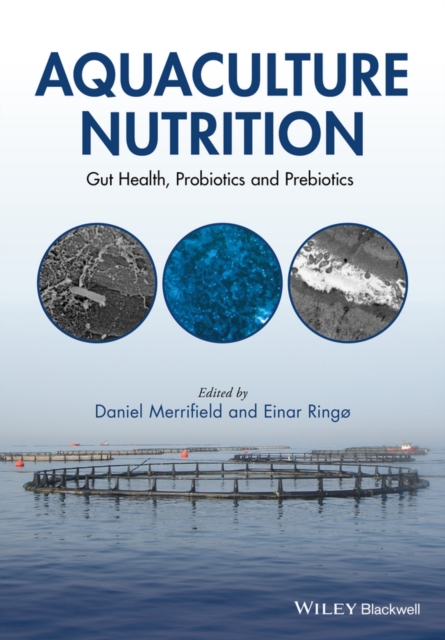
Aquaculture Nutrition
Manipulation of the microbial gut content of farmed fishes and crustaceans can have a marked effect on their general health, growth, and quality. Expertly covering the science behind the use of prebiotics and probiotics this landmark book explains how the correct manipulation of the gut flora of farmed fishes and crustaceans can have a positive effect on their health, growth rates, feed utilization, and general wellbeing. Aquaculture Nutrition: Gut Health, Probiotics and Prebiotics provides a comprehensive overview of the current knowledge of the gut microbiomes of fish and their importance with respect to host-fish health and performance, providing in-depth, cutting-edge fundamental and applied information. Written by many of the world’s leading authorities and edited by Dr Daniel Merrifield and Professor Einar Ringø, this important book discusses in detail the common mechanisms for modulating microbiomes, particularly at the gut level (e.g. probiotics, prebiotics and synbiotics). The book is a key resource for an understanding of the historical development of these products, their known mechanisms of action and their degree of efficacy as presently demonstrated in the literature. The fundamental material provided on the gut microbiota itself, and more broad aspects of microbe-live feed interactions, provide essential reading for researchers, academics and students in the areas of aquaculture nutrition, fish veterinary science, microbiology, aquaculture, fish biology and fisheries. Those involved in the development and formulation of aquaculture feeds and those with broader roles within the aquaculture industry will find a huge wealth of commercially-important information within the book’s covers. All libraries in universities and research establishments where biological sciences, nutrition and aquaculture are studied and taught, should have copies of this excellent book on their shelves.
eBook

Sea bones
\"Did you know that Jellies (not Jelly Fish--because they aren't actually fish) have no bones and no brains? Or that the largest animal on Earth is the blue whale? Join author-illustrator Bob Barner as he makes waves with this lush picture book about the sea featuring his signature rhyming text and colorful illustrations. Filled with incredible fishy facts about vertebrates, invertebrates, endoskeletons, and exoskeletons, and an underwater informational chart, Sea Bones will make young readers want to dive right in!\"-- Provided by publisher.
Book

Marine Animal Co-Products—How Improving Their Use as Rich Sources of Health-Promoting Lipids Can Foster Sustainability
Marine lipids are recognized for their-health promoting features, mainly for being the primary sources of omega-3 fatty acids, and are therefore critical for human nutrition in an age when the global supply for these nutrients is experiencing an unprecedent pressure due to an ever-increasing demand. The seafood industry originates a considerable yield of co-products worldwide that, while already explored for other purposes, remain mostly undervalued as sustainable sources of healthy lipids, often being explored for low-value oil production. These co-products are especially appealing as lipid sources since, besides the well-known nutritional upside of marine animal fat, which is particularly rich in omega-3 polyunsaturated fatty acids, they also have interesting bioactive properties, which may garner them further interest, not only as food, but also for other high-end applications. Besides the added value that these co-products may represent as valuable lipid sources, there is also the obvious ecological upside of reducing seafood industry waste. In this sense, repurposing these bioresources will contribute to a more sustainable use of marine animal food, reducing the strain on already heavily depleted seafood stocks. Therefore, untapping the potential of marine animal co-products as valuable lipid sources aligns with both health and environmental goals by guaranteeing additional sources of healthy lipids and promoting more eco-conscious practices.
Journal Article

Creepy sea creatures
The depths of the ocean are home to some creepy creatures that rarely see daylight. Packed with eerie information, this book will shed light on deep-sea life miles below the oceans surface.
Book
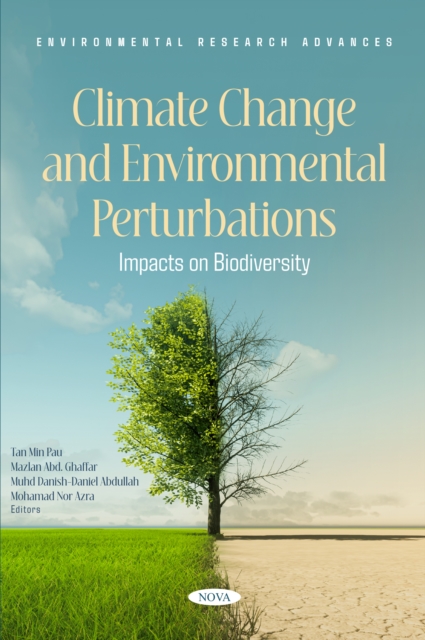
Climate Change and Environmental Perturbations: Impacts on Biodiversity
Global warming and climate change have become common and trending subjects of interest in recent decades, due to their massive influence on biodiversity and the subsequent effects on sustainable uses by human beings. In recent times, various ecosystems have been severely inundated with issues that threaten the very survival of the biodiversity that we depend on. Biodiversity is highly essential, as our health, food, and economy all depend on it. Unfortunately, the rapid change in the Earth's climatic and anthropogenic stressors are affecting all forms of life and non-life on earth, most such effects being irreversible. Climate change and environmental perturbation: Impacts on biodiversity highlights topics associated to the impacts of climate change and human-mediated environmental disturbances on biodiversity, as well as the use of micro-organisms in combating environmental pollution (including their potential as anti-biofouling agents).
eBook

Wild sea creatures : sharks, whales, and dolphins!
The Kratt Brothers use their creature powers to swim with sharks, whales, and other wild sea creatures in a book that identifies the characteristics of sperm whales, tiger sharks, blowfish, and dolphins.
Book

Semi-supervised Visual Tracking of Marine Animals Using Autonomous Underwater Vehicles
In-situ visual observations of marine organisms is crucial to developing behavioural understandings and their relations to their surrounding ecosystem. Typically, these observations are collected via divers, tags, and remotely-operated or human-piloted vehicles. Recently, however, autonomous underwater vehicles equipped with cameras and embedded computers with GPU capabilities are being developed for a variety of applications, and in particular, can be used to supplement these existing data collection mechanisms where human operation or tags are more difficult. Existing approaches have focused on using fully-supervised tracking methods, but labelled data for many underwater species are severely lacking. Semi-supervised trackers may offer alternative tracking solutions because they require less data than fully-supervised counterparts. However, because there are not existing realistic underwater tracking datasets, the performance of semi-supervised tracking algorithms in the marine domain is not well understood. To better evaluate their performance and utility, in this paper we provide (1) a novel dataset specific to marine animals located at http://warp.whoi.edu/vmat/, (2) an evaluation of state-of-the-art semi-supervised algorithms in the context of underwater animal tracking, and (3) an evaluation of real-world performance through demonstrations using a semi-supervised algorithm on-board an autonomous underwater vehicle to track marine animals in the wild.
Journal Article


Research biases create overrepresented “poster children” of marine invasion ecology
Nonnative marine species are increasingly recognized as a threat to the world's oceans, yet are poorly understood relative to their terrestrial and freshwater counterparts. Here, we conducted a systematic review of 2,203 research articles on nonnative marine animals to determine whether the current literature reflects the known diversity of marine invaders, how much we know about these species, and how frequently their impacts are measured. We found that only 39% of nonnative animals listed in the World Register of Introduced Marine Species appeared in the peer‐reviewed English literature. Of those, fewer than half were the subject of more than one study. There is currently little focus on the consequences of marine introductions: only 9.9% of studies quantified the impact of nonnative species. Finally, our knowledge of nonnative marine species is heavily limited by strong taxonomic biases consistent across all phyla, resulting in one or two disproportionately well‐studied representatives for each phylum, which we refer to as the “poster children” of invasion. These gaps in the literature make it difficult to effectively triage the most detrimental invasive species for management and illustrate the challenges in achieving the global biodiversity goals of preventing and managing the introduction and establishment of invasive species.
Journal Article