
Catalogue Search | MBRL


Are you sure you want to remove the book from the shelf?

{{itemTitle}}
33,623
result(s) for
"Marine organisms"
Sort by:


Ocean Acidification
The ocean has absorbed a significant portion of all human-made carbon dioxide emissions. This benefits human society by moderating the rate of climate change, but also causes unprecedented changes to ocean chemistry. Carbon dioxide taken up by the ocean decreases the pH of the water and leads to a suite of chemical changes collectively known as ocean acidification. The long term consequences of ocean acidification are not known, but are expected to result in changes to many ecosystems and the services they provide to society. Ocean Acidification: A National Strategy to Meet the Challenges of a Changing Ocean reviews the current state of knowledge, explores gaps in understanding, and identifies several key findings.
Like climate change, ocean acidification is a growing global problem that will intensify with continued CO2 emissions and has the potential to change marine ecosystems and affect benefits to society. The federal government has taken positive initial steps by developing a national ocean acidification program, but more information is needed to fully understand and address the threat that ocean acidification may pose to marine ecosystems and the services they provide. In addition, a global observation network of chemical and biological sensors is needed to monitor changes in ocean conditions attributable to acidification.
eBook


An Updated Review of Tetrodotoxin and Its Peculiarities
Tetrodotoxin (TTX) is a crystalline, weakly basic, colorless organic substance and is one of the most potent marine toxins known. Although TTX was first isolated from pufferfish, it has been found in numerous other marine organisms and a few terrestrial species. Moreover, tetrodotoxication is still an important health problem today, as TTX has no known antidote. TTX poisonings were most commonly reported from Japan, Thailand, and China, but today the risk of TTX poisoning is spreading around the world. Recent studies have shown that TTX-containing fish are being found in other regions of the Pacific and in the Indian Ocean, as well as the Mediterranean Sea. This review aims to summarize pertinent information available to date on the structure, origin, distribution, mechanism of action of TTX and analytical methods used for the detection of TTX, as well as on TTX-containing organisms, symptoms of TTX poisoning, and incidence worldwide.
Journal Article

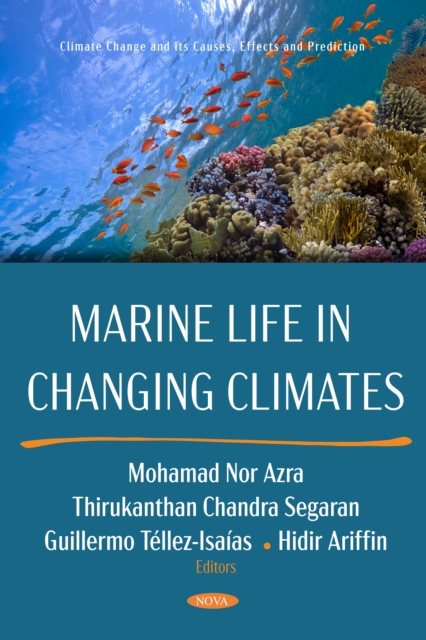
Marine Life in Changing Climates
The marine environment and coastal ecosystems are critical links in the sustainability of earth life, such as for mollusks, crustaceans, and other fisheries species, and will play an important role in ecosystem services in the future. Meanwhile, the climate change scenario is having a severe impact on these natural resources, as well as their food supply and production. Because of the vast amount of literature available on online academic databases, scientometric methodologies may benefit from identifying research gaps and potential future fields of study. This book evaluates the climate risks to various types of marine life. The authors navigate through the narratives of ocean researchers, conservationists, and communities, each of whom shares their recent research and perspectives on the challenges of climate change. The book is also a call to action, highlighting the critical importance of understanding, mitigating, and adapting to the effects of climate change on marine environmental ecosystems. From university initiatives to global collaboration, this scientific book sheds light on the current situation of climate change on marine resources, offering a glimmer of hope for ocean sustainability. This book on marine life in a changing climate is not confined to the blue horizon. The next volume of this book not only covers the literature of this book but also delves deeper into the current research and challenges of our ocean in a constantly changing climate.
eBook
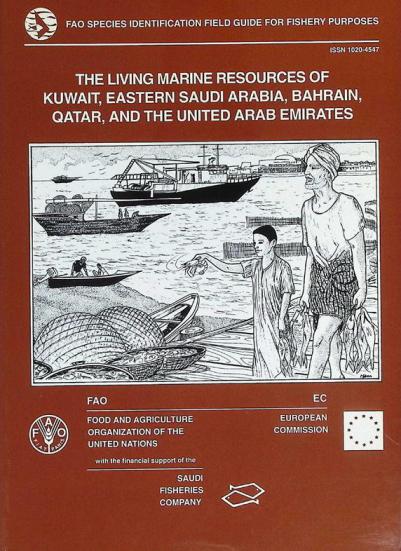
Living marine resources of Kuwait, eastern Saudi Arabia, Bahrain, Qatar, and the United Arab Emirates
\"Living Marine Resources of Kuwait, Eastern Saudi Arabia, Bahrain, Qatar, and the United Arab Emirates\" is a definitive taxonomic and ecological guide to the marine life of the Persian (Arabian) Gulf. Published primarily as a technical resource for the Food and Agriculture Organization (FAO), the work provides an exhaustive inventory of the fish, crustaceans, mollusks, and sea turtles inhabiting the shallow, hypersaline waters of the southern and western Gulf. Authored by Kent E. Carpenter and his colleagues, the manual serves as a critical tool for species identification, fisheries management, and biodiversity conservation in one of the most thermally extreme marine environments on Earth.
BOOK

An overview on marine cellulolytic enzymes and their potential applications
Marine-derived enzymes have recently gained attention particularly for industrial applications. Cellulose-degrading enzymes are among leading biocatalysts with potential utility in biorefineries. This review presents an account of the cellulase production by marine sources from microorganisms including bacteria, yeasts, and molds to marine invertebrates such as protist, rotifer, mollusks, arthropods, and echinoderms. Cellulose-degrading ability of marine invertebrates is attributed to the production of endogenous cellulases and activities by the symbionts. Specialized environments in marine including estuaries and mangroves are rich in lignocellulosic biomass and hence provide a feeding ground for cellulose digesters. Since cellulosic biomass is considered chemical and energy feedstock, therefore, cellulases with the ability to work under extreme environment are much needed to fulfill the demand of modern biotechnological industries. The review also discusses physicochemical parameters of marine-derived cellulases.Key Points:• Cellulolytic ability is widely distributed amongst marine organisms, yet very few have been studied for their biotechnological potential• Cellulase from marine organisms has been demonstrated as a successful agent in degradation of seaweed processing waste to low molecular fragments• Marine derived cellulases can find their application in green processes• Cellulases from marine sources exhibit high specific activity, thermostability, and other important biochemical properties and hence can contend well with the enzymes from terrestrial sources.
Journal Article

Antimicrobial and Immunomodulatory Properties and Applications of Marine-Derived Proteins and Peptides
Marine organisms provide an abundant source of potential medicines. Many of the marine-derived biomaterials have been shown to act as different mechanisms in immune responses, and in each case they can significantly control the immune system to produce effective reactions. Marine-derived proteins, peptides, and protein hydrolysates exhibit various physiologic functions, such as antimicrobial, anticancer, antioxidant, antihypertensive, and anti-inflammatory activities. Recently, the immunomodulatory properties of several antimicrobial peptides have been demonstrated. Some of these peptides directly kill bacteria and exhibit a variety of immunomodulatory activities that improve the host innate immune response and effectively eliminate infection. The properties of immunomodulatory proteins and peptides correlate with their amino acid composition, sequence, and length. Proteins and peptides with immunomodulatory properties have been tested in vitro and in vivo, and some of them have undergone different clinical and preclinical trials. This review provides a comprehensive overview of marine immunomodulatory proteins, peptides, and protein hydrolysates as well as their production, mechanisms of action, and applications in human therapy.
Journal Article