
Catalogue Search | MBRL


Are you sure you want to remove the book from the shelf?

{{itemTitle}}
4
result(s) for
"Marinetti, F. T., 1876-1944"
Sort by:


Filippo Tommaso Marinetti
Filippo Tommaso Marinetti: The Artist and His Politics explores the politics of the leader of the Futurist art movement. Emerging in Italy in 1909, Futurism sought to propel Italy into the modern world, and is famously known for outlandish claims to want to destroy museums and libraries in order to speed this transition. Futurism, however, also had a much darker political side. It glorified war as the solution to many of Italy's ills, and was closely tied to the Fascist Regime. In this book, Ialongo focuses on Marinetti as the chief determinant of Futurist politics and explores how a seemingly revolutionary art movement, at one point having some support among revolutionary left-wing movements in Italy, could eventually become so intimately tied to the repressive Fascist regime. Ialongo traces Marinetti's politics from before the foundation of Futurism, through the Great War, and then throughout the twenty-year Fascist dictatorship, using a wide range of published and unpublished sources. Futurist politics are presented within the wider context of developments in Italy and Europe, and Ialongo further highlights how Marinetti's political choices influenced the art of his movement.
eBook

Space as Storyteller
Walter Benjamin's Arcades Projectsuggests that space can become a storyteller: if so, plenty of fleeting stories can be read in the space of modernity, where repetition and the unexpected cross-pollinate. In Space as Storyteller, Laura Chiesa explores several stories across a wide range of time that narrate spatial jumps, from Benjamin's tangential take on the cityscape, the experimentalism of Futurist theatricality, the multiple and potential atlases narrated by Italo Calvino and Georges Perec, and the posturban thought and practice of Bernard Tschumi and Rem Koolhaas/OMA.Space as Storytellerdiverts attention from isolated disciplines and historical or geographical contexts toward transdisciplinary encounters that mobilize the potential to invent new spaces of comparison, a potential the author describes as \"architecturability.\"
eBook
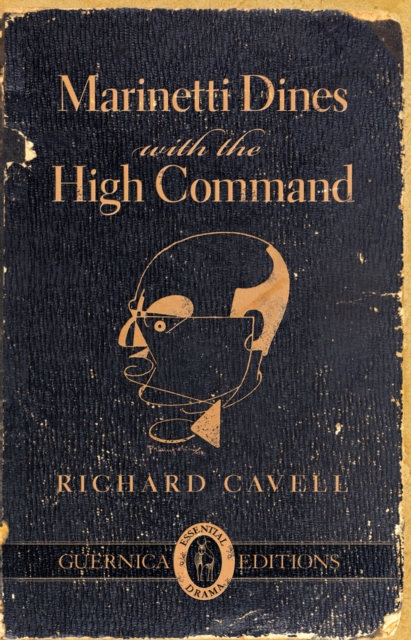
Marinetti Dines with the High Command
Marinetti Dines with the High Command is a work that dramatizes the turbulent life and times of F. T. Marinetti, founder of Futurism, the first global art movement. Marinetti?s artistic career raises enduring questions about art and politics because of his association with Fascism, and the second part of this work is an essay which explores the implications of this association. What makesthis text unique is that it is the first work that assesses Marinetti?s life in the context of a command performance he gave for the German High Command in January of 1934?and the spectacular conclusion to that performance.
eBook