
Catalogue Search | MBRL


Are you sure you want to remove the book from the shelf?

{{itemTitle}}
25,503
result(s) for
"Maritime History "
Sort by:

North to bondage : loyalist slavery in the Maritimes
\"Many Canadians believe their nation fell on the right side of history in harbouring escaped slaves from the United States. In fact, in the wake of the American Revolution, many Loyalist families brought slaves with them when they settled in the Maritime colonies of British North America. Once there, slaves used their traditions of survival, resistance, and kinship networks to negotiate their new reality. Harvey Amani Whitfield's book, the first on slavery in the Maritimes, is a startling corrective to the enduring and triumphant narrative of Canada as a land of freedom at the end of the Underground Railroad.\"--Provided by publisher.
Book

The Problem of Piracy in the Early Modern World
In the early modern period, both legal and illegal maritime predation was a common occurrence, but the expansion of European maritime empires exacerbated existing and created new problems of piracy across the globe. This collection of original case studies addresses these early modern problems in three sections: first, states' attempts to exercise jurisdiction over seafarers and their actions; second, the multiple predatory marine practices considered 'piracy'; and finally, the many representations made about piracy by states or the seafarers themselves. Across nine chapters covering regions including southeast Asia, the Atlantic archipelago, the North African states, and the Caribbean Sea, the complexities of defining and criminalizing maritime predation is explored, raising questions surrounding subjecthood, interpolity law, and the impacts of colonization on the legal and social construction of ocean, port, and coastal spaces. Seeking the meanings and motivations behind piracy, this book reveals that while European states attempted to fashion piracy into a global and homogenous phenomenon, it was largely a local and often idiosyncratic issue.
eBook


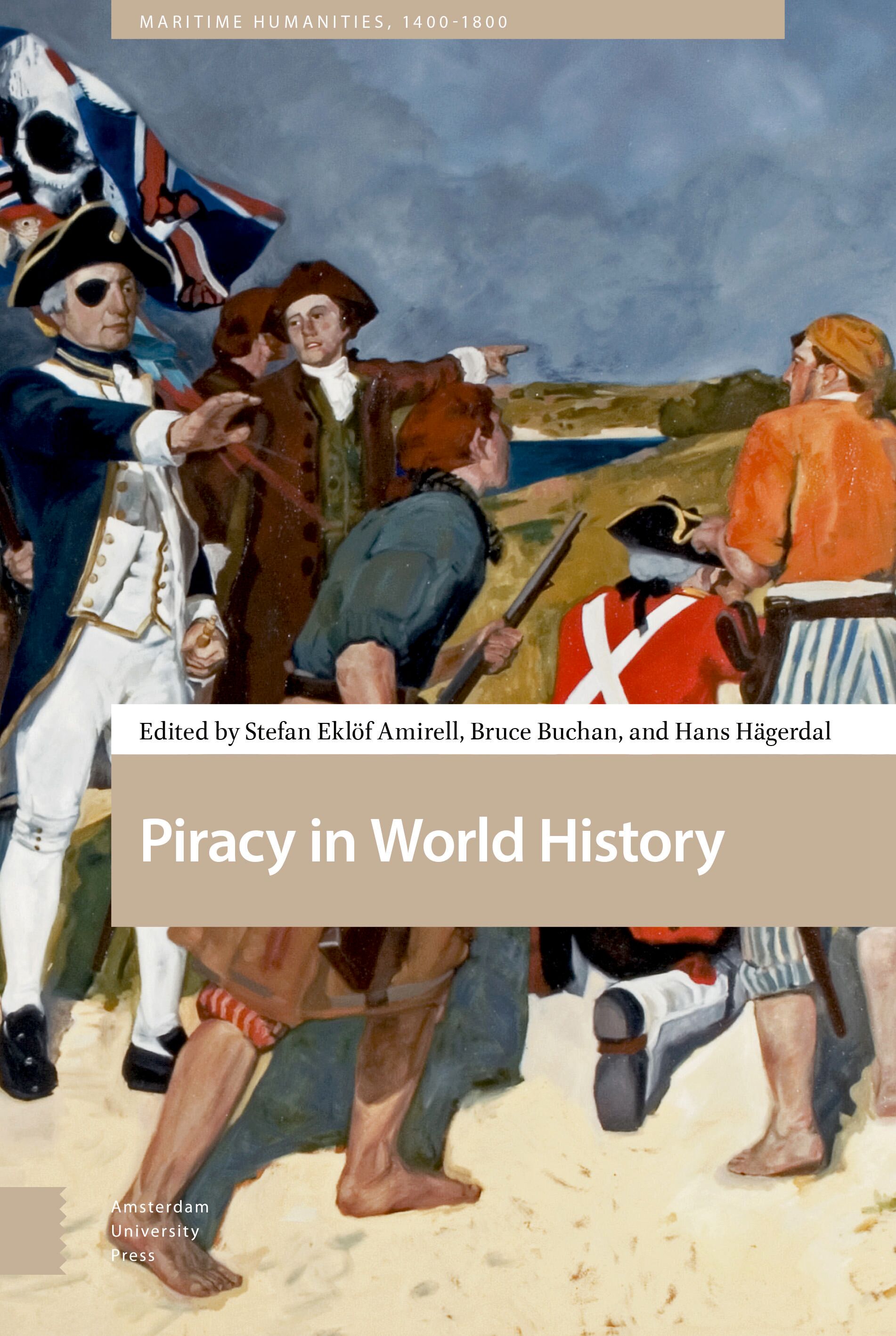
Piracy in World History
In a modern global historical context, scholars have often regarded piracy as an essentially European concept which was inappropriately applied by the expanding European powers to the rest of the world, mainly for the purpose of furthering colonial forms of domination in the economic, political, military, legal and cultural spheres. By contrast, this edited volume highlights the relevance of both European and non-European understandings of piracy to the development of global maritime security and freedom of navigation. It explores the significance of 'legal posturing' on the part of those accused of piracy, as well as the existence of non-European laws and regulations regarding piracy and related forms of maritime violence in the early modern era. The authors in this volume highlight cases from various parts of the early-modern world, thereby explaining piracy as a global phenomenon.
eBook

Vast expanses : a history of the oceans
Vast Expanses is a cultural, environmental and geopolitical history that examines the relationship between humans and oceans, reaching back across geological and evolutionary time and exploring different cultures around the globe. Our ancient connections with the sea have developed and multiplied with industrialization and globalization, a trajectory that runs counter to Western depictions of the ocean as a place remote from and immune to human influence. This book argues that knowledge about the ocean - discovered through work and play, scientific investigation, and also through the ambitions people have harboured for the sea - has played a central role in defining our relationship with this vast, trackless and opaque place. It has helped people exploit marine resources, control ocean space, extend imperial or national power, and attempt to refashion the sea into a more tractable arena for human activity. An understanding of the ocean has animated and strengthened connections between people and their seas. To comprehend this history we must address questions of how, by whom and why knowledge of the ocean was created and used, in both the past and the present; through this, we can forge a healthier relationship with the sea for the future.
Book

Piracy in World History
In a modern global historical context, scholars have often regarded piracy as an essentially European concept which was inappropriately applied by the expanding European powers to the rest of the world, mainly for the purpose of furthering colonial forms of domination in the economic, political, military, legal and cultural spheres. By contrast, this edited volume highlights the relevance of both European and non-European understandings of piracy to the development of global maritime security and freedom of navigation. It explores the significance of ‘legal posturing’ on the part of those accused of piracy, as well as the existence of non-European laws and regulations regarding piracy and related forms of maritime violence in the early modern era. The authors in Piracy in World History highlight cases from various parts of the early-modern world, thereby explaining piracy as a global phenomenon.
eBook

The Channel : England, France and the Construction of a Maritime Border in the Eighteenth Century
\"Rather than a natural frontier between natural enemies, this book approaches the English Channel as a shared space, which mediated the multiple relations between France and England in the long eighteenth century, in both a metaphorical and a material sense. Instead of arguing that Britain's insularity kept it spatially and intellectually segregated from the Continent, Renaud Morieux focuses on the Channel as a zone of contact. The 'narrow sea' was a shifting frontier between states and a space of exchange between populations. This richly textured history shows how the maritime border was imagined by cartographers and legal theorists, delimited by state administrators and transgressed by migrants. It approaches French and English fishermen, smugglers and merchants as transnational actors, whose everyday practices were entangled. The variation of scales of analysis enriches theoretical and empirical understandings of Anglo-French relations, and reassesses the question of Britain's deep historical connections with Europe\"-- Provided by publisher.
Book

Pirates of empire : colonisation and maritime violence in Southeast Asia
\"The suppression of piracy and other forms of maritime violence was a keystone in the colonisation of Southeast Asia. Focusing on what was seen in the nineteenth century as the three most pirate-infested areas in the region--the Sulu Sea, the Strait of Malacca and Indochina--this comparative study in colonial history explores how piracy was defined, contested and used to resist or justify colonial expansion, particularly during the most intense phase of imperial expansion in Southeast Asia from c. 1850 to c. 1920. In doing so, it demonstrates that piratical activity continued to occur in many parts of Southeast Asia well beyond the mid-nineteenth century, when most existing studies of piracy in the region end their period of investigation. It also points to the changes over time in how piracy was conceptualised and dealt with by each of the major colonial powers in the region, Britain, France, the Netherlands, Spain and the United States\"-- Provided by publisher.
Book

Maritime Musicians and Performers on Early Modern English Voyages
Maritime Musicians and Performers on Early Modern English Voyages aims to tell the full story of early English shipboard performers, who have been historically absent from conversations about English navigation, maritime culture, and economic expansion. Often described reductively in voyaging accounts as having one function, in fact maritime performers served many communicative tasks. Their lives were not only complex, but often contradictory. Though not high-ranking officers, neither were they lower-ranking mariners or sailors. They were influenced by a range of competing cultural practices, having spent time playing on both land and sea, and their roles required them to mediate parties using music, dance, and theatre as powerful forms of nonverbal communication. Their performances transcended and breached boundaries of language, rank, race, religion, and nationality, thereby upsetting conventional practices, improving shipboard and international relations, and ensuring the success of their voyages.
eBook