
Catalogue Search | MBRL


Are you sure you want to remove the book from the shelf?

{{itemTitle}}
339,087
result(s) for
"Marketing Research"
Sort by:


Bayesian, statistics and marketing
The past decade has seen a dramatic increase in the use of Bayesian methods in marketing due, in part, to computational and modelling breakthroughs, making its implementation ideal for many marketing problems. Bayesian analyses can now be conducted over a wide range of marketing problems, from new product introduction to pricing, and with a wide variety of different data sources. Bayesian Statistics and Marketing describes the basic advantages of the Bayesian approach, detailing the nature of the computational revolution. Examples contained include household and consumer panel data on product purchases and survey data, demand models based on micro-economic theory and random effect models used to pool data among respondents. The book also discusses the theory and practical use of MCMC methods.
eBook


Systemic antibiotic sales and WHO recommendations, India/Vente d'antibiotiques systemiques et recommandations de l'OMS en Inde/Venta de antibioticos sistemicos y recomendaciones de la OMS en la India
Metodos Se extrajeron datos sobre los volumenes de ventas de antibioticos sistemicos en la India de una base de datos de ventas de empresas de investigacion de mercado. Se comparo la cuota de mercado de las ventas de antibioticos en 2020 por categoria AWaRe (Access, Watch and Reserve) de la OMS y para los que estaban sometidos a controles regulatorios nacionales adicionales. Tambien se analizaron las ventas de combinaciones en dosis fijas que estaban: formalmente aprobadas para su comercializacion o tenian un certificado de no objecion; en la lista nacional de medicamentos esenciales; y en la lista de antibioticos no recomendados de la OMS.
Journal Article

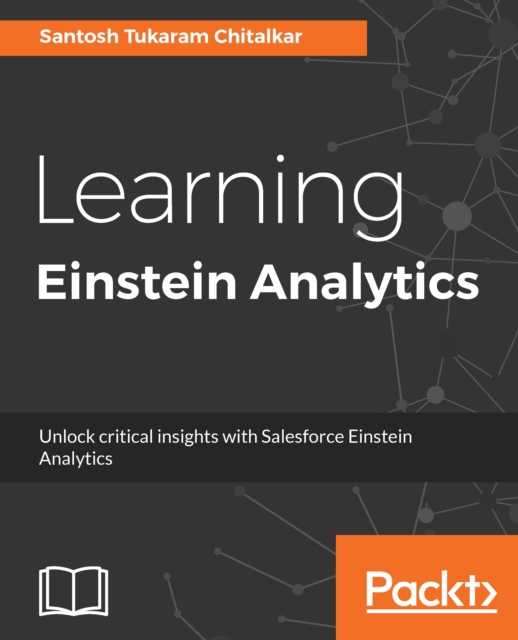
Learning einstein analytics
Salesforce Einstein analytics aka Wave Analytics is a cloud-based platform which connects data from the multiple sources and explores it to uncover insights. It empowers sales reps, marketers, and analysts with the insights to make customer interactions smarter, without building mathematical models. You will learn to create app, lenses, dashboards and share dashboards with other users. This book starts off with explaining you fundamental concepts like lenses, step, measures and sets you up with Einstein Analytics platform. We then move on to creating an app and here you will learn to create datasets, dashboards and different ways to import data into Analytics. Moving on we look at Einstein for sales, services, and marketing individually. Here you will learn to manage your pipeline, understand important business drivers and visualize trends. You will also learn features related to data monitoring tools and embedding dashboards with lightning, visualforce page and mobile devices. Further, you will learn advanced features pertaining to recent advancements in Einstein which include machine learning constructs and getting predictions for events. By the end of this book, you will become proficient in the Einstein analytics, getting insights faster and understanding your customer in a better way.
eBook


Quantitative analysis of qualitative data: Using voyant tools to investigate the sales-marketing interface
Purpose: The present study aims to give a short introduction into the possibilities offered by Voyant Tools to quantitatively explore qualitative data on the Sales-Marketing Interface (SMI). Design/methodology/approach: The study is exploratory in nature. The sample consists of sales and marketing employees of six manufacturing companies. Answers to three open-ended questions were analysed quantitatively and visualised in various ways using the online toolset of Voyant Tools. We experimented with four different tools out of the twenty four offered by Voyant Tools. These tools were: Cyrrus tool, Correlation tool, Topics tool and Scatter plot tool. All four tools that were tested on the data have scalable parameters. Various settings were tested to demonstrate how input conditions influence modelling of the textual data. Findings: It was demonstrated that the four selected text analysis tools can yield valuable information depicted in the form of attractive visualisation formats. It is also highlighted how rushed conclusions can be arrived at by falsely interpreting the visualised data. It is shown how setting different input parameters can affect results. Out of the four examined tools the Scatter plot tool offering an analysis and modelling method based on t-SNE (t-Distributed Stochastic Neighbour Embedding) proved to yield the most complex information about the text. Research limitations/implications: As the study aimed to be exploratory a sample of convenience was used to collect qualitative data. Although quantitative methods can be invaluable tools of preliminary analysis and hypothesis adjustment in the processing of qualitative data, their results should always be checked against the traditional content analysis techniques which are more sensitive to the complex structure of semantic units. These quantitative techniques are to help early exploration of textual data. Practical implications: Managerial implications might be connected to the fact that in a fast changing global business environment managers and corporate decision makers in general might find the attractive visualisation outputs of Voyant Tool easy to analyse and interprete various aspects of business. As Voyant Tools is an open source, free online sofware not even requiring regsitration and at the same time has an impressive array of sophisticated statistical tools, it might be a cost-effective way of analysing qualitative data. Originality/value: As there is virtually no earlier literature on how quantitative data visualisation techniques can be used in marketing research, especially in the analysis of the SMI, utilisation possibilities of Voyant Tools and other quantitative data analysis and visualisation software for handling qualitative data is definitely a worthwhile area for further research.
Journal Article


Exploring the Impact of COVID-19 Pandemic on Eating and Purchasing Behaviours of People Living in England
Consumers’ eating habits have changed significantly due to the anxiety and boredom from the reported cases and deaths of COVID-19, the change in work patterns, controlled food shopping, and the inability to meet loved ones during the lockdown. The magnitude of these changes in the eating behaviours and purchasing habits of consumers varies across different groups of people. This study provides empirical evidence of the effects of COVID-19 on the eating and purchasing behaviours of people living in England, which was assessed based on sociodemographic variables. A total of 911 participants were recruited by a market research company, while only 792 useable responses were included in this study. The participants, aged between 18 and 91 years, completed an online questionnaire, and the data were analysed using ordinal regression. Data were collected between October and December 2020. Male participants constituted 34.60%, females 63.89%, and others (other gender and those who prefer not to declare their gender) were 0.63%. The majority of participants’ ages fell into the ranges of 23–38 and 39–54. Participants aged 23 to 38 years had the greatest effect of COVID-19 on their purchasing decision of healthier foods, while participants in the age groups 55–73 and 74–91 were least affected. The amount of foods purchased during the pandemic decreased with increasing age. The amount of foods purchased by students, people in employment, and people from minority ethnic groups were greatly affected by the pandemic. All participants who stated that taking food supplements is not important during the pandemic were from the White ethnic group. The effects of the pandemic on purchasing healthier foods were greater in younger generations and participants in full- or part-time employment than participants who were retired and who were aged above 55. The participants with higher educational qualifications and those from minority ethnic groups were also more affected by the pandemic. We suggest further studies to monitor any changes in the effects of the ongoing COVID-19 pandemic on the eating and purchasing behaviours of consumers.
Journal Article