
Catalogue Search | MBRL


Are you sure you want to remove the book from the shelf?

{{itemTitle}}
33
result(s) for
"Marocains."
Sort by:


Making Morocco
How did four and a half decades of European colonial intervention transform Moroccan identity? As elsewhere in North Africa and in the wider developing world, the colonial period in Morocco (1912-1956) established a new type of political field in which notions about and relationships among politics and identity formation were fundamentally transformed. Instead of privileging top-down processes of colonial state formation or bottom-up processes of local resistance, the analysis in Making Morocco focuses on interactions between state and society.
Jonathan Wyrtzen demonstrates how, during the Protectorate period, interactions among a wide range of European and local actors indelibly politicized four key dimensions of Moroccan identity: religion, ethnicity, territory, and the role of the Alawid monarchy. This colonial inheritance is reflected today in ongoing debates over the public role of Islam, religious tolerance, and the memory of Morocco's Jews; recent reforms regarding women's legal status; the monarchy's multiculturalist recognition of Tamazight (Berber) as a national language alongside Arabic; the still-unresolved territorial dispute over the Western Sahara; and the monarchy's continued symbolic and practical dominance of the Moroccan political field.
eBook

Paradoxes of social capital
Paradoxes of Social Capital critically examines the robustness of social capital theory as an analytical tool in explaining the various 'integration' patterns amongst Moroccans in London. The book also considers how structural factors impact on the ways in which Moroccans - across generations - sustain, access and use social capital at the levels of family, ethnic community, migrant associations and schools. Furthermore, this research elaborates on how social capital serves as an identity (re)source that is continuously negotiated and redefined through (in)active group (family, ethnic, religious and national) memberships. An original model of studying the second-generation processes of adaptation - viewed as 'transversal adaptation'- is also introduced, shifting the focus from predetermined 'integration' patterns to a circular and a longitudinal approach to 'integration', where new opportunities and constraints emerge, structured by the temporal flow of life trajectories.
Paradoxes of Social Capital bestudeert de plaatsing van het sociale kapitaal om de samenhang en integratie van drie generaties Marokkanen in Londen te evalueren. Cherti heeft voor dit boek gebruik gemaakt van onder meer orale geschiedenis, diepteinterviews en andere veldtechnieken.
eBook

Partir pour cultiver, cultiver pour rester
Une partie des ouvriers agricoles saisonniers marocains qui alimentent les exploitations de la huerta provençale deviennent des entrepreneurs agricoles. Ces derniers négocient leur insertion dans les interstices en friche d’un milieu agricole en déclin depuis plusieurs décennies. Espace périurbain, la ressource foncière y est cependant convoitée. Pour y accéder, les exploitants marocains recourent à des pratiques informelles. Ces nouveaux acteurs ruraux qui s’installent seuls travaillent dans des conditions précaires et reproduisent les rapports de force à l’œuvre dans un milieu agricole provençal en difficulté.
Journal Article

A Man of Three Worlds
In the late fifteenth century, many of the Jews expelled from Spain made their way to Morocco and established a dynamic community in Fez. A number of Jewish families became prominent in commerce and public life there. Among the Jews of Fez of Hispanic origin was Samuel Pallache, who served the Moroccan sultan as a commercial and diplomatic agent in Holland until Pallache's death in 1616. Before that, he had tried to return with his family to Spain, and to this end he tried to convert to Catholicism and worked as an informer, intermediary, and spy in Moroccan affairs for the Spanish court. Later he became a privateer against Spanish ships and was tried in London for that reason. His religious identity proved to be as mutable as his political allegiances: when in Amsterdam, he was devoutly Jewish; when in Spain, a loyal converso (a baptized Jew).
In A Man of Three Worlds, Mercedes García-Arenal and Gerard Wiegers view Samuel Pallache's world as a microcosm of early modern society, one far more interconnected, cosmopolitan, and fluid than is often portrayed. Pallache's missions and misadventures took him from Islamic Fez and Catholic Spain to Protestant England and Holland. Through these travels, the authors explore the workings of the Moroccan sultanate and the Spanish court, the Jewish communities of Fez and Amsterdam, and details of the Atlantic-Mediterranean trade. At once a sweeping view of two continents, three faiths, and five nation-states and an intimate story of one man's remarkable life, A Man of Three Worlds is history at its most compelling.
eBook
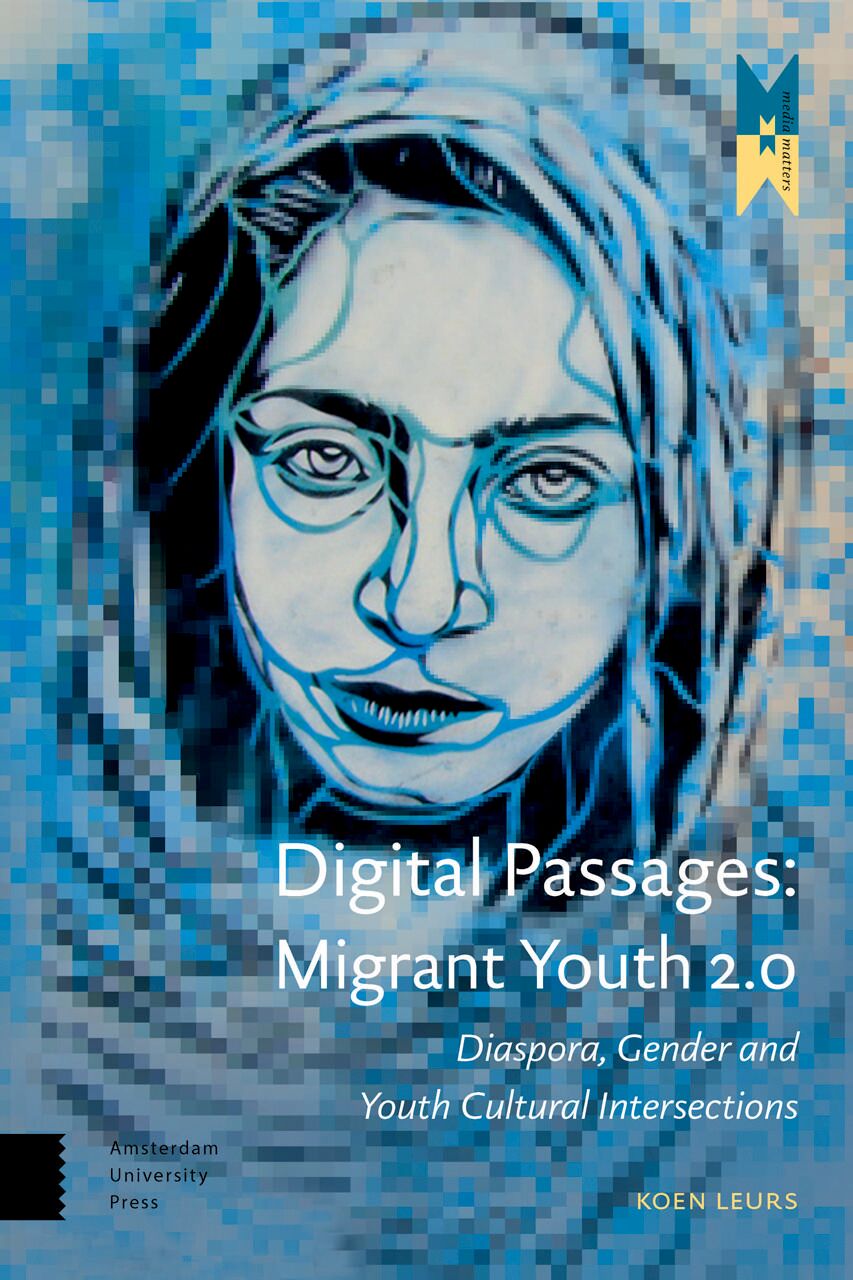
Digital Passages: Migrant Youth 2.0
Increasingly, young people live online, with the vast majority of their social and cultural interactions conducted through means other than face-to-face conversation. How does this transition impact the ways in which young migrants understand, negotiate, and perform identity? That's the question taken up by Digital Passages: Migrant Youth 2.0, a ground-breaking analysis of the ways that youth culture online interacts with issues of diaspora, gender, and belonging. Drawing on surveys, in-depth interviews, and ethnography, Koen Leurs builds an interdisciplinary portrait of online youth culture and the spaces it opens up for migrant youth to negotiate power relations and to promote intercultural understanding.
eBook

The position of the turkish and moroccan second generation in amsterdam and rotterdam
The Dutch second generation of Turkish and Moroccan origin is coming of age and making a transition from education to the labour market. This first publication of the TIES Project (Towards the Integration of the European Second Generation) studies the social situation and views of this ethnic group, drawing on the research carried out in Amsterdam and Rotterdam in 2006-07 among the Dutch-born children of immigrants from Turkey and Morocco and a comparison group of young people (age 18-35) whose parents were born in the Netherlands. This title is available in the OAPEN Library - http://www.oapen.org.
eBook

The Elusive Fox
Considered one of Morocco's most important contemporary writers, Muhammad Zafzaf created stories of alterity, compassionate tales inhabited by prostitutes, thieves, and addicts living in the margins of society. InThe Elusive Fox, Zafzaf's first novel to be translated into English, a young teacher visits the coastal city of Essaouira in the 1960s. There he meets a group of European bohemians and local Moroccans and is exposed to the grittier side of society.
More than a novel,The Elusive Foxis a portrait of a city during a time of fluidcultural and political mores in Morocco.
eBook

Paths to Middle-Class Mobility among Second-Generation Moroccan Immigrant Women in Israel
While first-generation immigrant women often begin their lives at the bottom of their new societies, the fates of their adult daughters can be very different. Still, little research has been done to examine the opportunities or constraints that second-generation women face and the class achievements they make. In this volume, author Beverly Mizrachi presents an in-depth study of 40¬-50-year-old Moroccan women whose parents made up part of the largest ethnic group to enter Israel after its establishment in 1948 and whose mothers began their new lives at the bottom of the economic and social ladder. Through her analysis of the life history narratives of these women, Mizrachi reveals that they used a range and number of sites to achieve an impressive mobility into the low, middle, and high segments of the middle class. Mizrachi's findings have implications for studying the middle-class mobility of second-generation immigrant women from subordinate groups in other Western societies.This book begins by examining the historical background and culture of Jewish communities in Morocco that affected the mobility resources of the first, immigrant generation of Moroccan women in Israel and those accrued by the second generation. Mizrachi goes on to analyze the life history narratives of a group of six second-generation Moroccan women to show how they used their education, employment, gendered spousal relationships, motherhood, residential mobility, and the body to achieve their middle-class mobility. Ultimately, she finds that these women used their human agency and social structures over these multiple social sites to reach their class goals for themselves and their children while simultaneously constructing new classed and ethnicized feminine identities. Mizrachi's findings integrate issues of gender, ethnicity, immigration, and class mobility in a single intriguing study.
eBook