
Catalogue Search | MBRL


Are you sure you want to remove the book from the shelf?

{{itemTitle}}
62
result(s) for
"Marvel Comics Group."
Sort by:

Infinity countdown companion
\"The events of the Infinity Countdown are felt across the Marvel Universe! Carol Danvers holds the Reality Stone - and with it meets the Captain Marvels of many worlds! Daredevil battles to keep Hell's Kitchen safe from the influence of the Mind Stone! And the Champions fight in deep space for...the Chitauri!? All this plus...Black Widow! Don't miss this blockbuster tie-in to the most explosive Marvel event of 2018! \" -- Page 4 of cover.
Book

Marvel Comics in the 1970s
Marvel Comics in the 1970s explores a forgotten chapter in the story of the rise of comics as an art form. Bridging Marvel's dizzying innovations and the birth of the underground comics scene in the 1960s and the rise of the prestige graphic novel and postmodern superheroics in the 1980s, Eliot Borenstein reveals a generation of comic book writers whose work at Marvel in the 1970s established their own authorial voice within the strictures of corporate comics. Through a diverse cast of heroes (and the occasional antihero)—Black Panther, Shang-Chi, Deathlok, Dracula, Killraven, Man-Thing, and Howard the Duck—writers such as Steve Gerber, Doug Moench, and Don McGregor made unprecedented strides in exploring their characters' inner lives. Visually, dynamic action was still essential, but the real excitement was taking place inside their heroes' heads. Marvel Comics in the 1970s highlights the brilliant and sometimes gloriously imperfect creations that laid the groundwork for the medium's later artistic achievements and the broader acceptance of comic books in the cultural landscape today.
eBook

Powers of a girl : 65 Marvel women who punched the sky & changed the universe
Character guide to the women of the Marvel Universe, explaining their early lives and how they became superheroes.
Book

Frank Miller's Daredevil and the Ends of Heroism
In the late 1970s and early 1980s, writer-artist Frank Miller turnedDaredevilfrom a tepid-selling comic into an industry-wide success story, doubling its sales within three years. Lawyer by day and costumed vigilante by night, the character of Daredevil was the perfect vehicle for the explorations of heroic ideals and violence that would come to define Miller's work.
Frank Miller's Daredevil and the Ends of Heroismis both a rigorous study of Miller's artistic influences and innovations and a reflection on how his visionary work onDaredevilimpacted generations of comics publishers, creators, and fans. Paul Young explores the accomplishments of Miller the writer, who fused hardboiled crime stories with superhero comics, while reimagining Kingpin (a classic Spider-Man nemesis), recuperating the half-baked villain Bullseye, and inventing a completely new kind ofDaredevilvillain in Elektra. Yet, he also offers a vivid appreciation of the indelible panels drawn by Miller the artist, taking a fresh look at his distinctive page layouts and lines.
A childhood fan of Miller'sDaredevil, Young takes readers on a personal journey as he seeks to reconcile his love for the comic with his distaste for the fascistic overtones of Miller's controversial later work. What he finds will resonate not only with Daredevil fans, but with anyone who has contemplated what it means to be a hero in a heartless world.
Other titles in the Comics Culture series includeTwelve-Cent Archie,Wonder Woman: Bondage and Feminism in the Marston/Peter Comics,1941-1948, andConsidering Watchmen:
Poetics, Property, Politics.
eBook

The life of Captain Marvel
When Carol Danvers takes a temporary leave from the Avengers to unravel her past, trouble comes looking for her in the form of an intergalactic weapon.
Book


What makes a hero
\"The finest heroes in the Marvel Cinematic Universe are here to answer one vital question: What makes a hero? Whether they're fighting evil throughout the realms or defending humanity on Earth, these heroes have their own approaches to strength, goodness, and heroism. Join these incredible women as they explore what it means to be a hero. Where we find real strength, and how to find your very own super-power. What makes a hero is the perfect story for every hero of every size, from very background, everywhere\"--Jacket.
Book

Make Ours Marvel
The creation of the Fantastic Four effectively launched the Marvel Comics brand in 1961. Within ten years, the introduction (or reintroduction) of characters such as Spider-Man, the Hulk, Iron Man, Captain America, and the X-Men catapulted Marvel past its primary rival, DC Comics, for domination of the comic book market. Since the 2000s, the company’s iconic characters have leaped from page to screens with the creation of the Marvel Cinematic Universe, which includes everything from live-action film franchises of Iron Man and the Avengers to television and streaming media, including the critically acclaimed Netflix series Daredevil and Jessica Jones. Marvel, now owned by Disney, has clearly found the key to transmedia success. Make Ours Marvel traces the rise of the Marvel brand and its transformation into a transmedia empire over the past fifty years. A dozen original essays range across topics such as how Marvel expanded the notion of an all-star team book with The Avengers, which provided a roadmap for the later films, to the company’s attempts to create lasting female characters and readerships, to its regular endeavors to reinvigorate its brand while still maintaining the stability that fans crave. Demonstrating that the secret to Marvel’s success comes from adeptly crossing media boundaries while inviting its audience to participate in creating Marvel’s narrative universe, this book shows why the company and its characters will continue to influence storytelling and transmedia empire building for the foreseeable future.
eBook

Thanos. Cosmic powers
\"The ever-scheming Thanos forges unlikely alliances! But what secret mission could lead Rhino, Super-Skrull, Titanium Man and more to join Thanos's new team of would-be Defenders?... The battle begins as the cosmic firmament holds its breath. But in a war between two evils, either outcome may result in death!\"--Back cover.
Book
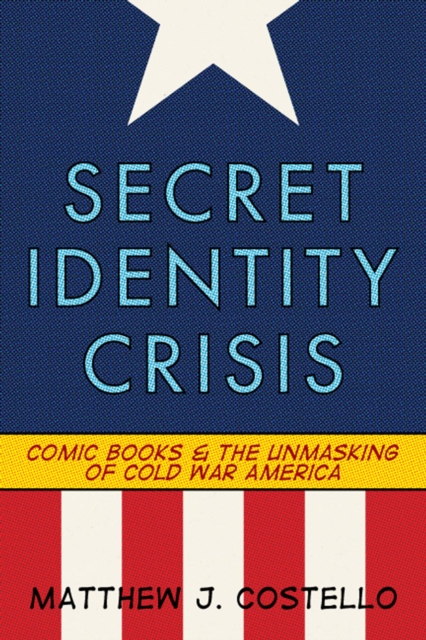
Secret identity crisis : comic books and the unmasking of cold war America
What Cold War-era superheroes reveal about American society and foreign policy Physicist Bruce Banner, caught in the nuclear explosion of his experimental gamma bomb, is transformed into the rampaging green monster, the Hulk.High school student Peter Parker, bitten by an irradiated spider, gains its powers and becomes Spiderman.
eBook