
Catalogue Search | MBRL


Are you sure you want to remove the book from the shelf?

{{itemTitle}}
5
result(s) for
"Mass media -- Political aspects -- Europe -- Case studies"
Sort by:

The Media and Elections
This comparative study brings together academics and practitioners who work in the field of media and elections to provide a set of national case studies and an analysis of the legal and regulatory frameworks that are employed by nation states to ensure that the media perform according to certain standards during election periods. In setting out the legal and regulatory framework each chapter provides an account of the socio-political conditions and media environment in each of the countries and subsequently details the laws that govern the print and broadcast media during election campaign periods. The countries included are France, Germany, Italy, Russia, South Africa, the United States, and the United Kingdom. A set of reflections by a Member of the European Parliament and a set of recommendations for good practice in media and elections are also included. Thus, the book is organized to provide a practical guide so that it can be used as a handbook.
Contents: D. Ward, Introduction. T. Perruci, M. Villa, Italy. L.L. Kaid, C.A. Jones United States of America. H. Drück, Germany. A.S. de Beer, South Africa. E. Mauboussin, France. D. Skillen, Russia. A. McNicholas, D. Ward, United Kingdom. K. Junker, Notes From an Election Observer. D. Ward, Conclusion. B-P. Lange, Media and Elections: Some Reflections and Recommendations. Appendices: Internet Sources for Electoral Legislation, Regulation, and Court Decisions. The European Institute for the Media--Media and Democracy Programme. List of Media-Monitoring Missions Conducted by the Media and Democracy Programme of the European Institute for the Media.
eBook

Public Broadcasting and Political Interference
Public broadcasters, like the BBC and the Italian broadcaster RAI, are some of the most important media organisations in the world. Politicians are often tempted to interfere in the workings of these broadcasters and when this happens, the results are highly controversial, as both the Blair and Berlusconi governments have discovered.
Public Broadcasting and Political Interference explains why some broadcasters are good at resisting politicians' attempts at interference, and have won a reputation for independence - and why other broadcasters have failed to do the same. It takes a comparative approach of broadcasters in different countries, including the United Kingdom, Italy, Spain and Sweden arguing political independence for public service broadcasters is important because of its contribution to democracy allowing voters alternative sources of information which allow them to choose between electoral alternatives.
The book will be of interest to be of interest to policy-makers, scholars and students of political communication, broadcasting and the media.
eBook
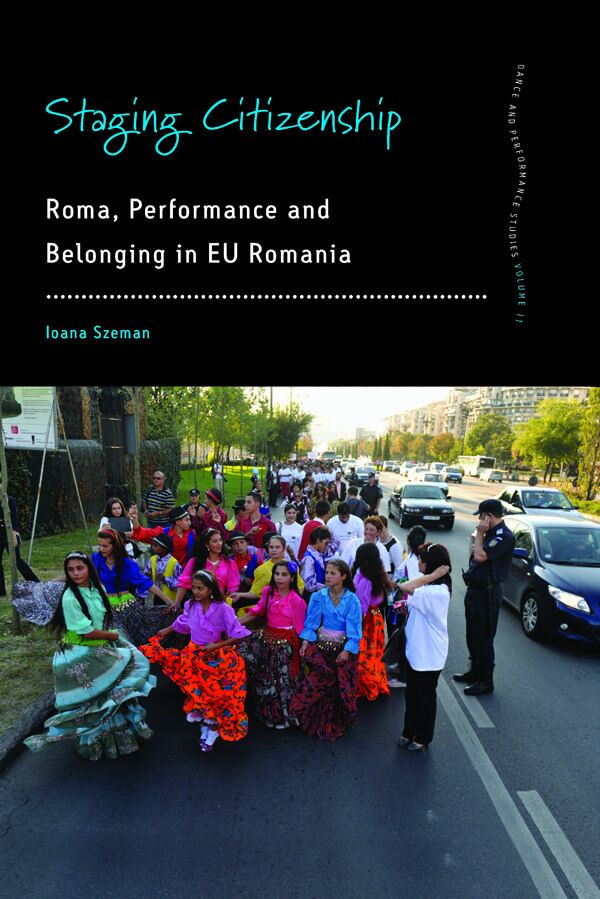
Staging Citizenship
Based on over a decade of fieldwork conducted with urban Roma, Staging Citizenship offers a powerful new perspective on one of the European Union’s most marginal and disenfranchised communities. Focusing on “performance” broadly conceived, it follows members of a squatter’s settlement in Transylvania as they navigate precarious circumstances in a postsocialist state. Through accounts of music and dance performances, media representations, activism, and interactions with both non-governmental organizations and state agencies, author Ioana Szeman grounds broad themes of political economy, citizenship, resistance, and neoliberalism in her subjects’ remarkably varied lives and experiences.
eBook

Telecommunications Liberalization on Two Sides of the Atlantic
The 1990s witnessed a major revolution in telecommunications policy in North America and Europe. The electronics revolution swept the world, and most countries began to realize that they could not compete in many markets without a vibrant, competitive telecommunications sector. As a result, the European Union, Canada, and the United States launched major new liberalization policies aimed at opening all telecommunications markets to competition. This report presents two views of the progress towards competition -one for North America and one for Europe. The authors provide an overview of the market structure on both continents prior to the 1990s, discuss significant regulatory changes during that decade, and analyze changes in rate structures and competition that have occurred since liberalization. They conclude with a look at the present and future impact of the Internet and other new technologies on the telecommunications industry.
eBook
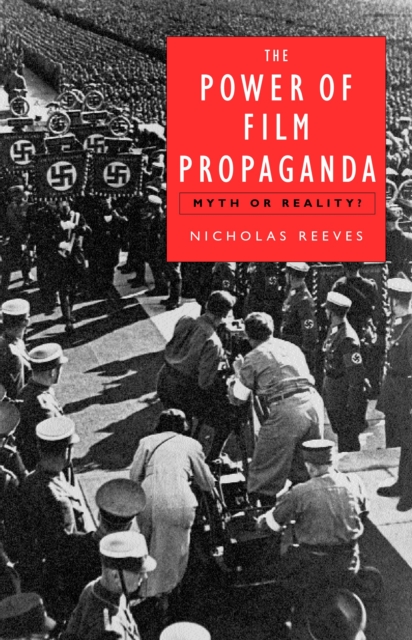
The power of film propaganda : myth or reality?
Explores five case studies in Britain, the USSR, Germany and Italy to determine whether or not propaganda films reached the audiences at which they were targeted, and where they did, whether the films made the impact on those audiences that the propagandists had expected.
eBook