
Catalogue Search | MBRL


Are you sure you want to remove the book from the shelf?

{{itemTitle}}
10
result(s) for
"Mass media Political aspects China 21st century."
Sort by:

The Contentious Public Sphere : Law, Media, and Authoritarian Rule in China
\"Since the mid-2000s, public opinion and debate in China have become increasingly common and consequential, despite the ongoing censorship of speech and regulation of civil society. How did this happen? [This book] shows how the Chinese state drew on law, the media, and the Internet to further an authoritarian project of modernization, but in so doing, inadvertently created a nationwide public sphere in China--one the state must now endeavor to control. [The author] examines the influence this unruly sphere has had on Chinese politics and the ways that the state has responded. Using interviews, newspaper articles, online texts, official documents, and national surveys, [the author] shows that the development of the public sphere in China has provided an unprecedented forum for citizens to influence the public agenda, demand accountability from the government, and organize around the concepts of law and rights. [The author] demonstrates how citizens came to understand themselves as legal subjects, how legal and media professionals began to collaborate in unexpected ways, and how existing conditions of political and economic fragmentation created unintended opportunities for political critique, particularly with the rise of the Internet. The emergence of this public sphere--and its uncertain future--is a pressing issue with important implications for the political prospects of the Chinese people. Investigating how individuals learn to use public discourse to influence politics, [this book] offers new possibilities for thinking about the transformation of state-society relations.\"-- Book jacket flap.
Book

Subaltern China
Behind China's growing economic and political power is a vast underworld of marginalized social groups.In this powerful and timely book, Wanning Sun focuses on the country's hundreds of millions of rural migrant workers, who embody China's most intractable problems of inequality.
eBook

The currency of truth : newsmaking and the late-socialist imaginaries of China's digital era
\"China's news sector is a place where newsmakers, advertising executives, company bosses, and Party officials engage one another in contingent and evolving arrangements that run from cooperation and collaboration to manipulation and betrayal. Drawing on long-term ethnographic fieldwork with journalists, editors, and executives at a newspaper in Guangzhou, The Currency of Truth brings its readers into the lives of the people who write, publish, and profit from news in this milieu. The book shows that far from working as mere cogs in a Party propaganda machine, these individuals are immersed in fluidly shifting networks of formal and informal relationships, which they carefully navigate to pursue diverse goals. In The Currency of Truth, Emily H. C. Chua argues that news in China works less as a medium of mass communication than as a kind of currency as industry players make and use news articles to create agreements, build connections, and protect and advance their positions against one another. Looking at the ethical and professional principles that well-intentioned and civically minded journalists strive to uphold, and the challenges and doubts that they grapple with in the process, Chua brings her findings into conversation around \"post-truth\" news and the \"crisis\" of professional journalism in the West. The book encourages readers to rethink contemporary news, arguing that rather than setting out from the assumption that news works either to inform or deceive its publics, we should explore the \"post-public\" social and political imaginaries emerging among today's newsmakers and remaking the terms of their practice\"-- Provided by publisher.
Book

The Tropical Silk Road
This book captures an epochal juncture of two of the world's most transformative processes: the People's Republic of China's rapidly expanding sphere of influence across the global south and the disintegration of the Amazonian, Cerrado, and Andean biomes. The intersection of these two processes took another step in April 2020, when Chinese President Xi Jinping launched a \"New Health Silk Road\" agenda of aid and investment that would wind through South America, extending the Eurasian-African \"Belt and Road Initiative\" to a series of mine, port, energy, infrastructure, and agrobusiness megaprojects in the Latin American tropics. Through thirty short essays, this volume brings together an impressive array of contributors, from economists, anthropologists, and political scientists to Black, feminist, and Indigenous community organizers, Chinese stakeholders, environmental activists, and local journalists to offer a pathbreaking analysis of China's presence in South America. As cracks in the progressive legacy of the Pink Tide and the failures of ecocidal right-wing populisms shape new political economies and geopolitical possibilities, this book provides a grassroots-based account of a post-US centered world order, and an accompanying map of the stakes for South America that highlights emerging voices and forms of resistance.
eBook

Media, Social Mobilisation and Mass Protests in Post-colonial Hong Kong
Since 2003, Hong Kong has witnessed a series of large-scale protests which have constituted the core of a reinvigorated pro-democracy movement. What drove tens of thousands of citizens to the street on a yearly basis to protest? What were the social and organizational bases of the protest movement? How did media and public discourses affect the protests’ formation and mobilization? How did the protesters understand their own actions and the political environment? This book tackles such questions by using a wide range of methods, including population and protest onsite surveys, media content analysis, and in-depth interviews with activists, politicians, and protest participants. It provides an account of the \"self-mobilization processes\" behind the historic July 1, 2003 protest, and how the protest kick-started new political dynamics and discursive contestations in the public arena which not only turned a single protest into a series of collective actions constituting a movement, but also continually shaped the movement’s characteristics and influence. The book is highly pertinent to readers interested in political development in Hong Kong, and as a case study on \"the power of critical events,\" the book also has broad implications on the study of both media politics and social movements in general.
1. Introduction: From a Critical Event to Ritualistic Protests 2. Public Opinion on the Eve of Explosion 3. Organization, Communication, and Mobilization 4. The Reshaping of Public Discourse 5. Constructing the Call for Democracy 6. Contextual Changes and Strategic Responses 7. Development of the Movement Organization 8. The Social Bases of Continual Protests 9. Making Sense of Participation 10. The June 4 Connection
Francis L. F. Lee is Associate Professor at the School of Journalism and Communication, Chinese University of Hong Kong. Joseph M. Chan is Professor of Journalism and Communication at the Chinese University of Hong Kong. He also served as the Changjiang Chair Professor of Journalism at Fudan University, Shanghai.
The authors also co-edited Media and Politics in Post-handover Hong Kong (also published by Routledge, 2008).
eBook
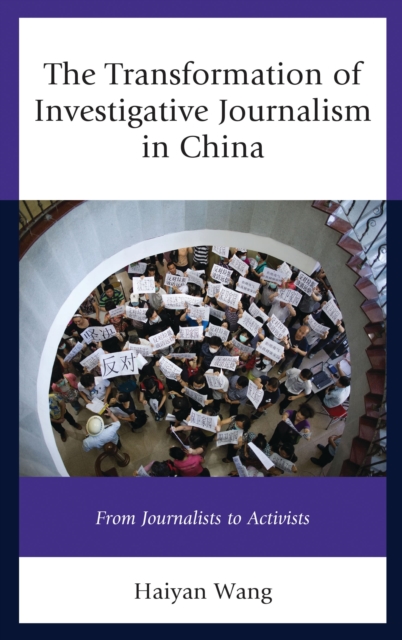
The transformation of investigative journalism in China
Investigative journalism emerged in China in the 1980s following Deng Xiaoping's media reforms.Over the past few decades, Chinese investigative journalists have produced an increasing number of reports in print or on air and covered a surprisingly wide range of topics which had been thought impossible by the standards of the Communist era.
eBook

China's Encounter with Global Hollywood
In recent years, the film industry in the People's Republic of China has found itself among the top three most prolific in the world. When the Chinese government introduced a new revenue-sharing system in 1994, the nation's total movie output skyrocketed with gross box-office receipts totaling billions of yuan. This newfound success, however, has been built on an alternately competitive and collaborative relationship between the ascendant global power of China and the popular culture juggernaut of America.
InChina's Encounter with Global Hollywood, Wendy Su examines the intertwining relationships among the Chinese state, global Hollywood, and the Chinese film industry while analyzing the causes and consequences of the rapid growth of the nation's domestic film production. She demonstrates how the Chinese state has consolidated power by negotiating foreign interest in the lucrative Chinese market while advancing its cultural industries. Su also reveals how mainland Chinese and Hong Kong filmmakers have navigated the often-incompatible requirements of marketization and state censorship.
This timely analysis demonstrates how China has cannily used global capital to modernize its own film industry and now stands poised to step clear of Hollywood's shadow. The country's debates -- on- and offscreen -- over cultural change, market-based economic reforms, and artistic freedom illuminate China's ongoing efforts to build a modern national identity.
eBook

The party line
The first in-depth, authoritative discussion of the role of the press in China and the way the Chinese government uses the media to shape public opinion China's 1.3 billion population may make the country the world's largest, but the vast majority of Chinese share remarkably similar views on these and a wide array of other issues, thanks.
eBook
China's Foreign Policy Making
Various domestic factors impact upon China's foreign policy making, such as bureaucracy, academics, media and public opinion. This stimulating book examines their increasing influence and focuses in particular on China's policy towards the United States, exploring whether there has been an emergence of societal factors, independent of the Communist Party, that have begun to exert influence over the policy process. It also debates questions such as how it will affect the ability of the Chinese government to frame and implement its policy towards the US, and whether it has generated institutional arrangements in China for cooperation on issues such as trade, human rights and Taiwan. The book provides a better understanding of the role of societal forces in China's foreign policy making process.
Contents: Introduction: influence of societal factors: a case of China's American policy making, Yufan Hao; Contending views: emerging Chinese elites's perception of America, Yufan Hao and Lin Su; Recent \"anti-Americanism\" in China: historical roots and impact, Hongshan Li; The role of the media: a case study of China's media coverage of U.S. War in Iraq, Yanmin Yu; The internet and China's foreign policy-making, Junhao Hong; Ministry of foreign affairs in the age of internet, Xin An (Lucian) Lu; Impact of intellectuals and think-tanks on Chinese foreign policy, Quansheng Zhao; Between war and peace: the role of nationalism in China's US policy-making with regard to Taiwan, Zhidong Hao and Su Hao; Civil society and Chinese foreign policy, Guoli Liu and Su Hao; Coastal provinces and China's foreign policy making, Zhimin Chen; Regional influence in China's US policy making: the roles of Shanghai and Wang Daohan, Zhiqun Zhu; Index.
Yufan Hao is Professor of Political Science and Robert Ho Professor of Asian Studies at Colgate University, USA. Lin Su is Associate Professor of International Relations at Renmin University of China, Beijing, China.
eBook

The Real Crisis of Global Order
The election of Donald Trump in 2016 sparked a major debate over the nature and fate of the liberal international order, suddenly caught, it seemed, between the Charybdis of illiberal great-power challengers and the Scylla of a hostile U.S. president. Trump may have lost the presidency in 2020, but the liberal order remains under threat. If anything, recent events have underlined the magnitude of the challenges it faces-and, most important, that these challenges are only one manifestation of a much broader crisis endangering liberalism itself.For decades after World War II, the dominant factions in both the Democratic and the Republican Parties were committed to the project of creating a U.S.-led liberal international order. They saw Washington as central to building a world at least partly organized around market exchanges and private property; the protection of political, civil, and human rights; the normative superiority of representative democracy; and formally equal sovereign states often working through multilateral institutions. Whatever its faults, the order that would emerge in the wake of the Cold War lifted millions out of poverty and led to a record percentage of humanity living under democratic governments. But it also removed firebreaks that made it more difficult for turmoil at one political level to spread to another-by, for instance, jumping from the subnational to the national to the regional and, finally, to the global level.
Magazine Article