
Catalogue Search | MBRL


Are you sure you want to remove the book from the shelf?

{{itemTitle}}
21
result(s) for
"Mass media Spain History 20th century."
Sort by:

Avant-garde cultural practices in Spain (1914-1936) : the challenge of modernity
\"This book offers a critical reinterpretation of the Spanish avant-garde, focusing on narrative, transculturality, and intermediality. Narrative, because it prioritizes the analysis of prose over poetry, against the traditional use of critical literature on the subject up to this point. Transculturality, because the Spanish avant-garde simply cannot be understood without the acknowledgement of its multi-linguistic reality and the transnational scope of the experience of modernism in Europe--of which Spain was an integral yet underexposed component. And intermediality, because the interrelations of painting, photography, film, and literature articulate a correlation and mutual affect among different media, creating a rich cultural tapestry that needs to be addressed. Contributors: Rosa Berland, Jennifer Duprey, Marcos Eymar, Regina Galasso, Eduardo Gregori, Juan Herrero-Senés, John McCulloch, Andrés Pérez-Simón, Lynn Purkey, Domingo Ródenas de Moya, Evelyn Scaramella and Antonio Sáez Delgado\"--Provided by publisher.
BOOK

Avant-Garde Cultural Practices in Spain (1914–1936)
This book offers a critical reinterpretation of the Spanish avant-garde, focusing on narrative, transculturality, and intermediality. Narrative, because it prioritizes the analysis of prose over poetry, against the traditional use of critical literature on the subject up to this point. Transculturality, because the Spanish avant-garde simply cannot be understood without the acknowledgement of its multi-linguistic reality and the transnational scope of the experience of Modernism in Europe - of which Spain was an integral yet underexposed component. And intermediality, because the interrelations of painting, photography, film, and literature articulate a correlation and mutual affect among different media, creating a rich cultural tapestry that needs to be addressed. Contributors: Rosa Berland, Jennifer Duprey, Marcos Eymar, Regina Galasso, Eduardo Gregori, Juan Herrero-Senés, John McCulloch, Andrés Pérez-Simón, Lynn Purkey, Domingo Ródenas de Moya, Evelyn Scaramella and Antonio Sáez Delgado.
eBook

Grupo Prisa
In one of the first English-language studies of Grupo Prisa, this book delivers a comprehensive and concise approach to the political, economic, and social-cultural profile of one of the leading cross-media conglomerates in Europe, tracing its development from a single newspaper publisher in 1972.
Prisa is now the world's leading Spanish- and Portuguese-language media group in the creation and distribution of content in the fields of culture, education, and information, producing content for more than 20 countries with global brands like El País (newspaper), Los 40 (radio), and Santillana (education). Using a critical political economy approach, the authors track Prisa's journey to becoming a cross-media conglomerate and examine how it mirrors the recent history of the economic and political developments in Spain.
This concise and highly contemporary volume is ideal for students, scholars, and researchers looking to further their understanding of a growing Spanish-language media power or more generally interested in international communication and media industries.
eBook

The Everyday Atlantic
In The Everyday Atlantic , Tania Gentic offers a new
understanding of the ways in which individuals and communities
perceive themselves in the twentieth-century Atlantic world. She
grounds her study in first-time comparative readings of daily
newspaper texts, written in Spanish, Portuguese, and Catalan. Known
as chronicles, these everyday literary writings are a precursor to
the blog and reveal the ephemerality of identity as it is
represented and received daily. Throughout the text Gentic offers
fresh readings of well-known and lesser-known chroniclers
( cronistas ), including Eugeni d'Ors (Catalonia), Germán
Arciniegas (Colombia), Clarice Lispector (Brazil), Carlos Monsiváis
(Mexico), and Brazilian blogger Ricardo Noblat. While previous
approaches to the Atlantic have focused on geographical crossings
by subjects, Gentic highlights the everyday moments of reading and
thought in which discourses of nation, postcolonialism, and
globalization come into conflict. Critics have often evaluated in
isolation how ideology, ethics, affect, and the body inform
identity; however, Gentic skillfully combines these approaches to
demonstrate how the chronicle exposes everyday representations of
self and community.
eBook
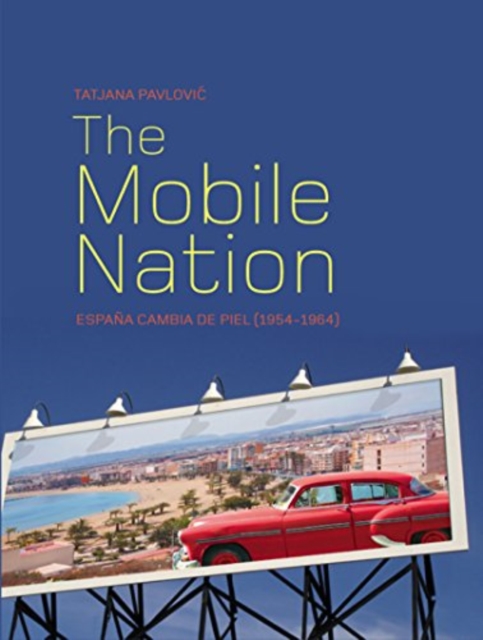
The mobile nation
Drawing from the methodologies of literature, film studies, cultural studies, feminist theory and history, The Mobile Nation explores consumer culture in Spanish media, mass tourism and the national automobile manufacturing industry from 1954 to 1964 and offers valuable insight to postmodern Spain's transformation and trends.
eBook

The Politics of Age and Disability in Contemporary Spanish Film
The Politics of Age and Disability in Contemporary Spanish Film examines the onscreen construction of adolescent, elderly, and disabled subjects in Spanish cinema from 1992 to the present. Applying a dual lens of film analysis and theory drawn from the allied fields of youth, age, and disability studies, this study is set both within and against a conversation on cultural diversity-with respect to gender, sexual, and ethnic identity-which has driven not only much of the past decade's most visible and fruitful scholarship on representation in Spanish film, but also the broader parameters of discourse on post-Transition Spain in the humanities. Presenting an engaging, and heretofore under-explored, interdisciplinary approach to images of multiculturalism in what has emerged as one of recent Spain's most vibrant areas of cultural production, this book brings a fresh, while still complementary, critical sensibility to the field of contemporary Peninsular film studies through its detailed discussion of six contemporary films (by Salvador García Ruiz, Achero Mañas, Santiago Aguilar & Luis Guridi, Marcos Carnevale, Alejandro Amenábar, and Pedro Almodóvar) and supporting reference to the production of other prominent and emerging filmmakers.
eBook
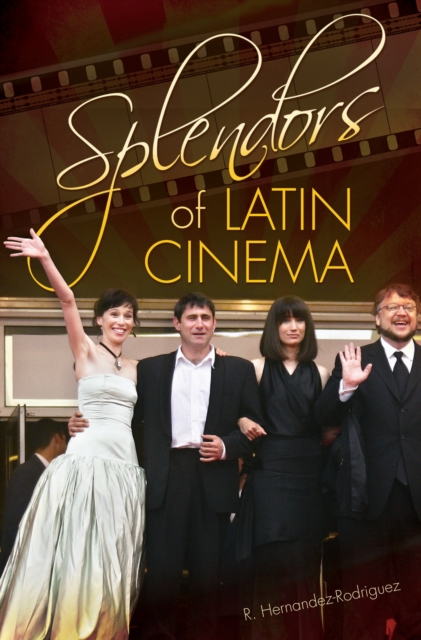
Splendors of Latin Cinema
This insightful account analyzes and provides context for the films and careers of directors who have made Latin American film an important force in Hollywood and in world cinema. In this insightful account, R. Hernandez-Rodriguez analyzes some of the most important, fascinating, and popular films to come out of Latin America in the last three decades, connecting them to a long tradition of filmmaking that goes back to the beginning of the 20th century. Directors Alejandro Inarritu, Guillermo del Toro, Alfonso Cuaron, and Lucretia Martel and director/screenwriter Guillermo Arriaga have given cause for critics and public alike to praise a new golden age of Latin American cinema. Splendors of Latin Cinema probes deeply into their films, but also looks back at the two most important previous moments of this cinema: the experimental films of the 1960s and 1970s, as well as the stage-setting movies from the 1940s and 1950s. It discusses films, directors, and stars from Spain (as a continuing influence), Mexico, Cuba, Brazil, Argentina, Peru, and Chile that have contributed to one of the most interesting aspects of world cinema.
eBook
(Re)viewing creative, critical and commercial practices in contemporary spanish cinema
This volume is a reassessment of contemporary Spanish cinema from 1992 to 2012, bringing leading academics from a broad range of disciplinary and geographical backgrounds into dialogue with critically and commercially successful practitioners to suggest the need to redefine the parameters of one of the world's most creative national cinemas.
eBook

Constructing Spain
Does fiction do more than just represent space? Can our experiences with fictional storytelling be in themselves spatial? In Constructing Spain: The Re-imagination of Space and Place in Fiction and Film, Nathan Richardson explores relations between cultural representation and spatial transformation across fifty years of Spanish culture. Beginning in 1953, the year Spanish space was officially reopened to Western thought and capital, and culminating in 2003, the year of Aznar's unpopular involvement of his country in the second Iraq War, Richardson traces in popular and critically acclaimed fiction and film an evolution in Spanish storytelling that, while initially representative in nature, increasingly engages its audience in spatial practices that go beyond mere perception or conception of local material geographies. In original readings of films by Luis Berlanga, Luis Buñuel, Alex de la Iglesia, Alejandro Amenábar, and Julio Medem, and novels by Juan Goytisolo, Antonio Muñoz Molina, and Javier Marías, Richardson shows this formal evolution as a necessary response to developments, restorations, and transformations of local landscapes that resulted during these years from various human migrations, tourist-invasions, urban development plans, resurgent nationalisms, and finally globalization. As these changes occur, Richardson traces a shift in the works studied from mere representation of spatial change toward actual engagement with shifting physical and social geographies, as they inch ever closer toward the production of an actual spatial experience for their audiences. In the final chapters of this book, Richardson offers in-depth and highly original readings of the storytelling projects of Medem and Marías in particular, showing how these two artists invite readers to not only reconceive hegemonic notions of space and place, but to practice alternative notions of being-in-place. In these final readings, Constructing Spain, points to the newest developments in contemporary Spanish narrative and film, a rise of new grammars of creation to challenge the ongoing capital-driven creative destruction of globalized Spanish geography.
eBook