
Catalogue Search | MBRL


Are you sure you want to remove the book from the shelf?

{{itemTitle}}
23
result(s) for
"Mass media and culture Caribbean Area."
Sort by:


Media, Sound, and Culture in Latin America and the Caribbean
Outside of music, the importance of sound and listening have been greatly overlooked in Latin American history. Visual media has dominated cultural studies, affording an incomplete record of the modern era. This edited volume presents an original analysis of the role of sound in Latin American and Caribbean societies, from the late nineteenth century to the present. The contributors examine the importance of sound in the purveyance of power, gender roles, race, community, religion, and populism. They also demonstrate how sound is essential to the formation of citizenship and nationalism.Sonic media, and radio in particular, have become primary tools for contesting political issues. In that vein, the contributors view the control of radio transmission and those who manipulate its content for political gain. Conversely, they show how, in neoliberal climates, radio programs have exposed corruption and provided a voice for activism.The essays address sonic production in a variety of media: radio; Internet; digital recordings; phonographs; speeches; carnival performances; fireworks festivals, and the reinterpretation of sound in literature. They examine the bodily experience of sound, and its importance to memory coding and identity formation.This volume looks to sonic media as an essential vehicle for transmitting ideologies, imagined communities, and culture. As the contributors discern, modern technology has made sound ubiquitous, and its study is therefore crucial to understanding the flow of information and influence in Latin America and globally.
eBook

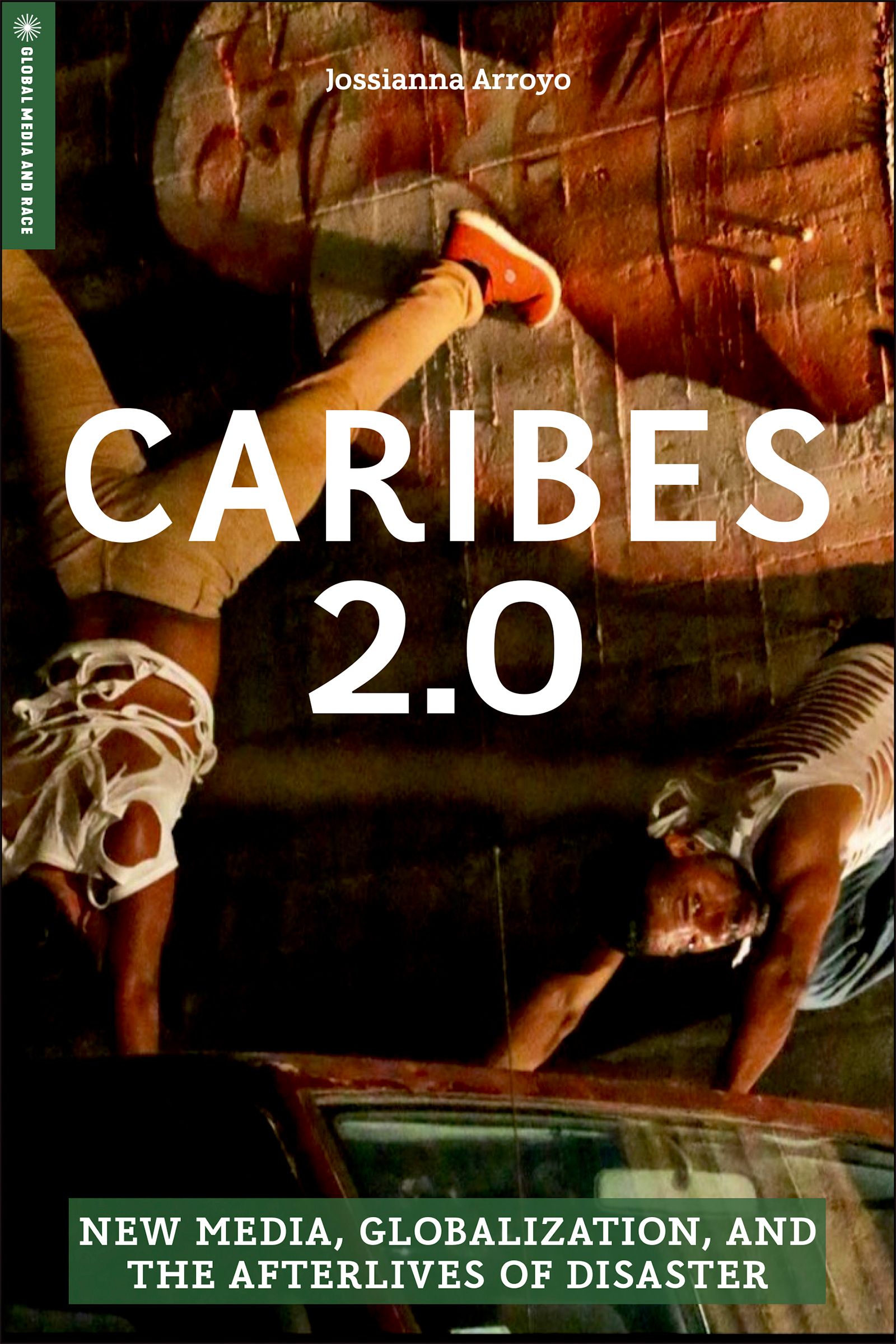
Caribes 2.0
In Caribes 2.0, author Jossianna Arroyo looks at the Caribbean mediasphere in the twenty-first century. Arroyo argues that we have seen a return to tropes such as blackface, brownface, cultural and ethnic stereotypes, and violent representations of the poor, the marginalized, and the racialized. Caribes 2.0 looks at these tropes as well as the work of writers, vloggers, performers, and photographers that have become media figures or have used new media platforms to promote their work and examines how they are challenging and negotiating these media representations. It analyzes contemporary Caribbean cultures to discuss, taste, guides, and actions (social and virtual) that shape Caribbean global communities today. Departing from Edouard Glissant's insight that \"Caribbean reality might not be accessed by remote control\" the book considers what types of political and social agencies are created by mediation. Caribes 2.0 deviates from these historical-globalized views of subjected, colonized Caribbean bodies, and their material conditions, to examine the relationship between the local and the global in contemporary Caribbean cultures, and the role that media is playing in the invisibility or hyper-visibilty of Caribbean cultures in the islands and the U.S. diaspora.
eBook
Literary Black Power in the Caribbean
Literary Black Power in the Caribbean focuses on the Black Power movement in the anglophone Caribbean as represented and critically debated in literary texts, music and film.
This volume is groundbreaking in its focus on the creative arts and artists in their evaluations of, and insights on, the relevance of the Black Power message across the region. The author takes a cultural studies approach to bring together the political with the aesthetic, enriching an already fertile debate on the era and the subject of Black Power in the Caribbean region. The chapters discuss various aspects of Black Power in the Caribbean: on the pages of journals and magazines, at contemporary conferences that radicalized academia to join forces with communities, in fiction and essays by writers and intellectuals, in calypso and reggae music, and in the first films produced in the Caribbean.
Produced at the 50th anniversary of the 1970 Black Power Revolution in Port of Spain, Trinidad, this timely book will be of interest to students and academics focusing on Black Power, Caribbean literary and cultural studies, African diaspora, and Global South radical political and cultural theory.
eBook
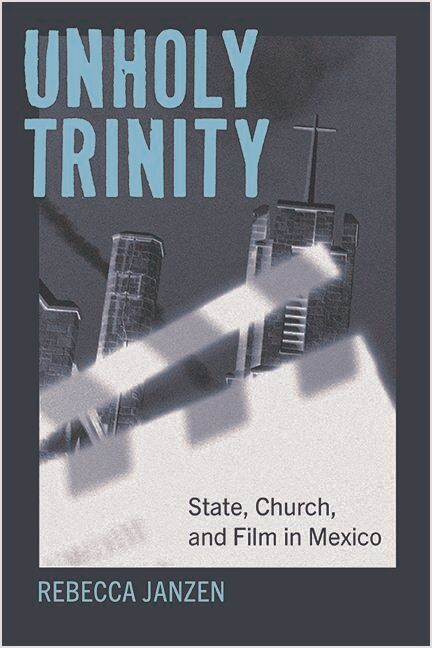
Unholy Trinity
Rebecca Janzen brings a unique applied understanding of religion to
bear on analysis of Mexican cinema from the Golden Age of the 1930s
onward. Unholy Trinity first examines canonical films like
Emilio Fernández's María Candelaria and Río
Escondido that mythologize Mexico's past, suggesting that
religious imagery and symbols are used to negotiate the place of
religion in a modernizing society. It next studies films of the
1970s, which use motifs of corruption and illicit sexuality to
critique both church and state. Finally, an examination of films
from the 1990s and 2000s, including Guita Schyfter's Novia que
te vea , a film that portrays Mexico City's Ashkenazi and
Sephardic Jewish communities in the twentieth century, and Carlos
Carrera's controversial 2002 film El crimen del padre
Amaro , argues that religious imagery-related to the Catholic
Church, people's interpretations of Catholicism, and
representations of Jewish communities in Mexico-allows the films to
critically engage with Mexican politics, identity, and social
issues.
eBook
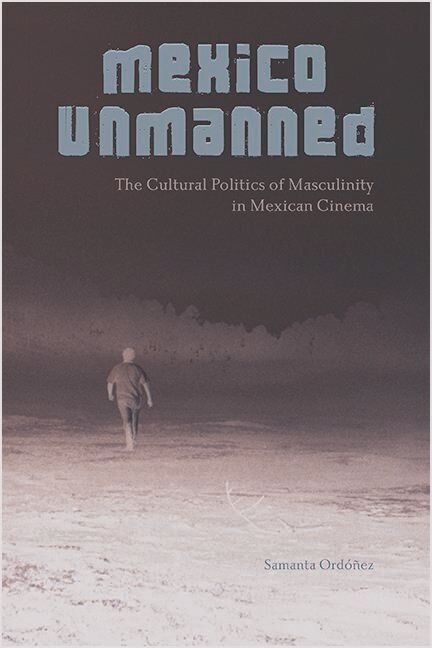
Mexico Unmanned
Iconic images of machismo in Mexico's classic cinema affirm the
national film industry's historical alignment with the patriarchal
ideology intrinsic to the post-revolutionary state's political
culture. Filmmakers gradually turned away from the cultural
nationalism of mexicanidad , but has the underlying gender
paradigm been similarly abandoned? Films made in the past two
decades clearly reflect transformations instituted by a neoliberal
regime of cultural politics, yet significant elements of macho
mythology continue to be rearticulated. Mexico Unmanned
examines these structural continuities in recent commercial and
auteur films directed by Alfonso Cuarón, Carlos Cuarón, Carlos
Reygadas, Amat Escalante, and Julio Hernández Cordón, among others.
Informed by cinema's role in Mexico's modern/colonial gender
system, Samanta Ordóñez draws out recurrent patterns of
signification that reproduce racialized categories of masculinity
and bolster a larger network of social hierarchies. In so doing,
Ordóñez dialogues with current intersectional gender theory, fresh
scholarship on violence in the neoliberal state, and the latest
research on Mexican cinema.
eBook

Gordon Rohlehr and the Culture Industry in Trinidad
The terms \"culture\" and \"cultural studies\" in Trinidad and Tobago have been narrowly defined to mean Carnival and various other phenomena connected to the nationalist project. There has been little acknowledgement of cyber culture, alternative sexualities, consumerism, media, and in general the \"Culture Industry\", as theorised by Theodor Adorno and Max Horkheimer. One critic, Gordon Rohlehr, has over decades presented a body of work ostensibly focused on Carnival, but which also contains a cogent critique and outline of the Trinidad and Tobago Culture Industry (as contemplated by Adorno). A close reading of Rohlehr's work, and his intellectual antecedents, reveal a compelling critique of the Trinidadian/West Indian notion and practice of culture and cultural studies, and suggests areas for the discipline's expansion to better serve the needs of the region.
Journal Article

Does Race Matter Among Cuban Immigrants? An Analysis of the Racial Characteristics of Recent Cuban Immigrants
Information on Cuban immigrants from the recent ‘Measuring Cuban Opinion Project’ survey is used to determine the extent to which race matters. We use multivariate binomial logistic regression models to determine if race can be predicted by key demographic and economic characteristics of the respondents, their use of mass media outlets in Cuba, their evaluation of and integration to the Cuban state and their participation in the dissidence in the island. The conclusion is reached that race cannot be predicted because these immigrants are, in general terms, very similar. However, some racial differences in mode of immigration and likelihood of immigration were found.
Journal Article