Catalogue Search | MBRL


Are you sure you want to remove the book from the shelf?

{{itemTitle}}
21,339
result(s) for
"Mass media in education."
Sort by:

Through a distorted lens : media as curricula and pedagogy in the 21st century
\"This volume examines what and how the media teach, to and by whom, and for what purpose, in a rapidly shifting milieu of media content, platforms, and relations. While intimately concerned with education, authors move the discussion beyond the setting of formal schooling to uncover the ways in which the media contribute to individual and collective understandings of self and other, and their relations to society and communities in which they move. In doing so, the text encourages readers to transcend exclusionary discussions of citizenship to consider participation in local and global geographies against a neoliberal backdrop that marginalizes those unable to, unwilling to, and excluded from competing in the free market. Contributors extend their deliberations back to formal school settings to reaffirm pedagogies that rediscover the reading of texts - broadly defined - in the world through multimodalities. In this sense, the text strives to be transdisciplinary, and is appropriate for use in multiple disciplones and fields of study.\"--Back cover.
Book


Current perspectives in media education : beyond the manifesto
This book emerged from the online project 'A Manifesto for Media Education' and takes forward its starting points by asking some of the original contributors to expand upon their view of the purpose of media education and to support their perspective with accounts of practice. Unlike other books, which focus on a particular sector or offer a guide to teaching for particular exam specifications, this book seeks to widen the debate and offers perspectives on where media education has been and where it might be going. With chapters from leading figures in the field, including David Buckingham and Henry Jenkins, \"Current Perspectives in Media Education\" brings together a range of viewpoints from across all sectors, from primary to university and including accounts from the UK, USA, Canada and Australia.
Book
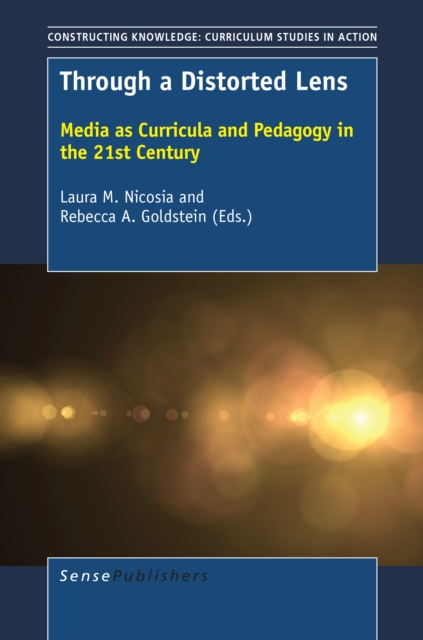
Through a Distorted Lens
This volume examines what and how the media teach, to and by whom, and for what purpose, in a rapidly shifting milieu of media content, platforms, and relations. While intimately concerned with education, authors move the discussion beyond the setting of formal schooling to uncover the ways in which the media contribute to individual and collective understandings of self and other, and their relations to society and communities in which they move. In doing so, the text encourages readers to transcend exclusionary discussions of citizenship to consider participation in local and global geographies against a neoliberal backdrop that marginalizes those unable to, unwilling to, and excluded from competing in the free market. Contributors extend their deliberations back to formal school settings to reaffirm pedagogies that rediscover the reading of texts-broadly defined-in the world through multimodalities. In this sense, the text strives to be transdisciplinary, and is appropriate for use in multiple disciplines and fields of study.
eBook


Reframing the Subject
\"Mental hygiene\" films developed for classroom use touted vigilance, correct behavior, morality, and model citizenship. They also became powerful tools for teaching literacy skills and literacy-based behaviors to young people following the Second World War.In this study, Kelly Ritter offers an extensive theoretical analysis of the alliance of the value systems inherent in mental hygiene films (class-based ideals, democracy, patriotism) with writing education-an alliance that continues today by way of the mass digital technologies used in teaching online. She further details the larger material and cultural forces at work in the production of these films behind the scenes and their effects on education trends.Through her examination of literacy theory, instructional films, policy documents, and textbooks of the late 1940s to mid-1950s, Ritter demonstrates a reliance on pedagogies that emphasize institutional ideologies and correctness over epistemic complexity and de-emphasize the role of the student in his or her own learning process. To Ritter, these practices are sustained in today's pedagogies and media that create a false promise of social uplift through formalized education, instead often resulting in negative material consequences.
eBook


Education for Democracy 2. 0
A panorama of perspectives on media education and democracy in a digital age that draws upon projects in both the formal and non-formal education spheres, this collection contributes to conceptualizing and cultivating a more respectful, robust and critically-engaged democracy.
eBook