
Catalogue Search | MBRL


Are you sure you want to remove the book from the shelf?

{{itemTitle}}
157
result(s) for
"Massachusetts -- History -- Colonial period, ca. 1600-1775"
Sort by:


Faithful Bodies
In the seventeenth-century English Atlantic, religious beliefs and practices played a central role in creating racial identity. English Protestantism provided a vocabulary and structure to describe and maintain boundaries between insider and outsider. In this path-breaking study, Heather Miyano Kopelson peels back the layers of conflicting definitions of bodies and competing practices of faith in the puritan Atlantic, demonstrating how the categories of white, black, and Indian developed alongside religious boundaries between Christian and heathen and between Catholic and Protestant.Faithful Bodiesfocuses on three communities of Protestant dissent in the Atlantic World: Bermuda, Massachusetts, and Rhode Island. In this puritan Atlantic, religion determined insider and outsider status: at times Africans and Natives could belong as long as they embraced the Protestant faith, while Irish Catholics and English Quakers remained suspect. Colonists interactions with indigenous peoples of the Americas and with West Central Africans shaped their understandings of human difference and its acceptable boundaries. Prayer, religious instruction, sexual behavior, and other public and private acts became markers of whether or not blacks and Indians were sinning Christians or godless heathens. As slavery became law, transgressing people of color counted less and less as sinners in English puritans eyes, even as some of them made Christianity an integral part of their communities. As Kopelson shows, this transformation proceeded unevenly but inexorably during the long seventeenth century.
eBook

The traitor's wife : a novel
\"In the harsh wilderness of colonial Massachusetts, Martha Allen takes work as a servant in her cousin's household. While overseeing the neglected home, she locks wills with those around her, including the tall and silent Thomas Carrier, known for both his immense strength and his mysterious past. As Martha comes to know him, she falls in love--and the two begin a courtship that suits their independent natures. But in the rugged new world they inhabit, danger is ever present, whether from the London assassins out for bounty, or the wolves--in many forms--who hunt for blood.\"--P. [4] of cover.
Book
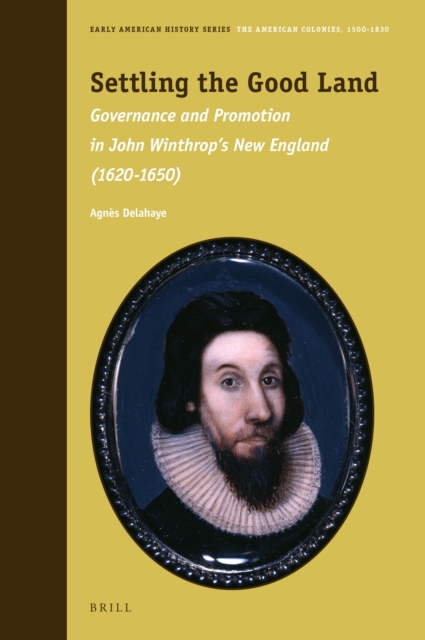
Settling the good land : governance and promotion in John Winthrop's New England (1620-1650)
\"Settling the Good Land: Governance and Promotion in John Winthrop's New England (1620-1650) is the first institutional history of the Massachusetts Bay Company, cornerstone of early modern English colonisation in North America. Agnès Delahaye analyses settlement as a form of colonial innovation, to reveal the political significance of early New England sources, above and beyond religion. John Winthrop was not just a Puritan, but a settler governor who wrote the history of the expansion of his company as a record of successful and enduring policy. Delahaye argues that settlement, as the action and the experience of appropriating the land, is key to understanding the role played by Winthrop's writings in American historiography, before independence and in our times\"--.
eBook


The New England Knight
Born in 1651 in what is now Maine, William Phips became a sea captain out of Boston, an adventurer in search of Spanish treasure in the Caribbean. He captured and plundered Port Royal in Acadia, now Nova Scotia, and led an unsuccessful expedition against Quebec in 1690. He became the first royal governor of Massachusetts in 1692, put an end to the Salem witchcraft trials, and negotiated a treaty with the native Wabanaki.
This biography presents a well-rounded picture of Phips, one that looks at all phases of his colourful career. He was an unusual figure among colonial governors, and his very uniqueness, as well as his difficulties as governor, help us to understand the politics and society of New England during his era. Helped and hindered by his obscure origins, Phips struggled for advancement, and his struggle illustrates the fluid nature of the British Empire in the late seventeenth century.
Phips's life was left unexplored by scholars for the past seventy years. The New England Knight reconstructs his career using contemporary material that brings life and immediacy to the narrative. It interacts with recent studies in colonial, imperial, aboriginal, and marine history to set Phips's eventful life in context.
eBook


The witches : Salem, 1692
The Pulitzer Prize-winning author of Cleopatra analyzes the Salem Witch Trials to offer key insights into the role of women in its events while explaining how its tragedies became possible.
Book

Buried in Shades of Night
The captivity narrative of Mary Rowlandson,The Soveraignty and Goodness of God, published in 1682, is often considered the first \"best seller\" to be published in North America. Since then, it has long been read as a first-person account of the trials of Indian captivity. After an attack on the Puritan town of Lancaster, Massachusetts, in February 1676, Rowlandson was held prisoner for more than eleven weeks before eventually being ransomed. The account of her experiences, published six years later, soon took its place as an exemplar of the captivity narrative genre and a popular focal point of scholarly attention in the three hundred years since.In this groundbreaking new book, Billy J. Stratton offers a critical examination of the narrative of Mary Rowlandson. Although it has long been thought that the book's preface was written by the influential Puritan minister Increase Mather, Stratton's research suggests that Mather was also deeply involved in the production of the narrative itself, which bears strong traces of a literary form that was already well established in Europe. As Stratton notes, the portrayal of Indian people as animalistic \"savages\" and of Rowlandson's solace in Biblical exegesis served as a convenient alibi for the colonial aspirations of the Puritan leadership.Stratton calls into question much that has been accepted as fact by scholars and historians over the last century, and re-centers the focus on the marginalized perspective of Native American people, including those whose land had been occupied by the Puritan settlers. In doing so, Stratton demands a careful reconsideration of the role that the captivity narrative-which was instrumental in shaping conceptions of \"frontier warfare\"-has played in the development of both American literary history and national identity.
eBook