
Catalogue Search | MBRL


Are you sure you want to remove the book from the shelf?

{{itemTitle}}
237,185
result(s) for
"Massacre"
Sort by:

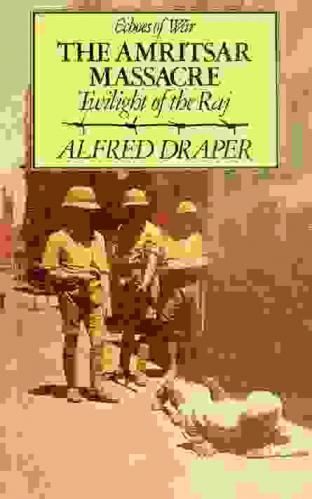
The Amritsar Massacre : the untold story of one fateful day
\"On 13 April 1919, a fateful event took place which was to define the last decades of the British Raj in India. At 5:10pm on that day, Brigadier-General 'Rex' Dyer led a small party of soldiers through the centre of Amritsar into a walled garden known as the Jallianwala Bagh. He had been informed that an illegal political meeting was taking place and had come to disperse it. On entering the garden, Dyer's men immediately lined up in formation. Dyer then gave the order to open fire on the huge crowd that had gathered there. 379 people were killed and at least 1,000 more were wounded in what has became known as the Amritsar Massacre. Nick Lloyd here provides a highly readable, but detailed account of the most infamous British atrocity in the entire history of the Raj. He considers the massacre in its historical context, but also describes its impact in uniting the people of the sub-continent against their colonial rulers. The book dispels common myths and misconceptions surrounding the massacre and offers a new explanation of the decisions taken in 1919. Ultimately, it seeks to examine whether the massacre was an unfortunate and tragic mistake or a case of cold-blooded murder, and one which would fatally weaken the British position in India.\"--Provided by publisher.
Book

Claude Boudan, moine célestin et poète des Guerres de religion en France
Claude Boudan, moine célestin d'un statut considérable, qui remplit plusieurs offices au sein de l'Ordre monastique, fut aussi un auteur de vers latins à la fois productif et talentueux. Parmi ses oeuvres nombreuses qui demeurent en manuscrit, le long poème en hexamètres dactyliques, intitulé De mutua hugonostici belli et catholicae pacis collatione carmen heroicum, constitue une prestation unique dans la mesure où elle donne la perspective, claire et directe, du poète monastique sur les événements récents et l'actualité des Guerres de religion en France. Ãcrit sur un ton énergique et même parfois polémique, ce poème raconte plusieurs incidents violents survenus entre le début des années 1560 et le massacre de la Saint-Barthélemy en 1572, d'un point de vue résolument partisan. Il ressemble en cela à une bonne part de la poésie polémique composée pendant cette période, par des auteurs aussi divers que Ronsard, d'Aubigné, Jean Dorat et Léger Duchesne. Claude Boudan was a Celestine monk of significant stature, who held several offices within the Order. He was also a prolific and talented author of Latin verse. Among his numerous works still in manuscript, the long poem in dactylic hexameters, titled De mutua hugonostici belli et catholicae pacis collatione carmen heroicum, is unique insofar as it offers his perspective on the contemporaneous events of the Wars of Religion in France. Written in an energetic, and at times eve polemical tone, the poem describes several violent incidents that occurred during the period beginning in the early 1560S and preceding the Saint Bartholomew's Massacre of 1572, adopting a resolutely partisan point of view. In this, it resembles much of the polemical poetry written during the period, by authors as diverse as Ronsard, d'Aubigné, Jean Dorat, and Léger Du Chesne.
Journal Article


Izaokas , dir. Jurgis Matulevicius Based on the novel by Antanas Skema
This is a flm review of Izaokas (Isaac), directed by Jurgis Matulevicius.
Journal Article


Katyn and the Soviet Massacre of 1940
The Soviet massacre of Polish prisoners of war at Katyn and in other camps in 1940 was one of the most notorious incidents of the Second World War. The truth about the massacres was long suppressed, both by the Soviet Union, and also by the United States and Britain who wished to hold together their wartime alliance with the Soviet Union.
This informative book examines the details of this often overlooked event, shedding light on what took place especially in relation to the massacres at locations other than Katyn itself. It discusses how the truth about the killings was hidden, how it gradually came to light and why the memory of the massacres has long affected Polish-Russian relations.
George Sanford is a reader in politics Bristol University and a leading academic specialist on Poland and Eastern Europe. He is the author of ten books, including most recently the Historical Dictionary of Poland (2003), Democratic Government in Poland (2002) and Poland: The Conquest of History (1999).
'This study is the fullest investigation to date of this atrocity...It is based on considerable research in various archives and is written dispassionately and objectively and is thereby all the more moving.' - Contemporary Review
List of tables Preface Introduction Acknowledgements List of abbreviations 1. Poland and Russia 2. The Sovietisation of East Poland 3. The Stalinist Terror and Prisoner of War System 4. The Indoctrination, Screening/Investigation and Selection 5. Course, Mechanisms and Technology of the Massacre 6. The Struggle for Historical Truth 7. Management and Control of the Truth about the 1940 Massacre: American-British lies, hypocrisy and self-delusion 8. Soviet and Polish Communist Control of the Truth about Katyn: The conflict with national memory 9. Closure of the 1940 Soviet Massacre Issue Bibliography Index
eBook