
Catalogue Search | MBRL


Are you sure you want to remove the book from the shelf?

{{itemTitle}}
237,961
result(s) for
"Massacres."
Sort by:

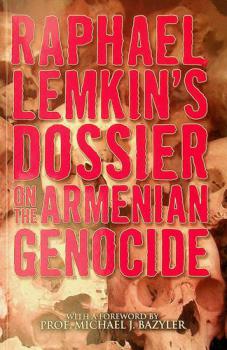
Turkey and the Armenian ghost : on the trail of the genocide
In Turkey and the Armenian Ghost, a translation of the award-winning La Turquie et le fantôme arménien, Laure Marchand and Guillaume Perrier visit historic sites and interview politicians, elderly survivors, descendants, authors, and activists in a quest for the hidden truth. Taking the reader into remote mountain regions, tiny hamlets, and the homes of traumatized victims of a deadly persecution that continues to this day, they reveal little-known aspects of the history and culture of a people who have been rendered invisible in their ancient homeland. -- from back cover.
BOOK

Claude Boudan, moine célestin et poète des Guerres de religion en France
Claude Boudan, moine célestin d'un statut considérable, qui remplit plusieurs offices au sein de l'Ordre monastique, fut aussi un auteur de vers latins à la fois productif et talentueux. Parmi ses oeuvres nombreuses qui demeurent en manuscrit, le long poème en hexamètres dactyliques, intitulé De mutua hugonostici belli et catholicae pacis collatione carmen heroicum, constitue une prestation unique dans la mesure où elle donne la perspective, claire et directe, du poète monastique sur les événements récents et l'actualité des Guerres de religion en France. Ãcrit sur un ton énergique et même parfois polémique, ce poème raconte plusieurs incidents violents survenus entre le début des années 1560 et le massacre de la Saint-Barthélemy en 1572, d'un point de vue résolument partisan. Il ressemble en cela à une bonne part de la poésie polémique composée pendant cette période, par des auteurs aussi divers que Ronsard, d'Aubigné, Jean Dorat et Léger Duchesne. Claude Boudan was a Celestine monk of significant stature, who held several offices within the Order. He was also a prolific and talented author of Latin verse. Among his numerous works still in manuscript, the long poem in dactylic hexameters, titled De mutua hugonostici belli et catholicae pacis collatione carmen heroicum, is unique insofar as it offers his perspective on the contemporaneous events of the Wars of Religion in France. Written in an energetic, and at times eve polemical tone, the poem describes several violent incidents that occurred during the period beginning in the early 1560S and preceding the Saint Bartholomew's Massacre of 1572, adopting a resolutely partisan point of view. In this, it resembles much of the polemical poetry written during the period, by authors as diverse as Ronsard, d'Aubigné, Jean Dorat, and Léger Du Chesne.
Journal Article




Izaokas , dir. Jurgis Matulevicius Based on the novel by Antanas Skema
This is a flm review of Izaokas (Isaac), directed by Jurgis Matulevicius.
Journal Article


Theatres Of Violence
Massacres and mass killings have always marked if not shaped the history of the world and as such are subjects of increasing interest among historians. The premise underlying this collection is that massacres were an integral, if not accepted part (until quite recently) of warfare, and that they were often fundamental to the colonizing process in the early modern and modern worlds. Making a deliberate distinction between 'massacre' and 'genocide', the editors call for an entirely separate and new subject under the rubric of 'Massacre Studies', dealing with mass killings that are not genocidal in intent. This volume offers a reflection on the nature of mass killings and extreme violence across regions and across centuries, and brings together a wide range of approaches and case studies.
eBook