
Catalogue Search | MBRL


Are you sure you want to remove the book from the shelf?

{{itemTitle}}
589
result(s) for
"Master and servant"
Sort by:


Master and Servant
Leading historian Carolyn Steedman offers a fascinating and compelling account of love, life and domestic service in eighteenth-century England. This book, situated in the regional and chronological epicentre of E. P. Thompson's The Making of the English Working Class and Emily Bronte's Wuthering Heights, focuses on the relationship between a Church of England clergyman (the Master of the title) and his pregnant maidservant in the late eighteenth century. This case-study of people behaving in ways quite contrary to the standard historical account sheds new light on the much wider historical questions of Anglicanism as social thought, the economic history of the industrial revolution, domestic service, the poor law, literacy, education, and the very making of the English working class. It offers a unique meditation on the relationship between history and literature and will be of interest to scholars and students of industrial England, social and cultural history and English literature.
eBook

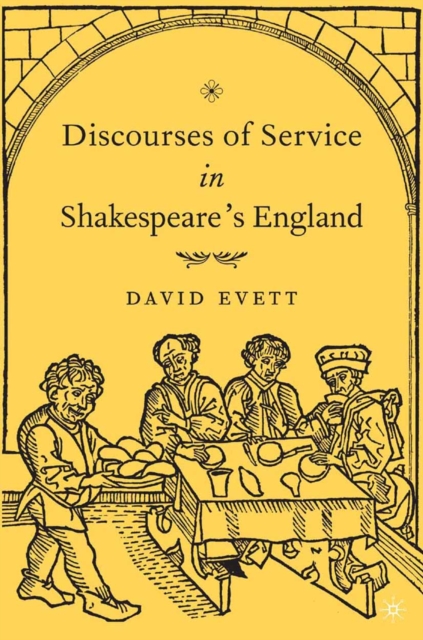
Discourses of service in Shakespeare's England
One way and another, nearly all of Shakespeare's countrymen and women (including the playwright himself) spent at least parts of their lives as servants of someone else. But until now that fact has gone largely unregarded. This book remedies the oversight, by showing how the ideals and practices of early modern service affect dozens of characters in almost all the plays, in ways that enrich our understanding of familiar figures like Iago and Falstaff and enhance the significance of lesser-known people and events across the canon. And it introduces an important concept, volitional primacy, into contemporary critical discourse.
eBook


Enemies and Familiars
A prominent Mediterranean port located near Islamic territories, the city of Valencia in the late fifteenth century boasted a slave population of pronounced religious and ethnic diversity: captive Moors and penally enslaved Mudejars, Greeks, Tartars, Russians, Circassians, and a growing population of black Africans. By the end of the fifteenth century, black Africans comprised as much as 40 percent of the slave population of Valencia.
Whereas previous historians of medieval slavery have focused their efforts on defining the legal status of slaves, documenting the vagaries of the Mediterranean slave trade, or examining slavery within the context of Muslim-Christian relations, Debra Blumenthal explores the social and human dimensions of slavery in this religiously and ethnically pluralistic society.Enemies and Familiarstraces the varied experiences of Muslim, Eastern, and black African slaves from capture to freedom. After describing how men, women, and children were enslaved and brought to the Valencian marketplace, this book examines the substance of slaves' daily lives: how they were sold and who bought them; the positions ascribed to them within the household hierarchy; the sorts of labor they performed; and the ways in which some reclaimed their freedom. Scrutinizing a wide array of archival sources (including wills, contracts, as well as hundreds of civil and criminal court cases), Blumenthal investigates what it meant to be a slave and what it meant to be a master at a critical moment of transition.
Arguing that the dynamics of the master-slave relationship both reflected and determined contemporary opinions regarding religious, ethnic, and gender differences, Blumenthal's close study of the day-to-day interactions between masters and their slaves not only reveals that slavery played a central role in identity formation in late medieval Iberia but also offers clues to the development of \"racialized\" slavery in the early modern Atlantic world.
eBook

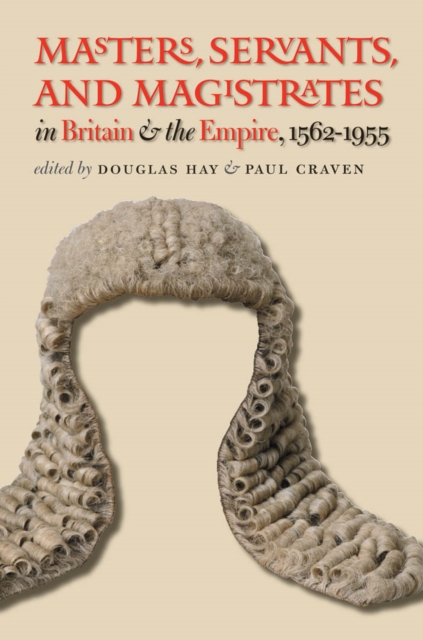
Masters, servants, and magistrates in Britain and the Empire, 1562-1955
Master and servant acts, the cornerstone of English employment law for more than four hundred years, gave largely unsupervised, inferior magistrates wide discretion over employment relations, including the power to whip, fine, and imprison men, women, and children for breach of private contracts with their employers. The English model was adopted, modified, and reinvented in more than a thousand colonial statutes and ordinances regulating the recruitment, retention, and discipline of workers in shops, mines, and factories; on farms, in forests, and on plantations; and at sea. This collection presents the first integrated comparative account of employment law, its enforcement, and its importance throughout the British Empire.
Sweeping in its geographic and temporal scope, this volume tests the relationship between enacted law and enforced law in varied settings, with different social and racial structures, different economies, and different constitutional relationships to Britain. Investigations of the enforcement of master and servant law in England, the British Caribbean, India, Africa, Hong Kong, Canada, Australia, and colonial America shed new light on the nature of law and legal institutions, the role of inferior courts in compelling performance, and the definition of \"free labor\" within a multiracial empire.
Contributors:
David M. Anderson, St. Antony's College, Oxford
Michael Anderson, London School of Economics
Jerry Bannister, Dalhousie University, Nova Scotia
M. K. Banton, National Archives of the United Kingdom, London
Martin Chanock, La Trobe University, Australia
Paul Craven, York University
Juanita De Barros, McMaster University
Christopher Frank, University of Manitoba
Douglas Hay, York University
Prabhu P. Mohapatra, Delhi University, India
Christopher Munn, University of Hong Kong
Michael Quinlan, University of New South Wales
Richard Rathbone, University of Wales, Aberystwyth
Christopher Tomlins, American Bar Foundation, Chicago
Mary Turner, London University
eBook


Uncle Tom's Cabin
The most controversial antislavery novel written in antebellum America, and a best-seller of the 19th century, this novel is credited with intensifying sectional conflict leading to the Civil War. In his introduction, Bromwich places the book in its Victorian contexts and reminds us why it is an enduring work of literary and moral imagination.
eBook