
Catalogue Search | MBRL


Are you sure you want to remove the book from the shelf?

{{itemTitle}}
15
result(s) for
"Material culture Mediterranean Region History To 1500."
Sort by:

Intercultural transmission in the medieval Mediterranean
This volume presents evidence of the extent and effects of intercultural contacts across Europe and the Mediterranean rim, opening up a new understanding of early medieval civilisation and its continuing influence in both Western and Eastern cultures today.
Book
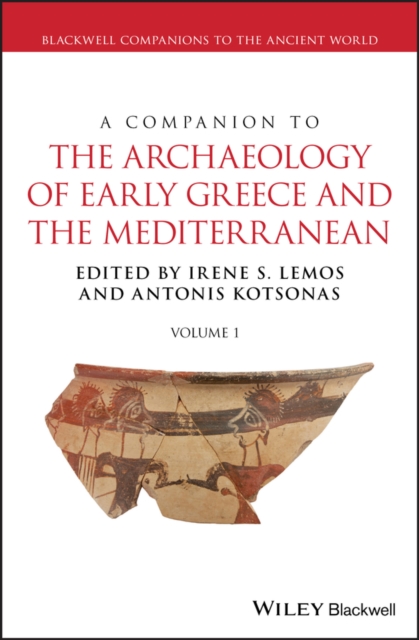
A Companion to the Archaeology of Early Greece and the Mediterranean
A Companion that examines together two pivotal periods of Greek archaeology and offers a rich analysis of early Greek culture A Companion to the Archaeology of Early Greece and the Mediterranean offers an original and inclusive review of two key periods of Greek archaeology, which are typically treated separately—the Late Bronze Age and the Early Iron Age. It presents an in-depth exploration of the society and material culture of Greece and the Mediterranean, from the 14th to the early 7th centuries BC. The two-volume companion sets Aegean developments within their broader geographic and cultural context, and presents the wide-ranging interactions with the Mediterranean. The companion bridges the gap that typically exists between Prehistoric and Classical Archaeology and examines material culture and social practice across Greece and the Mediterranean. A number of specialists examine the environment and demography, and analyze a range of textual and archaeological evidence to shed light on socio-political and cultural developments. The companion also emphasizes regionalism in the archaeology of early Greece and examines the responses of different regions to major phenomena such as state formation, literacy, migration and colonization. Comprehensive in scope, this important companion: * Outlines major developments in the two key phases of early Greece, the Late Bronze Age and the Early Iron Age * Includes studies of the geography, chronology and demography of early Greece * Explores the development of early Greek state and society and examines economy, religion, art and material culture * Sets Aegean developments within their Mediterranean context Written for students, and scholars interested in the material culture of the era, ACompanion to the Archaeology of Early Greece and the Mediterranean offers a comprehensive and authoritative guide that bridges the gap between the Late Bronze Age and the Early Iron Age. 2020 CHOICE Outstanding Academic Title Winner!
eBook

Fifty early medieval things : materials of culture in late antiquity and the early Middle Ages
\"An introduction to the material culture of the greater Mediterranean world, including Europe and western Asia, this book connects actual things to the political, economic, cultural, and social forces that shaped the first millennium AD\"-- Provided by publisher.
Book

Intercultural Transmission in the Medieval Mediterranean
This volume presents evidence of the extent and effects of intercultural contacts across Europe and the Mediterranean rim, opening up a new understanding of early medieval civilisation and its continuing influence in both Western and Eastern cultures today. From the perspectives of textual transmission, cultural memory, religion, art and cultural traditions, this work explores the central question of how ideas travelled in the medieval world, challenging the conventional notion of insular communities in the Middle Ages. Despite the schism between East and West that took hold after the thirteenth century this volume reveals a rich and extensive cultural exchange and demonstrates that transmission of ideas and culture across borders began much earlier than the Crusades. It contributes to new perspectives on medieval cities, Christian Europe’s history with the Byzantine and Islamic Mediterranean, the landscape of power and the power-plays of the medieval Church, and the way in which cross-cultural transmission affected all of these areas.
eBook
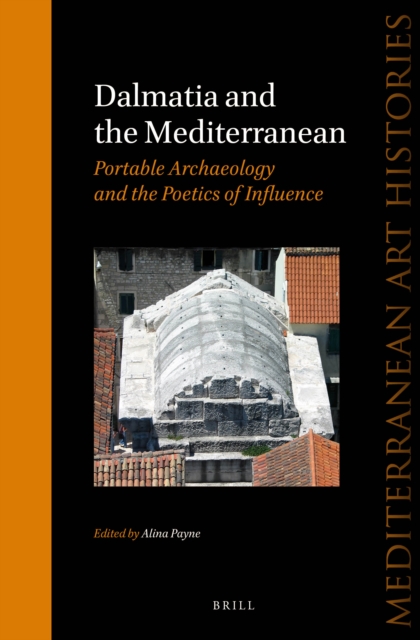
Dalmatia and the Mediterranean
Dalmatia and the Mediterranean. Portable Archaeology and The Poetics of Influence proposes a reading of early modern Dalmatian and Mediterranean coastal exchanges focused on the arts that thrusts portability and translations across artistic media into the foreground.
eBook

Ceramics, Cuisine and Culture
The 23 papers presented here are the product of the interdisciplinary exchange of ideas and approaches to the study of kitchen pottery between archaeologists, material scientists, historians and ethnoarchaeologists. They aim to set a vital but long-neglected category of evidence in its wider social, political and economic contexts. Structured around main themes concerning technical aspects of pottery production; cooking as socioeconomic practice; and changing tastes, culinary identities and cross-cultural encounters, a range of social economic and technological models are discussed on the basis of insights gained from the study of kitchen pottery production, use and evolution. Much discussion and work in the last decade has focussed on technical and social aspects of coarse ware and in particular kitchen ware. The chapters in this volume contribute to this debate, moving kitchen pottery beyond the Binfordian ‘technomic’ category and embracing a wider view, linking processualism, ceramic-ecology, behavioral schools, and ethnoarchaeology to research on historical developments and cultural transformations covering a broad geographical area of the Mediterranean region and spanning a long chronological sequence.
eBook

Daily life, materiality, and complexity in early urban communities of the southern Levant : papers in honor of Walter E. Rast and R. Thomas Schaub
No detailed description available for \"Daily Life, Materiality, and Complexity in Early Urban Communities of the Southern Levant\".
eBook

Understanding Material Text Cultures
The present volume comprises 6 highly original studies on material text cultures in different nontypographic societies stretching from the 3rd millennium cuneiform textual record of Ancient Mesopotamia to 20th century Qur'anic boards of northern and central African provenience. It provides a multidisciplinary approach to material text cultures complementary to the interdisciplinary, strongly theory-grounded research scheme of the CRC 933. Six research fellowships were awarded to outstanding young researchers for innovative, high-risk research proposals pertinent to the CRC 933's overall research scheme. Their studies contained in this volume add multidisciplinary dimension to material text culture research, satisfy the curiosity as to the applicability of the theoretical premises and methodology developed and tested by the CRC 933 to research on inscribed artefacts carried out on an international level and in different research environments and contribute to anchoring material text culture research as proposed by the CRC 933 within the tradition and broader context of other research strategies devoted to the material dimension of writing, such as the filologia materiale.
eBook

Communication and Materiality
This volume reconsiders literacy and communication in pre-modern societies, focusing especially on how material form affects the way textual artefacts are understood and interpreted. By bringing together scholars from diverse disciplines such as archaeology, medieval studies, and Islamic studies, this volume provides the specialist and non-specialist with insights on how humans express themselves through writing and material culture.
eBook