
Catalogue Search | MBRL


Are you sure you want to remove the book from the shelf?

{{itemTitle}}
43,500
result(s) for
"Materials conservation"
Sort by:

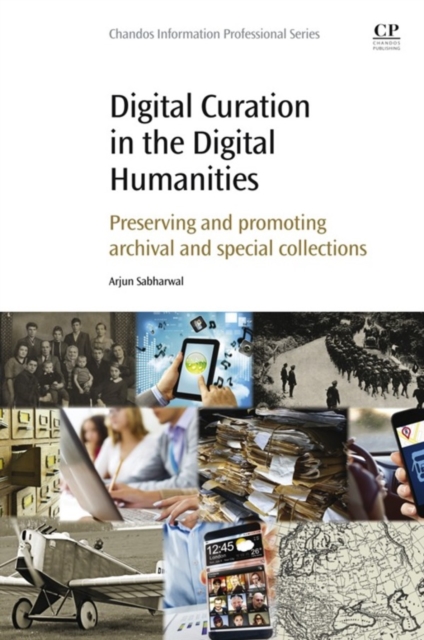
Digital curation in the digital humanities : preserving and promoting archival and special collections
Archives and special collections departments have a long history of preserving and providing long-term access to organizational records, rare books, and other unique primary sources including manuscripts, photographs, recordings, and artifacts in various formats.
eBook

Documenting Performance
Performance in the digital age has undergone a radical shift in which a once ephemeral art form can now be relived, replayed and repeated. Until now, much scholarship has been devoted to the nature of live performance in the digital age; Documenting Performance is the first book to provide a collection of key writings about the process of documenting performance, focused not on questions of liveness or the artistic qualities of documents, but rather on the professional approaches to recovering, preserving and disseminating knowledge of live performance. Through its four-part structure, the volume introduces readers to important writings by international practitioners and scholars on:
the contemporary context for documenting performanceprocesses of documenting performancedocumenting bodies in motiondocumenting to create In each, chapters examine the ways performance is documented and the issues arising out of the process of documenting performance. While theorists have argued that performance becomes something else whenever it is documented, the writings reveal how the documents themselves cannot be regarded simply as incomplete remains from live events. The methods for preserving and managing them over time, ensuring easy access of such materials in systematic archives and collections, requires professional attention in its own right. Through the process of documenting performance, artists acquire a different perspective on their own work, audiences can recall specific images and sounds for works they have witnessed in person, and others who did not see the original work can trace the memories of particular events, or use them to gain an understanding of something that would otherwise remain unknown to them and their peers.
eBook


Disaster response and planning for libraries
Fire, water, mold, construction problems, power-outages mishaps like these can not only bring library services to a grinding halt, but can also destroy collections and even endanger employees. Preparing for the unexpected is the foundation of a library s best response. Expert Kahn comes to the rescue with this timely update of the best step-by-step, how-to guide for preparing and responding to all types of library disasters. This completely revised third edition offers * Quick and efficient guidance for creating protocols and response plans tailored to your own institution * Pointers for handling all kinds of library materials when damaged * The last information on preparing for technology recovery * Up-to-date information on prevention equipment and materials * Dozens of reproducible checklists and forms, and a comprehensive list of resources Kahn s guide gives libraries the tools they need to face any emergency, no matter the size or scope.
eBook

Nanomaterials in architecture and art conservation
The conservation and protection of buildings that constitute our cultural heritage are complex tasks calling for a comprehensive knowledge of the historical background of the buildings, as well as the construction technologies and materials used. 'Nanomaterials in Architecture and Art Conservation' gives a comprehensive overview of the state of the art of using nanomaterials in conservation sciences, mainly for stone, mortar and plaster strengthening, but also for the consolidation of wall paintings. The book compiles and details deterioration mechanisms of stone and historical mortars, as well as methods of characterising and testing consolidation effects. The non- or semi-destructive characterisation methods that will be presented allow additional measurements to characterise objects before and after any interventions. Besides, general aspects of inorganic consolidants are targeted. The focus, in particular, is the application of nanolime as a new consolidation agent. Basic characteristics and application advices as well as beneficial combinations with other consolidation agents, such as silicic acid esters, are emphasised. What makes this book so special is the large number of practical applications described from the viewpoint of different restorers, offering a direct inside view of the procedure for the conservation of historical monuments. Restorers dealing with stone, mortar and plaster conservation; artists; advanced undergraduate- and graduate-level students of conservation science, art and nanotechnology; offices for the protection of monuments and heritage agencies; and researchers in materials science, conservation, nanotechnology and chemistry, especially those with an interest in applied sciences, will find this book a great reference.
Book

The Disaster Planning Handbook for Libraries
Libraries are in a unique position to aid communities during times of adversity, and this comprehensive handbook's practical tools and expert guidance will help ensure that your library is thoroughly prepared for emergency response and recovery.
eBook

Historic construction and conservation : materials, systems and damage
\"Conservation in the built environment raises fundamental questions which have been debated for centuries - what is worth preserving, how is it possible, why is it important? This book takes a modern approach to the meaning of a heritage structure and its conservation. The historical evolution of conservation is briefly addressed, considering prominent individuals and cases; along with the history of construction, focusing on materials and related structural elements, with insight on the sizing rules adopted by masons. This explains structural decisions made during the construction process and allows comparison of scientific theories from the 18th century to modern understanding of limit analysis. Damage and collapse mechanisms for masonry construction, as the most widespread structural form for historical buildings, is described. Excess permanent loading and settlement is differentiated from environmental and anthropogenic actions such as earthquake or incorrect intervention. The team of authors brings together unique expertise, with high level research and leading practice with archetypical cases from around the world. The book addresses the history of conservation by exploring materials and structures and the history of construction and damage, so it is of value to students and professionals in civil engineering and architecture, as well as archaeologists and art historians\"-- Provided by publisher.
Book

Material management practices and factors influencing material conservation on construction sites in Nigeria
PurposeThe purpose of this study is to enhance material conservation and further the knowledge of efficient material management practices on construction sites. This study investigated contractors’ material management practices on construction sites in Nigeria. The factors influencing material conservation on construction sites were also examined.Design/methodology/approachData were collected through a survey of 125 contractors who were administered with structured questionnaire, which resulted in 82 valid returned questionnaire. Data collected was analyzed using frequency, importance, utility and severity indexes.FindingsThis study found checking materials delivered to a site for specification, use of security personnel to safeguard materials and analysis of materials as key material management practices used on construction sites. Critical factors influencing material management are materials double-handling, management of surplus materials, subsequent design changes, excessive paperwork and not receiving materials at the expected time.Practical implicationsThe implementation of the material management practices identified in this study will support contractors to efficiently manage materials on construction sites. The factors influencing material conservation reported in this study will also help contractors understand the critical factors that may affect material management in their construction sites and make better plans for future projects.Originality/valueThis study has reported key issues confronting contractors on the conservation of materials on construction site and various material management practices suitable for application in a wide range of infrastructure projects. This is significant because the construction industry is recording outrageous cost and time overruns of infrastructure projects, which are vital to economic prosperity of nations. The issues and panaceas presented in this study had received scant consideration in construction literature in the sub-Sahara Africa. This study represents a novel synthesis and adds value to knowledge in a manner that has not been reported in previous studies.
Journal Article