
Catalogue Search | MBRL


Are you sure you want to remove the book from the shelf?

{{itemTitle}}
228
result(s) for
"Maternité."
Sort by:

Don't forget to scream : unspoken truths about motherhood
Like grief or falling in love, becoming a mother is an experience both ordinary and transformative. You are prepared for the sleeplessness and wonder, the noise and the chaos, the pram in the hall. But the extent to which this new life can turn your inner world upside-down - nothing prepares you for that. In this frank, funny and fearless memoir, Marianne Levy writes with heart-wrenching honesty about love and loss, rage and pain, fear and joy. She breaks the silence around the emotional turmoil that having a child can unleash and asks why motherhood is at once so venerated and so undervalued -- Source other than Library of Congress.
Book

Perfect Motherhood
Parenting today is virtually synonymous with worry. We want to ensure that our children are healthy, that they get a good education, and that they grow up to be able to cope with the challenges of modern life. In our anxiety, we are keenly aware of our inability to know what is best for our children. When should we toilet train? What is the best way to encourage a fussy child to eat? How should we protect our children from disease and injury? Before the nineteenth century, maternal instinct-a mother's \"natural know-how\"-was considered the only tool necessary for effective childrearing. Over the past two hundred years, however, science has entered the realm of motherhood in increasingly significant ways. InPerfect Motherhood,Rima D. Apple shows how the growing belief that mothers need to be savvy about the latest scientific directives has shifted the role of expert away from the mother and toward the professional establishment. Apple, however, argues that most women today are finding ways to negotiate among the abundance of scientific recommendations, their own knowledge, and the reality of their daily lives.
eBook

The baby on the fire escape : creativity, motherhood, and the mind-baby problem
\"An insightful and provocative exploration of the relationship between motherhood and art through the lives of women artists and writers. What does it mean to create, not in \"a room of one's own,\" but in a domestic space? Do children and genius rule each other out? In The Baby on the Fire Escape, award-winning biographer Julie Phillips traverses the shifting terrain where motherhood and creativity converge. With fierce empathy and vivid prose, Phillips evokes the intimate struggles of brilliant artists and writers, including Doris Lessing, who had to choose between her motherhood and herself; Ursula K. Le Guin, who found productive stability in family life; Audre Lorde, whose queer, polyamorous union allowed her to raise children on her own terms; and Alice Neel, who once, to finish a painting, was said to have left her baby on the fire escape of her New York apartment. A meditation on maternal identity and artistic greatness, The Baby on the Fire Escape illuminates some of the most pressing conflicts in contemporary women's lives\"-- Provided by publisher.
Book

Feminism and motherhood in Western Europe, 1890-1970 : the maternal dilemma
According to Allen, motherhood and citizenship are terms that are closely linked and have been redefined over the past century due to changes in women's status, feminist movements, and political developments. Mother-child relationships were greatly affected by political decisions during the early 1900s, and the maternal role has been transformed over the years. To understand the dilemmas faced by women concerning motherhood and work, for example, Allen argues that the problem must be examined in terms of its demographic and political development through history. Allen highlights the feminist movements in Western Europe - primarily Britain, France, Germany and the Netherlands, and explores the implications of the maternal role for women's aspirations to the rights of citizenship. Among the topics Allen explores the history of the maternal role, psychoanalysis and theories on the mother-child relationship, changes in family law from 1890-1914, the economic status of mothers, and reproductive responsibility.
eBook

Unrooted : botany, motherhood, and the fight to save an old science
Growing up in rural Ontario, Erin Zimmerman became fascinated with plants - an obsession that led to a life in academia as a professional botanist. But as her career choices narrowed in the face of failing institutions and subtle, but ubiquitous, sexism, Zimmerman began to doubt herself. Unrooted: Botany, Motherhood, and the Fight to Save an Old Science is a scientist's memoir, a glimpse into the ordinary life of someone in a fascinating field. This is a memoir about plants, about looking at the world with wonder, and about what it means to be a woman in academia - an environment that pushes out mothers and those with any outside responsibilities. Zimmerman delves into her experiences as a new mom, her decision to leave her position in post-graduate research, and how she found a new way to stay in the field she loves. She also explores botany as a \"dying science\" worth fighting for. While still an undergrad, Zimmerman's university started the process of closing the Botany Department, a sign of waning funding for her beloved science. Still, she argues for its continuation, not only because we have at least 100,000 plant species yet to be discovered, but because an understanding of botany is crucial in the fight against climate change and biodiversity loss. Zimmerman is also a botanical illustrator and will provide 8 original illustrations for the book.
Book

Domestic Goddesses
Based on extensive fieldwork in Calcutta, this book provides the first ethnography of how middle-class women in India understand and experience economic change through transformations of family life. It explores their ideas, practices and experiences of marriage, childbirth, reproductive change and their children's education, and addresses the impact that globalization is having on the new middle classes in Asia more generally from a domestic perspective. By focusing on maternity, the book explores subjective understandings of the way intimate relationships and the family are affected by India's liberalization policies and the neo-liberal ideologies that accompany through an analysis of often competing ideologies and multiple practices. And by drawing attention to women's agency as wives, mothers and grandmothers within these new frameworks, Domestic Goddesses discusses the experiences of different age groups affected by these changes. Through a careful analysis of women's narratives, the domestic sphere is shown to represent the key site for the remaking of Indian middle-class citizens in a global world.
eBook

The Gift of the Other
Winner of the 2007 Symposium Book Award presented by
Symposium: Canadian Journal of Continental
Philosophy The Gift of the Other brings
together a philosophical analysis of time, embodiment, and ethical
responsibility with a feminist critique of the way women's
reproductive capacity has been theorized and represented in Western
culture. Author Lisa Guenther develops the ethical and temporal
implications of understanding birth as the gift of the Other, a
gift which makes existence possible, and already orients this
existence toward a radical responsibility for Others. Through an
engagement with the work of Levinas, Beauvoir, Arendt, Irigaray,
and Kristeva, the author outlines an ethics of maternity based on
the givenness of existence and a feminist politics of motherhood
which critiques the exploitation of maternal generosity.
eBook

Hinge
Finding joy and beauty in the face of suffering Readers enter \"a stunted world,\" where landmarks--a river, a house, a woman's own body--have become unrecognizable in a place as distorted and dangerous as any of the old tales poet Molly Spencer remasters in this elegant, mournful collection.
eBook

Wombs of empire : population discourses and biopolitics in modern Japan
Japan's contemporary struggle with low fertility rates is a well-known issue, as are the country's efforts to bolster their population in order to address attendant socioeconomic challenges. However, though this anxiety about and discourse around population is thought of as relatively recent phenomenon, government and medical intervention in reproduction and fertility are hardly new in Japan. The \"population problem (jinko mondai)\" became a buzzword in the country over a century ago, in the 1910s, with a growing call among Japanese social scientists and social reformers to solve what were seen as existential demographic issues. In this book, Sujin Lee traces the trajectory of population discourses in interwar and wartime Japan, and positions them as critical sites where competing visions of modernity came into tension. Lee destabilizes the essentialized notions of motherhood and population by dissecting gender norms, modern knowledge, and government practices, each of which played a crucial role in valorizing, regulating, and mobilizing women's maternal bodies and responsibilities in the name of population governance. Bringing a feminist perspective and Foucauldian theory to bear on the history of Japan's wartime scientific fascism, Lee shows how anxieties over demographics have undergirded justifications for ethnonationalism and racism, colonialism and imperialism, and gender segregation for much of Japan's modern history.
eBook
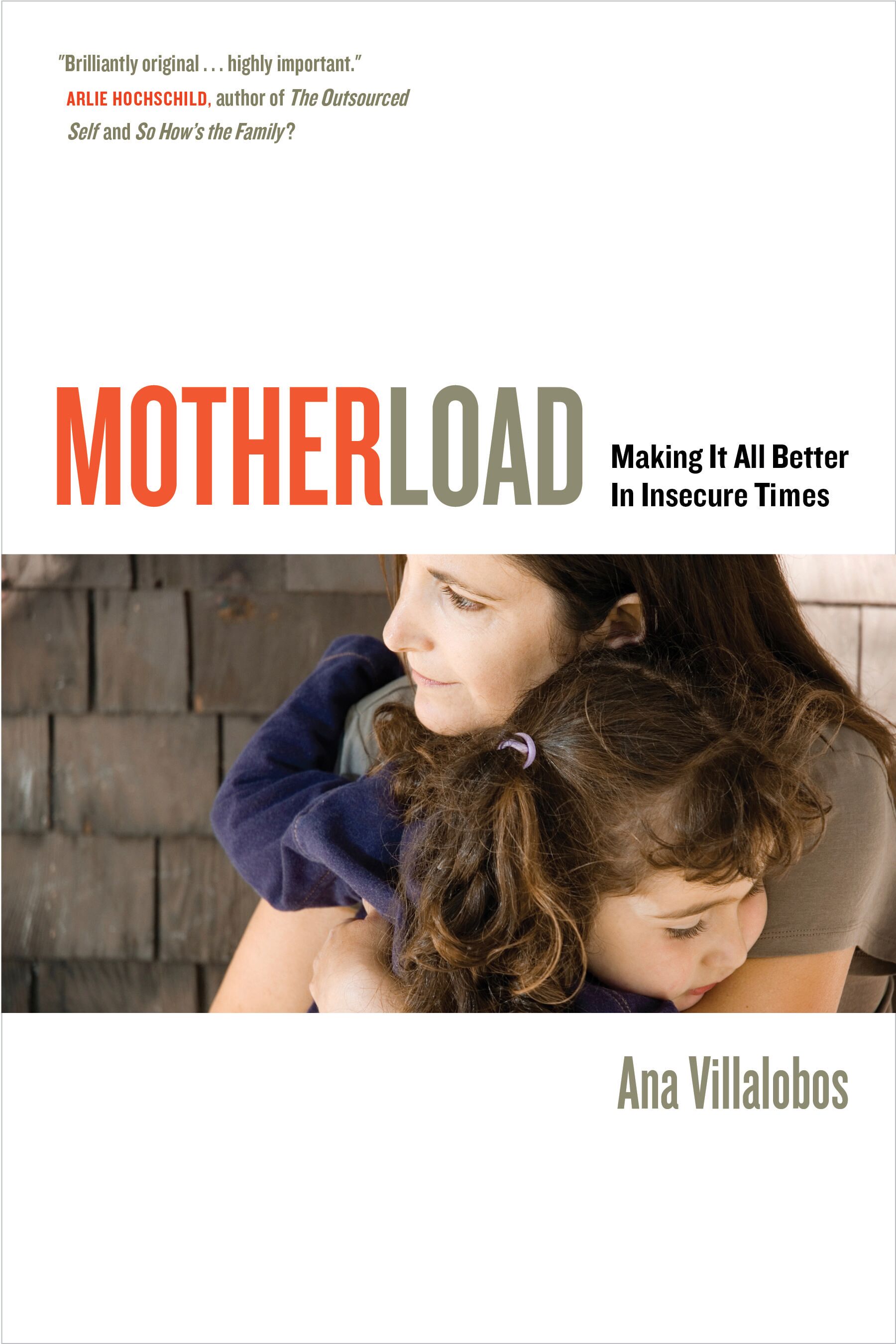
Motherload
In a time of economic anxiety, fear of terrorism, and marital uncertainty, insecurity has become a big part of life for many American mothers. With bases of security far from guaranteed, mothers are often seeking something they can count on. In this beautifully written and accessible book, Ana Villalobos shows how mothers frequently rely on the one thing that seems sure to them: the mother-child relationship. Based on over one hundred interviews with and observations of mothers—single or married, but all experiencing varying forms of insecurity in their lives—Villalobos finds that mothers overwhelmingly expect the mothering relationship to \"make it all better\" for themselves and their children. But there is a price to pay for loading this single relationship with such high expectations. Using detailed case studies, Villalobos shows how women's Herculean attempts to create various kinds of security through mothering often backfire, thereby exhausting mothers, deflecting their focus from other possible sources of security, and creating more stress. That stress is further exacerbated by dominant ideals about \"good\" mothering—ideals that are fraught with societal pressures and expectations that reach well beyond what mothers can actually do for their children. Pointing to hopeful alternatives, Villalobos shows how more realistic expectations about motherhood lead remarkably to greater security in families by prompting mothers to cast broader security nets, making conditions less stressful and—just as significantly—bringing greater joy in mothering.
eBook