
Catalogue Search | MBRL


Are you sure you want to remove the book from the shelf?

{{itemTitle}}
25
result(s) for
"Mathematical physics Popular works"
Sort by:

Fantastic numbers and where to find them : a cosmic quest from zero to infinity
\"The leading theoretical physicist and YouTube star Tony Padilla uses nine of the most extraordinary numbers in physics to build a picture of our current best understanding of how the universe works\"-- Provided by publisher.

Unraveling Violeta Parra's painting technique: a first scientific approach to the study of “Justice”
Violeta Parra's visual art is characterized by the integration of the popular Chilean artist's craftsmanship, her field research, the role of women, poverty and injustice, as well as the use of everyday and modern art materials. Today, fifty years after her passing, Parra's creations are still being debated on the grounds of a solid narrative that supports the current socio-political discussion of the Chilean and Latin American scenario, for which she has earned a fundamental place in the collective memory. “Justice” (1964, 149.5 × 109.5 cm) is an oil painting on burlap canvas from the collection of the “Museo Violeta Parra” (Violeta Parra Museum). For the first time, the recent conservation treatment of the painting has allowed the development of a scientific multi-analytical approach. This research aimed to study the color palette and understand the studio practice used by the artist in the creation of the oil painting. The scientific strategy included visual documentation, canvas characterization, noninvasive portable X-ray fluorescence spectroscopy (pXRF) to determine elemental composition, and vibrational spectroscopy analysis to identify pigments. In addition, a stratigraphic study was conducted to understand the painting technique used by Parra. However, due to the rich elemental composition found in the blue areas, consistent with the predominance of this color in the composition of the painting, a chemometric analysis was performed that allowed the identification of five characteristic elements: iron (Fe), cobalt (Co), manganese (Mn), chromium (Cr) and copper (Cu). By using Raman spectrometry and attenuated total reflectance Fourier transform infrared spectroscopy (ATR-FTIR) analysis, the blue pigments were later identified as ultramarine blue, copper phthalocyanine blue, anthraquinone blue, and manganese blue. In contrast, no specific pigments could be identified to explain the systematic appearance of cobalt and iron. Since commercial production of manganese blue was limited to a narrow time frame, its identification could be further used as a marker for Parra's color palette. Furthermore, the findings of the stratigraphic study showed that the artist made an overall application of a white ground layer, used a block distribution of underlying colors, and suggested the application of a varnish. Results correlated with previous documentation about Parra paying close attention to the facial expressions of the figures in her oil paintings, which is consistent with the application of multiple pictorial layers using a wet-on-wet painting technique. Due to the lack of evidence or studies on the subject, this research represents the first scientific milestone on the studio practice and use of materials in Parra's visual artwork.
Journal Article

Sciencia : mathematics, physics, chemistry, biology, and astronomy for all
\"From the structure of the cosmos to that of the human body, the discoveries of science over the past few hundred years have been remarkable. Sciencia spans the realms of mathematics, physics, chemistry, biology, and astronomy, offering an invaluable introduction to each. Curious about quarks, quasars, and the fantastic universe around you? Ever wanted to explore a mathematical proof? Need an introduction to biochemistry? Beautifully illustrated with engravings, woodcuts, and original drawings and diagrams, Sciencia will inspire inquisitive readers of all ages to appreciate the interconnected knowledge of the modern sciences\"--Page 4 of cover.
Book
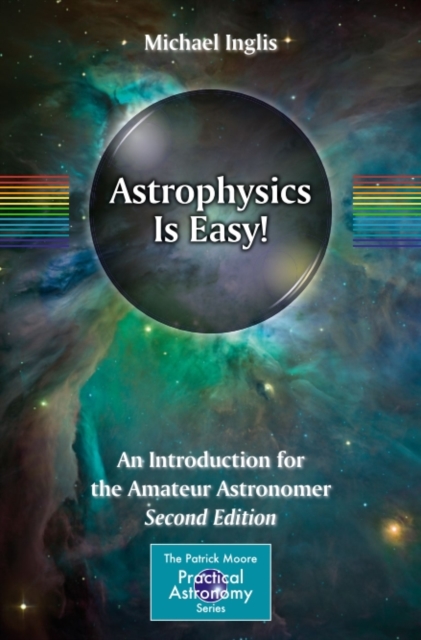
Astrophysics Is Easy!
Astrophysics is often -with some justification - regarded as incomprehensible without the use of higher mathematics.Consequently, many amateur astronomers miss out on some of the most fascinating aspects of the subject.Astrophysics Is Easy!cuts through the difficult mathematics and explains the basics of astrophysics in accessible terms.
eBook

N-Dimensional Space and Perspective: The Mathematics Behind the Interpretation of Ancient Perspective
The discoveries of Herculaneum and Pompeii and the broadened scope of geography in the eighteenth century, and developments in mathematics and physics that began in the nineteenth and continued into the twentieth, renewed studies of ancient works of art led to the creation of opposing factions regarding the “question of perspective”: those who maintained the existence of a single possible perspective, and those who upheld the existence of multiple perspective constructions. To shed light on the debate, this present paper examines some of the factors behind the two positions.
Journal Article
Mathematics Art Music Architecture Education Culture
The international annual Bridges conference exploring Mathematical Connections in Art, Music, Architecture, Education and Culture was founded by Reza Sarhangi (1952–2016) in 1998 at a private liberal arts college in Kansas, Southwestern College. It is an annual conference, which has provided a remarkable multi-disciplinary model of collaboration between mathematics, arts and other cultural activities. The genuine efforts of many founding members of this organization provided an inspirational model throughout the past 20 years that has shaped the Bridges into one of the premier interdisciplinary conferences in the world. The conference has travelled across North America to Europe, and Asia, and hosts participants from dozens of countries around the world.
Journal Article
Epidermis: Algorithmic Design Based on Biomimetic Morphology
The paper discusses the possibilities and challenges that arise when teaching algorithmic design to students with no previous experience in computational processes. It describes the educational approach and methodology of an introductory algorithmic design workshop which employed biomimetic morphological references. In the workshop, the research on the formation processes of natural patterns and the study of the geometric principles that govern their form, triggered an algorithmic design approach where the morphogenetic strategy is abstracted and implemented for biomimetic design using computational design tools. The paper suggests a series of guidelines based on examples of good practice and identifies potential risks that arise from the use of digital design tools. The workshop methodology aimed to address the challenges of complex parametric geometry employing new digital techniques while studying the underlying algorithmic logic of natural systems. The workshop took place at the Aristotle University of Thessaloniki, in Greece.
Journal Article

Quantum Mechanics
From the bestselling author of The Theoretical Minimum, an accessible introduction to the math and science of quantum mechanics Quantum Mechanics is a (second) book for anyone who wants to learn how to think like a physicist. In this follow-up to the bestselling The Theoretical Minimum, physicist Leonard Susskind and data engineer Art Friedman offer a first course in the theory and associated mathematics of the strange world of quantum mechanics. Quantum Mechanics presents Susskind and Friedman's crystal-clear explanations of the principles of quantum states, uncertainty and time dependence, entanglement, and particle and wave states, among other topics. An accessible but rigorous introduction to a famously difficult topic, Quantum Mechanics provides a tool kit for amateur scientists to learn physics at their own pace.
eBook
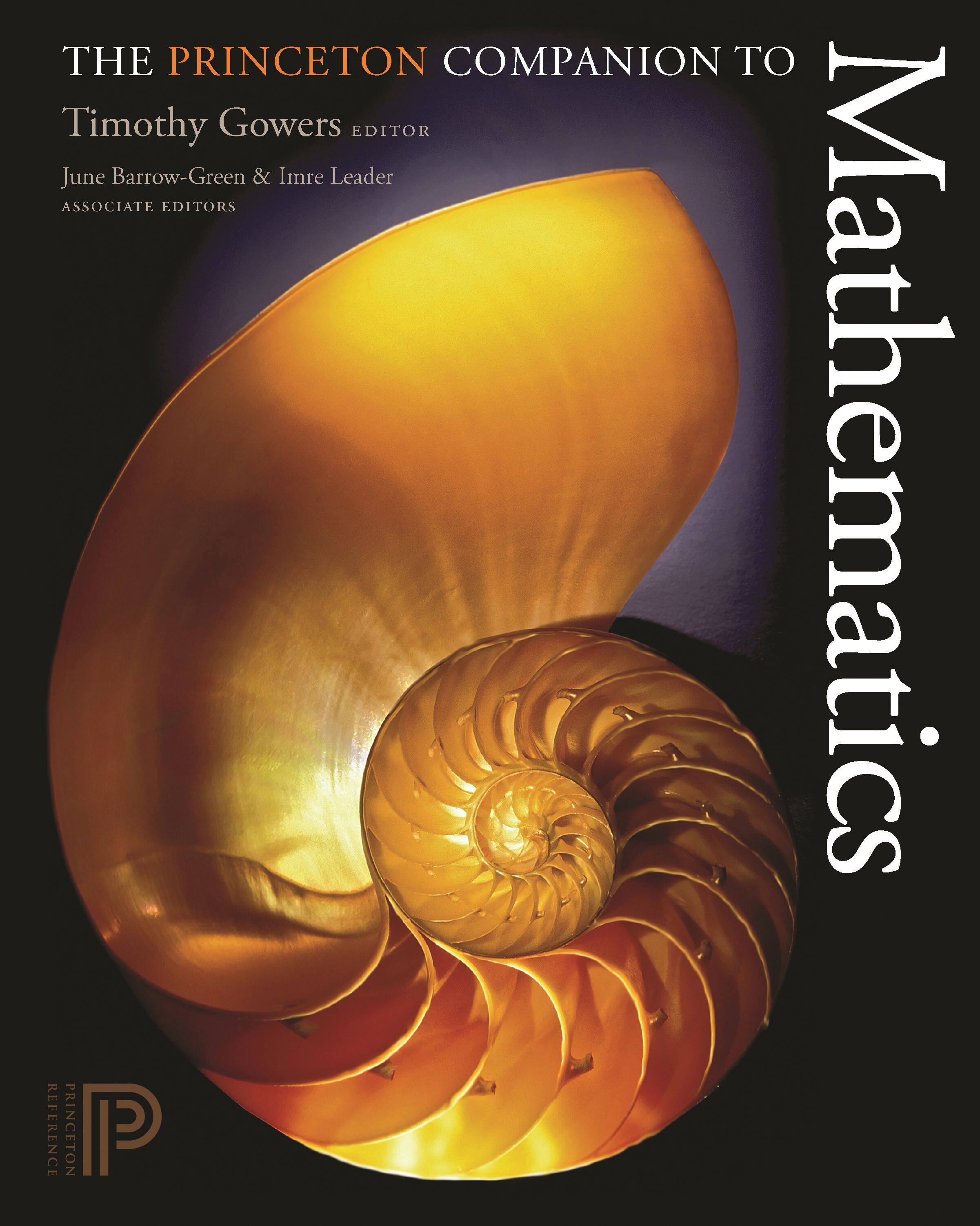
The Princeton Companion to Mathematics
This is a one-of-a-kind reference for anyone with a serious interest in mathematics. Edited by Timothy Gowers, a recipient of the Fields Medal, it presents nearly two hundred entries, written especially for this book by some of the world's leading mathematicians, that introduce basic mathematical tools and vocabulary; trace the development of modern mathematics; explain essential terms and concepts; examine core ideas in major areas of mathematics; describe the achievements of scores of famous mathematicians; explore the impact of mathematics on other disciplines such as biology, finance, and music--and much, much more.
eBook