
Catalogue Search | MBRL


Are you sure you want to remove the book from the shelf?

{{itemTitle}}
264
result(s) for
"Mathematics Study and teaching (Higher) Case studies."
Sort by:

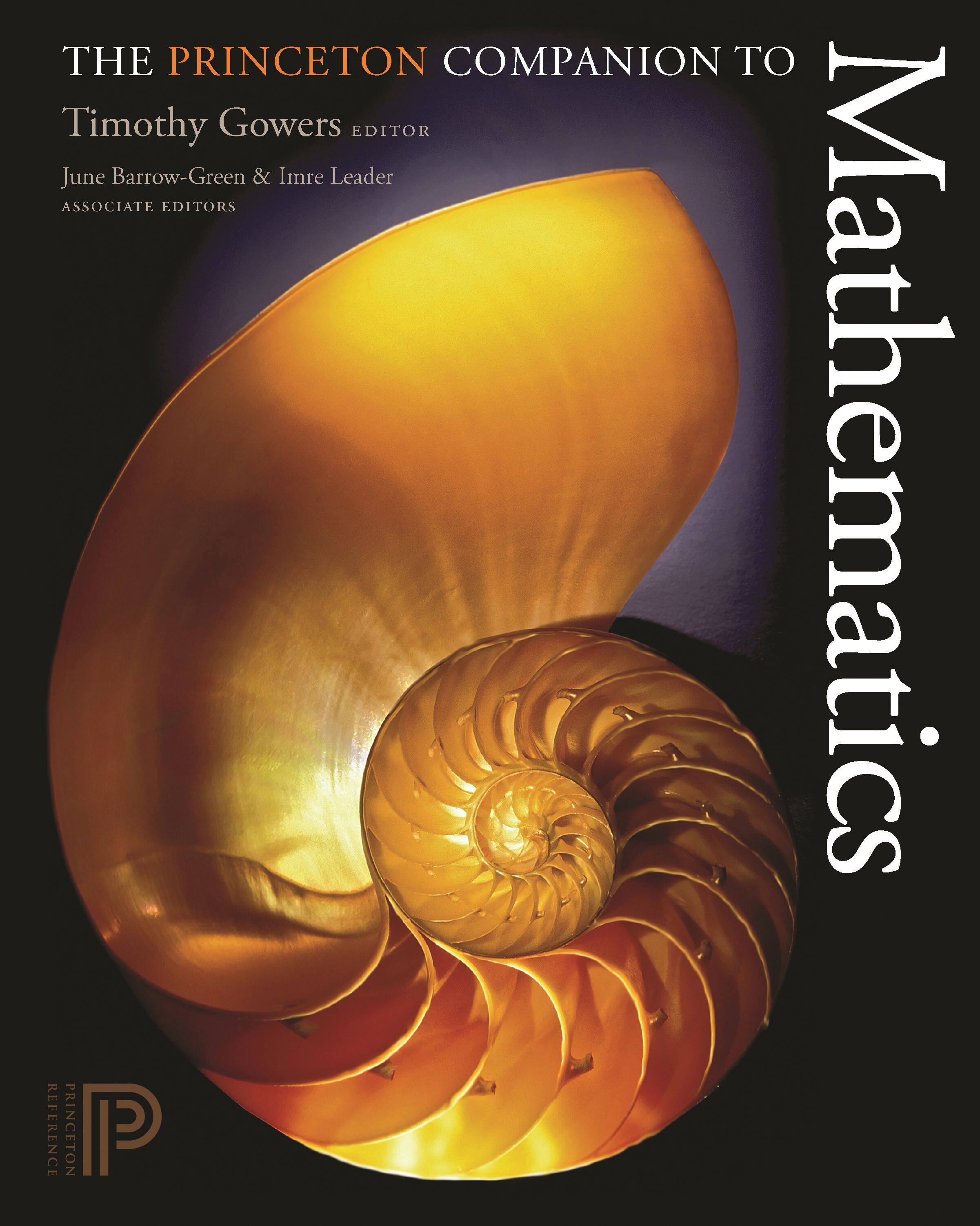
The Princeton Companion to Mathematics
This is a one-of-a-kind reference for anyone with a serious interest in mathematics. Edited by Timothy Gowers, a recipient of the Fields Medal, it presents nearly two hundred entries, written especially for this book by some of the world's leading mathematicians, that introduce basic mathematical tools and vocabulary; trace the development of modern mathematics; explain essential terms and concepts; examine core ideas in major areas of mathematics; describe the achievements of scores of famous mathematicians; explore the impact of mathematics on other disciplines such as biology, finance, and music--and much, much more.
eBook

Mathematics learning and assessment using MathE platform: A case study
Universities are encouraging the implementation of innovative methodologies and teaching strategies to develop an interactive and appealing educational environment where students are the focus of the learning process. In such a personalised learning environment, an increase of the students’ engagement and the improvement of the outcomes arise. MathE has been developed to help achieve this goal. Based on collaborative procedures, internet resources – both pre-existing and freely available as well as resources specifically conceived by the project team – and communities of practices, MathE intends to be a tool to nurture and stimulate the learning of Mathematics in higher education. This study introduces and describes the MathE platform, which is divided into three sections: Student’s Assessment, Library and Community of Practice. An in-depth description of the Student’s Assessment section is presented and an analysis of the results obtained from students, when using this feature of the platform, is also provided. After this, and based on the answers to an online survey, the impact of the MathE platform among students and teachers of eight countries is shown. Although the number of collected results is still scarce, it allows the recognition of a trend regarding the use of the material of the Student’s Assessment section for autonomous study. The results indicate the platform is well organized, with a satisfactory amount and diversity of questions and good interconnection between the various parts. Nevertheless, both teachers and students indicate that more questions should be introduced. The overall opinion about the MathE platform is very favourable.
Journal Article

Lessons learnt and insights shared: The Diagnostic Mathematics Information for Student Retention and Success (DMISRS) Case Studies Dialogue on teaching first-year mathematics in South Africa
The Diagnostic Mathematics Information for Student Retention and Success (DMISRS) project was a collaborative project focused on first-year mathematics, which drew together lecturers in South African higher education institutions and other related organisations. Various themes were explored during the annual DMISRS symposia from 2018 to 2022. The project’s culmination was a final DMISRS symposium held in November 2023, which focused on the case studies that examine the sub-projects that have emerged over the years. The symposia have tackled critical themes, including collaborative practices and courses that influence graduation rates, the psychological well-being of students, and innovative solutions in first-year mathematics, such as assessments, performance metrics, blended learning approaches and curriculum development. The case studies offer valuable narratives of day-to-day interactions, teaching and learning activities, and shared resources or practices in first-year mathematics education experiences. They showcase successes and delve into challenges and their corresponding solutions, providing practical insights that empower the community of practice across diverse higher education institutions and contexts. As a capstone to the DMISRS project’s final symposium, the DMISRS team invited those who contributed case studies to take part in a panel discussion, referred to as the “DMISRS Case Studies Dialogue”, on a range of topics, including their own experiences in setting up and implementing innovations or conducting investigations, and their reflections on the impact of and the legacy of the work done as part of this project. This paper captures that conversation as a dialogue among the contributors.
Journal Article

My Students Need Encouragement: Two Black Female Preservice Teachers’ Beliefs About Culturally Responsive Teaching for Black Students
Despite ubiquitous calls in existing literature, there are limited research studies on preparing culturally responsive African American female teachers for urban schools serving predominantly African American students. This article reports findings from a case study of two African American female preservice mathematics teachers who were part of a mathematics methods course and practicum field placements within a yearlong initial teacher certification Master of Arts of Teaching program at an urban university in the Southeast region of the United States. Data reveal that after conceptualizing culturally responsive mathematics teaching practices, the participants identified and challenged the devaluing of African American culture as a perennial characteristic of the United States education system. Implications and recommendations for research and practice are explored.
Journal Article

Assessing Long-Term Effects of Inquiry-Based Learning: A Case Study from College Mathematics
As student-centered approaches to teaching and learning are more widely applied, researchers must assess the outcomes of these interventions across a range of courses and institutions. As an example of such assessment, this study examined the impact of inquiry-based learning (IBL) in college mathematics on undergraduates’ subsequent grades and course selection at two institutions. Insight is gained upon disaggregating results by course type (IBL vs. non-IBL), by gender, and by prior mathematics achievement level. In particular, the impact of IBL on previously low-achieving students’ grades is sizable and persistent. The authors offer some methodological advice to guide future such studies.
Journal Article

Active Learning Augmented Reality for STEAM Education—A Case Study
Immersive technologies are rapidly transforming the field of education. Amongst them, Augmented Reality (AR) has shown promise as a resource, particularly for education in Science, Technology, Engineering, Arts, and Mathematics (STEAM). There are, however, few teachers deploying this new medium in the classroom directly, and, consequently, only a few, elect students benefit from the AR-enriched offers. Curricula are already overloaded, and schools generally lack developmental resources, thus leaving no room for experimentation. This situation is further aggravated by the too few educational applications available with sufficient learning content. In this article, we investigate the method of Active Learning for the teaching of STEAM subjects, using a format where students are tasked with building an AR application as part of their learning. We evaluate the applicability of the Active Learning for STEAM subjects with a qualitative, case study approach, applying the workshop format as an extracurricular activity in our work with students from a range of secondary schools in Oxford. We discuss how the format works, so it can be embedded into regular curricula, not just as an extracurricular activity, also providing an overview on the involved teaching units and rationale. All teams in our preview audience of the case study succeeded in building working applications, several of impressive complexity. Students found that the lessons were enjoyable and AR technology can enhance their learning experience. The Active Learning method served as a catalyst for students’ skills development, with the case study providing evidence of learning to code, working with a physics simulation engine, ray-tracing, and geometry, learning how to manage teams and interact with other students/instructors, and engineering a working prototype of a game. We consequentially argue that combining the STEM subjects and the arts, using the proposed Active Learning format, is able to provide a more holistic and engaging education.
Journal Article

Assistance of students with mathematical learning difficulties : how can research support practice?
When looking at teaching and learning processes in mathematics education students with mathematical learning difficulties or disabilities are of great interest. To approach the question of how research can support practice to assist these students one has to clarify the group or groups of students that we are talking about. The following contribution firstly concentrates on the problem of labelling the group of students having mathematical difficulties as there does not exist a single definition. This problem might be put down to the different roots of mathematics education on the one hand and special education on the other hand. Research results with respect to concepts and models for instruction are multifaceted based on the specific content and mathematical topics as well as the underlying view of mathematics. Taking into account inclusive education, a closer orientation to mathematical education can be identified and the potential of selected teaching and learning concepts can be illustrated. Beyond this, the role of the teacher, their attitudes and beliefs and the corresponding teacher education programs are discussed. [Author abstract]
Journal Article

Sustaining grant-funded programs: Conditions for sustaining initiatives that enhance diversity in STEMM
As funding agencies seek to broaden their impact in science, technology, engineering, mathematics, and medicine (STEMM) and workforce diversity, many grants have required plans for sustaining institutional change beyond the grant-period. However, little is known about the types of STEMM interventions that are likely to be sustained. Employing a multiple case study design, we examine the NIH BUilding Infrastructure Leading to Diversity (BUILD) initiative, at 10 awarded higher education sites nationwide, designed to promote sustainable change in biomedical workforce diversity. Among all the activities developed by program sites, undergraduate research training, faculty mentoring training, and curricular changes were most likely to be sustained in the final two years of the 10-year award period. Drawing on implementation science, we also examined why interventions were sustainable and identified four contextual elements that largely facilitated program sustainability: institutional financial status; organizational infrastructure and partnerships; central administration and STEMM faculty commitment; and alignment with institutional priorities. Ultimately, this study provides key lessons for future grant-funded teams and senior administrators engaged in efforts to promote equity and inclusion in STEMM.
Journal Article
Analyzing the associations between motivation and academic performance via the mediator variables of specific mathematic cognitive learning strategies in different subject domains of higher education
BackgroundThere are different teaching methods and learning content in the academic field of mathematics between school and university. Many students fail in their studies when the proportion of mathematics is high. Additionally, dropout rates, due to mathematical performance, are high. However, there are different strategies used to improve mathematical skills. Based on the process model of self-regulated learning, an analysis of the association between motivational aspects in the pre-action phase as well as seven special cognitive learning strategies for mathematics in the action phase was conducted. The variables were compared with student performance. The study drew on data from 548 retrospective interviews of cooperative students, using a cross-sectional research design.ResultsThe analysis via structural equation modeling shows a direct association between motivational aspects, such as academic self-concept and curiosity, and the seven learning strategies in mathematics. Furthermore, there is a direct effect of academic self-concept on performance. However, the learning strategy of practicing was the only variable with associations to performance. Additionally, the indirect effect of curiosity on performance via practicing is analyzed.ConclusionIt can be seen, that curiosity on its own is not enough to ensure a good level of performance in mathematics. The findings suggest student learning strategies focusing on harnessing their curiosity and on practicing. A high academic self-concept is also relevant to the performance level achieved. Lecturers should create a learning environment to support such student behavior.
Journal Article