
Catalogue Search | MBRL


Are you sure you want to remove the book from the shelf?

{{itemTitle}}
42
result(s) for
"Mathematics Study and teaching (Preschool) Activity programs."
Sort by:


Teaching the Common Core Math Standards with Hands-On Activities, Grades K-2
Start young children off with Common Core math using these innovative activities
Teaching the Common Core Math Standards with Hands-On Activities, Grades K-2 provides teachers with the help they need to begin teaching to the new standards right away. The book outlines the Common Core math standards from kindergarten to second grade, providing one classroom-ready activity for each standard, plus suggestions for variations and extensions for students of different learning styles and abilities. Along with teaching the required mathematical concepts and skills, many of the activities encourage collaboration, technology utilization, written and oral communication, and an appreciation of the significance of mathematics in modern life.
As the Common Core is adopted across the nation, teachers are scrambling to find information on CCSS-aligned lesson planning and classroom activities. This comprehensive guide answers that need, providing both the background information and practical, applicable guidance that can bring the Common Core into the classroom today. The activities include:
* Abstract and critical thinking using mathematical reasoning
* Problem-solving strategies and calculation proficiency
* Math fluency, and an understanding of mathematical concepts and skills
* Applying mathematical understanding to real life problems
Early confidence and success in math is critical to a student's future performance. Math anxiety and a shaky foundation can hinder a student's potential far into the future, giving elementary math teachers a huge role in shaping their students' academic lives. The Common Core has set the bar, and Teaching the Common Core Math Standards with Hands-On Activities, Grades K-2 brings the standards to life.
eBook

Brain-Compatible Activities for Mathematics, Grades K-1
This book provides ready-to-use, brain-compatible lessons for Key Stage 1 mathematics teaching.
eBook
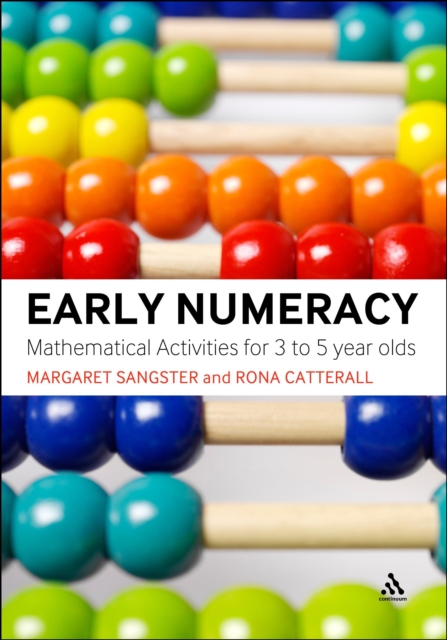
Early Numeracy
This highly practical text provides support for teachers and helps satisfy government guidelines with over 100 activities to introduce mathematical concepts. The resource offers a range of versatile activities and full colour illustrations throughout to help engage the reader and help support best teaching practice.
eBook

Finding Rigor Within a Large-Scale Expansion of Preschool to Test Impacts of a Professional Development Program
Achieving high-quality preschool at scale is challenging; to do so likely entails a combination of program standards, teacher qualifications and compensation, on-site quality monitoring, and professional development (PD). This study aims to examine the impact of investments in PD within the context of an expansion of universal preschool in one of the nation’s largest school districts. We leverage the opportunity provided by a “natural experiment” to estimate PD’s effects that embeds an evidence-based math curriculum in interdisciplinary units of study with coaching support on teacher math practices. A total of 95 schools participated in this study (51 treatment and 44 comparison schools). Treatment sites implemented more teacher-led math activities for a longer period compared to control sites. The size and magnitude of the impacts of a curriculum and PD program implemented at scale were comparable to results from studies of small-scale efficacy trials.
Journal Article

STEAM Activities in the Inclusive Classroom: Intentional Planning and Practice
The promotion of equity and access for all children to learn science is critical in early childhood settings. Considering the benefits of teaching science, technology, engineering, arts, and mathematics (STEAM), it is important that educators embed this pedagogy across early childhood settings. In order to promote access in inclusive early childhood settings that include young children from birth to 8 years of age with or without disabilities to STEAM pedagogy, educators need to be intentional about their practice. This article provides a four-step approach to using an intentional framework, universal design for learning (UDL), to plan for and implement STEAM pedagogy in the inclusive classroom. Practical implications are illustrated through examples of an early childhood educator and a child with autism in an inclusive urban education setting.
Journal Article
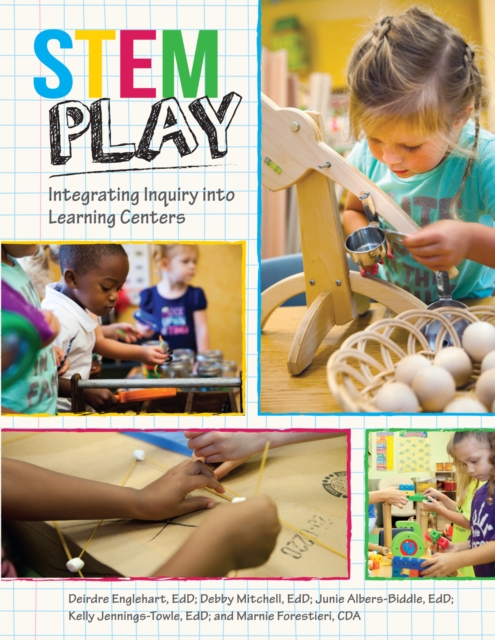
STEM Play
Most early childhood teachers are using learning centers in the classroom, but do not approach them in ways that fully support a variety of learning opportunities. This book approaches learning centers through the STEM (science, technology, engineering, math) lens, and shares how themes can be integrated into centers to promote creativity and highler-level thinking.
eBook

Educational Robotics in Down Syndrome: A Feasibility Study
Educational robotics (ER) uses robotic kits as a channel for education and collaborative learning in a play setting. Thanks to adaptability of robots, ER could facilitate inclusion of special-needs children, such as children with Down syndrome (DS), in learning programs. In a previous study, we provided evidence that ER could promote superior cognitive functions, such as executive functions, which are involved in problem solving, reasoning and planning in typically developing preschool children. In this preliminary study, we aimed to evaluate ER training feasibility, adapting methodology and previously experimented activities to promote executive functions in DS children. Eight DS children carried out 45-min weekly group sessions for 8 weeks in an ER laboratory (ER-Lab) using the Bee-Bot. Training setting was generally well-suited for this small sample of DS children. Due to sample heterogeneity, qualitative results of only two exemplificative children are presented and discussed. Results indicate that Bee-Bot is a very significant device for promoting interest, attention and interaction with adults and peers. Promotion of executive functions seemed to be possible in one child, who eagerly participated in ER-Lab activities.
Journal Article

Comparing the Effectiveness of Using ICT for Teaching Geometrical Shapes in Kindergarten and the First Grade
The purpose of this study is to investigate if information and communications technology (ICT) helps to improve first grade and kindergarten students' basic geometry achievement. The author's research compares the level of geometrical competence of the first grade students and kindergarten students taught using an ICT oriented learning method specifically targeting ‘Realistic Mathematics Education' (RME) for geometry concepts, as opposed to traditional teaching methodology. The study dealt with first grade and kindergarten students in Crete and Athens. The experimental group of the consisted of 237 students who were taught shapes with the support of computers and the control group had 247 students. The results of the study indicated that teaching and learning through ICT is an interactive process for students at the first grade and kindergarten level and has a positive effect for the learning of shapes using the background of RME theory.
Journal Article

Teachers’ perceptions in creating an invitational learning environment in culturally diverse foundation phase classrooms
South Africa is characterised by its vast cultural diversity, and the current classrooms are filled with learners from multicultural and multilingual backgrounds. This cultural diversity has an impact on the classroom climate. The classroom climate is seen as a major determiner of classroom behaviour and learning. Research surrounding classroom practice is changing the way teachers organise their learning spaces as well as their methods of teaching and learning. This paper aimed to gain insight into the teachers' perceptions of the creation of invitational learning environments, using the Invitational Learning Theory as the basis. A qualitative case study involving methods such as focus group interviews with teachers and document analysis containing teachers' notes were examined through the lens of the Invitational Learning Theory of Purkey and Novak. The results indicated that the learning environment plays a significant role in teaching and learning. Teachers noted that when the learning environment was friendly and conducive, learners showed greater enthusiasm to participate in classroom activities. If classrooms were inviting, neatly organised and well-arranged, learners showed a willingness to learn and accepted responsibility for their learning. Teachers noted that learners would go to a specific subject table, for example, mathematics or literacy, and engage in peer learning with the materials.
Journal Article