
Catalogue Search | MBRL


Are you sure you want to remove the book from the shelf?

{{itemTitle}}
94
result(s) for
"Mathematics Study and teaching (Primary) Activity programs."
Sort by:


Teaching the Common Core Math Standards with Hands-On Activities, Grades K-2
Start young children off with Common Core math using these innovative activities Teaching the Common Core Math Standards with Hands-On Activities, Grades K-2 provides teachers with the help they need to begin teaching to the new standards right away. The book outlines the Common Core math standards from kindergarten to second grade, providing one classroom-ready activity for each standard, plus suggestions for variations and extensions for students of different learning styles and abilities. Along with teaching the required mathematical concepts and skills, many of the activities encourage collaboration, technology utilization, written and oral communication, and an appreciation of the significance of mathematics in modern life. As the Common Core is adopted across the nation, teachers are scrambling to find information on CCSS-aligned lesson planning and classroom activities. This comprehensive guide answers that need, providing both the background information and practical, applicable guidance that can bring the Common Core into the classroom today. The activities include: * Abstract and critical thinking using mathematical reasoning * Problem-solving strategies and calculation proficiency * Math fluency, and an understanding of mathematical concepts and skills * Applying mathematical understanding to real life problems Early confidence and success in math is critical to a student's future performance. Math anxiety and a shaky foundation can hinder a student's potential far into the future, giving elementary math teachers a huge role in shaping their students' academic lives. The Common Core has set the bar, and Teaching the Common Core Math Standards with Hands-On Activities, Grades K-2 brings the standards to life.
eBook

The really useful maths book : a guide to interactive teaching
\"A rich resource which will help a teacher who likes to take risks to enable, inspire and support. - TES magazineThe Really Useful Maths book has been written for all those who want children to enjoy the challenge of learning mathematics. It presents teachers and students with exciting and varied ideas for introducing mathematics to children. With suggestions about the best ways to use resources and equipment to support learning, it describes in detail how to make learning the easy option for children. This accessible and comprehensive book covers both the practical side of mathematics and the theory and practice of mathematics teaching. Packed with ideas and activities, it is the perfect tool to help you to improve your teaching strategies. Topics covered include:numbers and the number system what teachers need to know about interactive teaching calculating consolidating new ideas and developing personal qualities shape and space measures, statistics and data handling consolidation and practice for accuracy, speed and fluency.Fully updated to take into account changes in mathematics teaching and curriculum, this new edition offers a host of new ideas for teaching, new topics, a glossary of mathematical terms and an activity matrix for easy navigation of the books practical activities. It is the perfect tool to support training and practicing primary teachers, subject specialists and mathematics coordinators in schools\"-- Provided by publisher.
Book
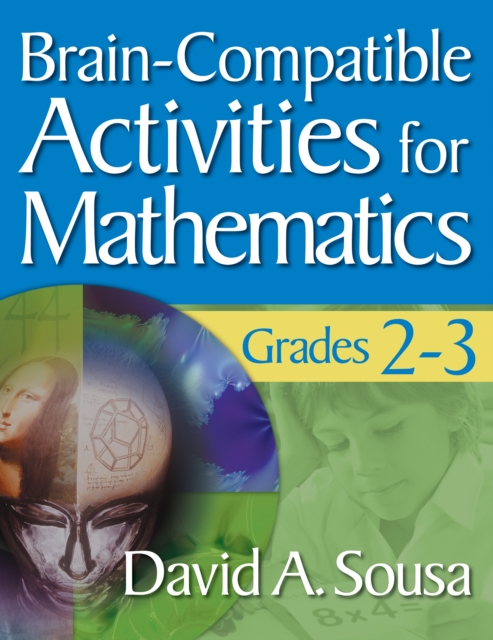
Brain-Compatible Activities for Mathematics, Grades 2-3
Sophisticated medical instruments have provided us with a unique glimpse into the learning brain. As educators, we can take the knowledge and apply it to teaching in our classrooms. With the advantage of brain research, we have been able to develop instructional techniques that facilitate the brain's innate learning capacity. The more teachers know about how the brain learns, the more instructional options they have. Brain-Compatible Activities for Mathematics, Grades K-1 provides ready-to-use, brain-compatible lessons for mathematics instruction. Each step-by-step lesson includes detailed instructions for the teacher, maths activities, and all the necessary reproducibles. Correlated with the National Council of Teachers of Mathematics' standards and Focal Points, this classroom resource shows teachers how to apply the principles discussed in Sousa's bestseller, How the Brain Learns Mathematics.
eBook


Brain-Compatible Activities for Mathematics, Grades K-1
This book provides ready-to-use, brain-compatible lessons for Key Stage 1 mathematics teaching.
eBook
Guided Math Workstations Grades 3-5
This essential classroom resource helps teachers successfully plan, organize, implement, and manage Guided Math Workstations. These workstation tasks help students practice, review and maintain mathematical concepts and skills during Guided Math Workshop.
eBook
Reasons to Reason in Primary Maths and Science
This book explores what reasoning is and what it is not. It includes background theory and a rationale for primary teachers alongside examples of how reasoning in primary mathematics and science classes can develop.
eBook
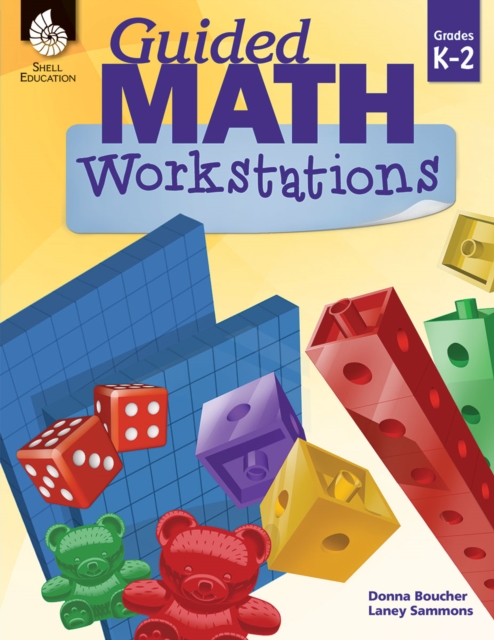
Guided Math Workstations Grades K-2
This essential classroom resource helps teachers successfully plan, organize, implement, and manage Guided Math Workstations. These workstation tasks help students practice, review and maintain mathematical concepts and skills during Guided Math Workshop.
eBook

Video as a tool for focusing teacher self-reflection : supporting and provoking teacher learning
This article describes the research landscape related to the use of video for promoting teacher learning, drawing on a variety of research studies to illustrate the breadth of approaches that have been employed. One particular research study is reported in some detail since, it is argued, this represents a new level of devolution of agency to teachers to play a self-scaffolding role in their own professional education. The study involved the investigation of an approach to the provision of feedback to teachers about their practice that involved stimulating teacher self-reflection and juxtaposed structure and agency. An observation framework grounded in classroom practice research was developed, and teachers selected elements of that framework to serve as the focus for examining their practice and seeking feedback about that practice. Teachers and researchers examined video-recorded lessons focusing on the teachers' selected observation elements, and then engaged in feedback conversations about their observations and analyses, and the implications of these for future practice. The approach identified the video record as an artefact of the teacher's own practice and one which demanded a professional response from the teacher. The balance between structure and agency realised in the study, in combination with the use of video for observation and analysis of practice, facilitated teacher self-reflection and functioned to both support and provoke teacher learning. [Author abstract]
Journal Article