
Catalogue Search | MBRL


Are you sure you want to remove the book from the shelf?

{{itemTitle}}
2,975
result(s) for
"Maximus"
Sort by:

A Guide to the Maximus Poems of Charles Olson
A Guide to the Maximus Poems of Charles Olson offers an essential companion to Olson's monumental and intricate Maximus Poems. This scholarly guide navigates the complexities of Olson's allusive and expansive verse, which spans themes from local Gloucester history to universal mythologies. With nearly 4,000 annotations, the guide meticulously decodes references to historical figures, literary works, geographical landmarks, and philosophical concepts. It moves line by line, offering insight into Olson's sources and intellectual framework, including his borrowings from Algonquin legends, Arabic angelology, and Whitehead's cosmology. Rich with unpublished material from Olson's papers, as well as letters, interviews, and classroom notes, the guide aims to equip readers with the tools to actively engage with Olson's text, uncovering its layered meanings through his principle of 'istorin--\"to find out for oneself.\" Structured chronologically rather than alphabetically, the guide mirrors the progression of Olson's three-volume epic, weaving historical scholarship with interpretive clarity. Each annotation situates Olson's references in context, revealing the intricate interplay between history, myth, and the poet's life in Gloucester. The guide further illuminates Olson's creative process, tracing the evolution of his ideas through drafts, personal correspondences, and published works. Designed as both a reference and an entry point into Olson's ambitious poetic project, it not only deepens appreciation for The Maximus Poems but also serves as a model for literary scholarship, inviting readers to engage with Olson's world on their own intellectual journey. This title is part of UC Press's Voices Revived program, which commemorates University of California Press's mission to seek out and cultivate the brightest minds and give them voice, reach, and
impact. Drawing on a backlist dating to 1893, Voices Revived makes high-quality, peer-reviewed scholarship accessible once again using print-on-demand technology. This title was originally published in 1980. Many titles in the Voices Revived program are also newly available as ebooks, offered at a discounted price to support wider access to scholarly work.
eBook


Genomics Reveals Distinct Evolutionary Lineages in Asian Elephants
This study introduces, for the first time, whole‐genome sequencing (WGS) data from predominantly wild‐born Asian elephants currently housed in European zoos, covering the distribution range of Asian elephants. With this WGS data, we aim to validate the current designation of Asian elephant subspecies and address currently discussed ambiguities about their origin, particularly concerning Bornean and Sri Lankan elephants by analyzing population structure, determining divergence times, and exploring ancient and recent bottlenecks. Understanding the evolutionary history of the Asian elephant subspecies is essential for developing targeted conservation strategies and mitigating risks to their survival. Analysis reveals a clear population structure with relatively recent splits, delineating three distinct genetic clusters: Borneo, Sumatra, and Asian Mainland, with Sri Lanka forming an additional group. We estimated the divergence time between Bornean and Sumatran elephants to be around 170,000 years ago. The divergence of the Sri Lankan elephant from the Mainland is estimated to have occurred around 48,000 years ago, with Sri Lankan elephants predominantly clustering with those from Myanmar, possibly due to historical trade networks. The genome of the Bornean elephant exhibited signatures of severe bottlenecks as recently as 8 and 38 generations ago, further supporting hypotheses of their introduction. Our data reflect the current Asian elephant subspecies designation. Additionally, for the first time, the Sumatra elephant is confirmed as a distinct subspecies with genomic data. Furthermore, the study discusses genetic management strategies for ex‐situ populations, emphasizing the importance of implementing cluster‐specific conservation measures. This study introduces, for the first time, whole‐genome sequencing (WGS) data from predominantly wild‐origin Asian elephants housed in European zoos, covering the distribution range of Asian elephants. The WGS data aim to validate the Asian elephant subspecies designation and address ambiguities about their origin, particularly concerning Bornean and Sri Lankan elephants.
Journal Article

Strong curves : a woman's guide to building a better butt and body
This is not your run-of-the-mill fitness book. Developed by world-renowned gluteal expert Bret Contreras, Strong Curves offers an extensive fitness and nutrition guide for women seeking to improve their physique, function, strength, and mobility. Contreras spent the last eighteen years researching and field-testing the best methods for building better butts and shapelier bodies. In Strong Curves, he offers the programs that have proven effective time and time again with his clients, allowing you to develop lean muscle, rounded glutes, and greater confidence. Each page is packed with information decoding the female anatomy, providing a better understanding as to why most fitness programs fail to help women reach their goals. With a comprehensive nutritional guide and over 200 strength exercises, this book gets women off the treadmill and furnishes their drive to achieve strength, power, and sexy curves from head to toe. Although the glutes are the largest and most powerful muscle group in the human body, they often go dormant due to lifestyle choices, leading to a flat, saggy bum. Strong Curves is the cure.--Publisher's description.
Book

The human-elephant conflict in Sri Lanka: history and present status
Human-elephant conflict (HEC) is a severe conservation, socio-economic and environmental issue of forests and ecosystems in elephant inhabiting countries, including Sri Lanka. Due to the rapid growth of human and elephant populations, both struggles to share limited land resources. The major causes and contexts of HEC in Sri Lanka include land use change, habitat loss due to human population growth, crop raiding behavior, problem elephants, and changes in agriculture practices. Since 2019, 125 people and 370 elephants have killed annually on average due to the conflict. Also, Sri Lanka has recorded the highest annual elephant deaths and second-highest human deaths due to HEC. The human death rate has increased by approximately 42% over previous three decades. The Sri Lankan government provides compensation for death and disability of the human caused by elephants and for elephant-damaged houses or properties. The Sri Lankan elephant (Elephas maximus maximus) is an endangered subspecies. It’s home range is restricted to 50–150 km2 and depends on the availability of food, water, and shelter of the habitat in which they live. Various management strategies have been developed by the government and villagers to prevent and mitigate HEC. Today, Sri Lankan elephants are protected under Sri Lankan law, with punishment by fines and jail terms. This article reviews the history, present status, and traditional conflict management of HEC in Sri Lanka. We suggest a satellite data fusion approach with GIS modeling to identify risk zones of HEC to develop further protective measures for humans and elephants.
Journal Article


The Whole Mystery of Christ
A thoroughgoing examination of Maximus Confessor's
singular theological vision through the prism of Christ's cosmic
and historical Incarnation.
Jordan Daniel Wood changes the trajectory of patristic
scholarship with this comprehensive historical and systematic study
of one of the most creative and profound thinkers of the patristic
era: Maximus Confessor (560-662 CE). Wood's panoramic vantage on
Maximus's thought emulates the theological depth of Hans Urs von
Balthasar's Cosmic Liturgy while also serving as a
corrective to that classic text.
Maximus's theological vision may be summed up in his enigmatic
assertion that \"the Word of God, very God, wills always and in all
things to actualize the mystery of his Incarnation.\" The Whole
Mystery of Christ sets out to explicate this claim. Attentive
to the various contexts in which Maximus thought and
wrote-including the wisdom of earlier church fathers, conciliar
developments in Christological and Trinitarian doctrine, monastic
and ascetic ways of life, and prominent contemporary philosophical
traditions-the book explores the relations between God's act of
creation and the Word's historical Incarnation, between the analogy
of being and Christology, and between history and the Fall, in
addition to treating such topics as grace, deification, theological
predication, and the ontology of nature versus personhood. Perhaps
uniquely among Christian thinkers, Wood argues, Maximus envisions
creatio ex nihilo as creatio ex Deo in the event
of the Word's kenosis: the mystery of Christ is the revealed
identity of the Word's historical and cosmic Incarnation. This book
will be of interest to scholars and students of patristics,
historical theology, systematic theology, and Byzantine
studies.
eBook
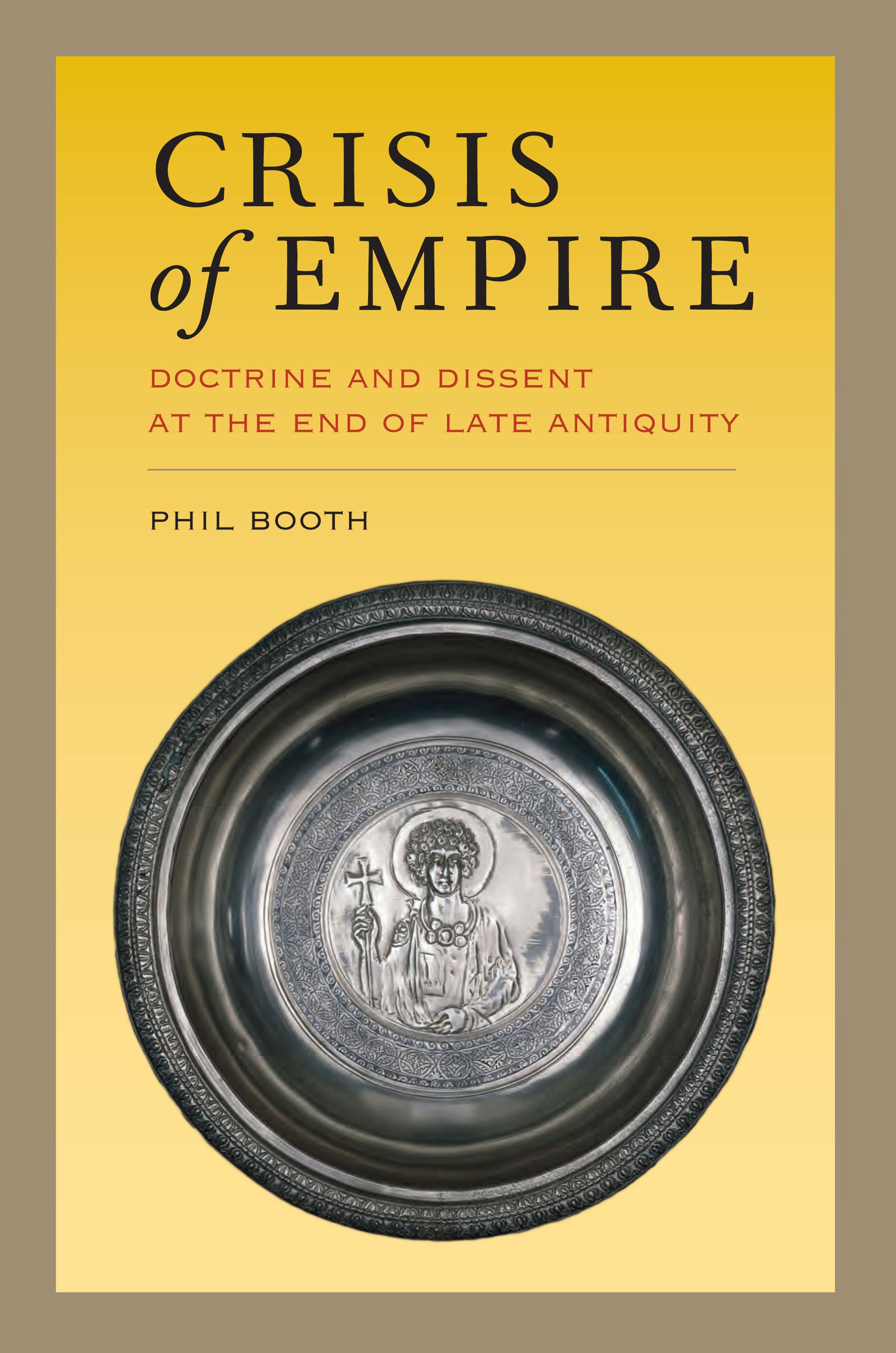
Crisis of empire
This book focuses on the attempts of three ascetics—John Moschus, Sophronius of Jerusalem, and Maximus Confessor—to determine the Church’s power and place during a period of profound crisis, as the eastern Roman empire suffered serious reversals in the face of Persian and then Islamic expansion. By asserting visions which reconciled long-standing intellectual tensions between asceticism and Church, these authors established the framework for their subsequent emergence as Constantinople's most vociferous religious critics, their alliance with the Roman popes, and their radical rejection of imperial interference in matters of the faith. Situated within the broader religious currents of the fourth to seventh centuries, this book throws new light on the nature not only of the holy man in late antiquity, but also of the Byzantine Orthodoxy that would emerge in the Middle Ages, and which is still central to the churches of Greece and Eastern Europe.
eBook

Genetic features of Sri Lankan elephant, Elephas maximus maximus Linnaeus revealed by high throughput sequencing of mitogenome and ddRAD-seq
Elephas maximus maximus Linnaeus, the Sri Lankan subspecies is the largest and the darkest among Asian elephants. Patches of depigmented areas with no skin color on the ears, face, trunk, and belly morphologically differentiate it from the others. The elephant population in Sri Lanka is now limited to smaller areas and protected under Sri Lankan law. Despite its ecological and evolutionary importance, the relationship between Sri Lankan elephants and their phylogenetic position among Asian elephants remains controversial. While identifying genetic diversity is the key to any conservation and management strategies, limited data is currently available. To address such issues, we analyzed 24 elephants with known parental lineages with high throughput ddRAD-seq. The mitogenome suggested the coalescence time of the Sri Lankan elephant at ~0.2 million years, and sister to Myanmar elephants supporting the hypothesis of the movement of elephants in Eurasia. The ddRAD-seq approach identified 50,490 genome-wide SNPs among Sri Lankan elephants. The genetic diversity within Sri Lankan elephants assessed with identified SNPs suggests a geographical differentiation resulting in three main clusters; north-eastern, mid-latitude, and southern regions. Interestingly, though it was believed that elephants from the Sinharaja rainforest are of an isolated population, the ddRAD-based genetic analysis clustered it with the north-eastern elephants. The effect of habitat fragmentation on genetic diversity could be further assessed with more samples with specific SNPs identified in the current study.
Journal Article